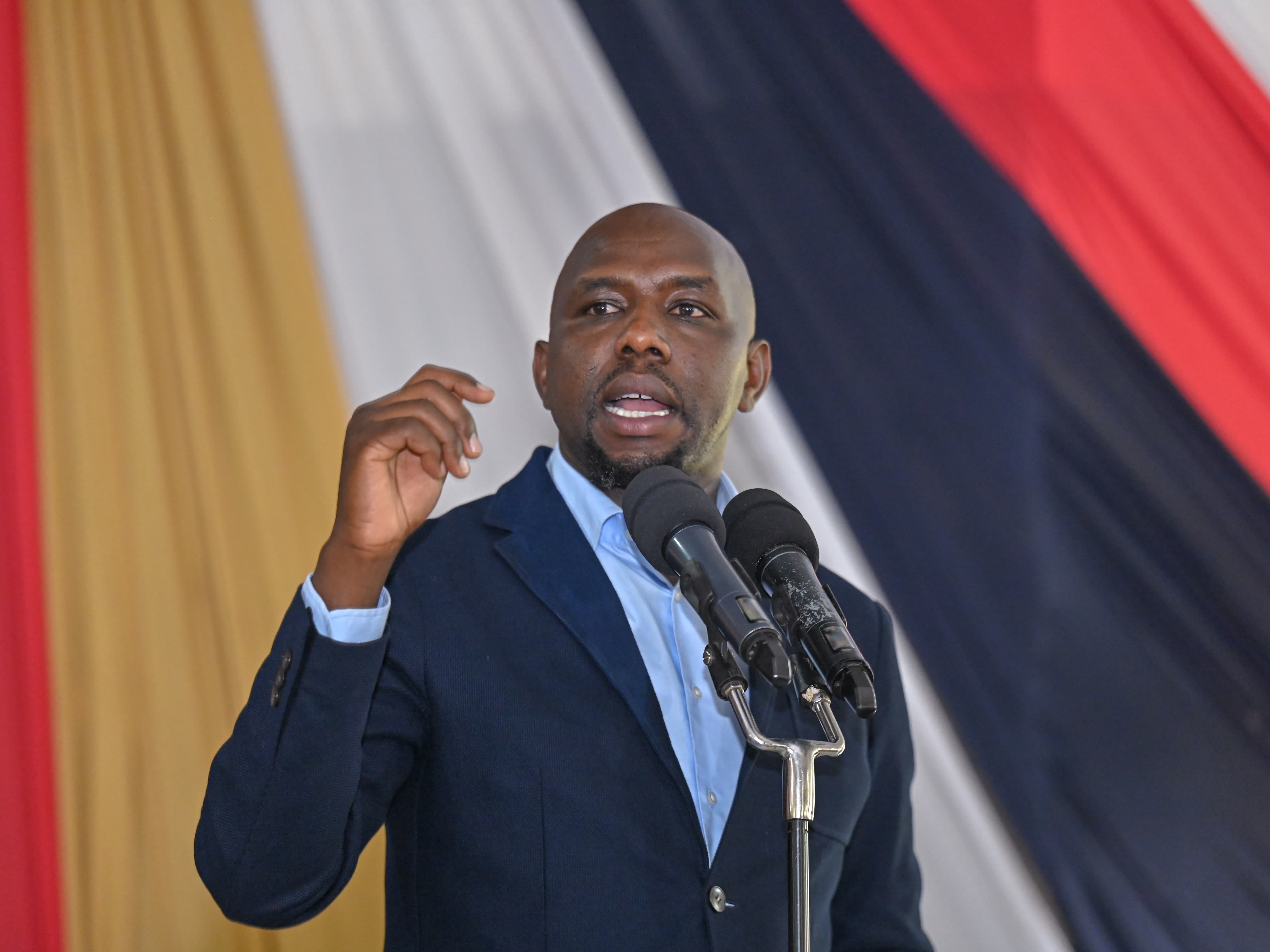
 Dr Dennis Munene is the Executive Director of China-Africa Center at the Africa Policy Institute./HANDOUT
On May 18, a nationwide strike by the transport sector alliance brought Kenya's public transport system and major urban centres, including Nairobi, to a near standstill in protest of soaring fuel prices. Simultaneously, severe fuel shortages and massive price surges hit multiple African countries such as Ethiopia, Mozambique, Tanzania, and Uganda. These fuel shortages were largely triggered by the power wars in the Gulf Region that resulted in supply chain disruptions. Similarly, about twenty-nine African currencies also plunged in value, while fertiliser imports have been disrupted at planting season.
Food insecurity now looms over millions of households across the continent of Africa. A prolonged US–Israel conflict against Iran could impose a massive economic loss on African economies, largely through higher fuel, transport, fertiliser, and borrowing costs. East African oil-importing countries would likely bear the greatest burden.
However, some countries in the global south, such as China has managed to insulate itself from the Gulf fuel crisis through a combination of massive oil and Liquefied Natural Gas (LNG) stockpiles and a strategic shift to renewable energies. Currently, China has built the world's largest and fastest-growing renewable energy system, with a capacity of more than 2.09 billion kilowatts. Further, its early transition to new energy vehicles has enabled the country of more than 1.4 billion people to withstand the fuel shortage shock.
This experience in renewable energy systems by China needs to be shared and accelerate Africa’s energy security. The continent is home to approximately 1.5 billion people, a figure projected to exceed 2.5 billion by 2050. The continent also possesses vast energy resources, including oil, natural gas, hydropower, solar, wind, geothermal energy, and critical minerals essential for the global clean energy transition. At the same time, nearly 600 million Africans still lack access to electricity, while hundreds of millions continue to rely on traditional biomass for cooking and heating. These statistics highlight a paradox. Africa is energy-rich, yet millions remain energy-poor.
Addressing this challenge is central to the realisation of Agenda 2063, the African Union’s blueprint for “The Africa We Want.” Reliable, affordable, sustainable, and modern energy systems are indispensable for achieving Agenda 2063’s aspirations of inclusive growth, industrialisation, regional integration, and sustainable development.
Against this backdrop, China–Africa energy cooperation has become more important than ever. Over the past several decades, Africa and China have built a robust partnership grounded in mutual respect, shared development objectives, and South–South cooperation. Energy security with a focus on renewable energy has been one of the most significant pillars of this relationship.
Chinese investments, infrastructure financing, technology transfer, and engineering expertise have contributed to expanding energy production and supporting economic growth across many African countries. However, the demands of the twenty-first century require us to move beyond traditional models of cooperation as observed in a recent conference organized by the Africa Policy Institute (API), in partnership with China National Petroleum Corporation – Economic & Technological Research Institute (CNPC-ETRI), in Addis Ababa - Ethiopia, themed “Strengthening China-Africa Energy Diplomacy in a Turbulent World”.
China and Africa need to reimagine the Forum on China-Africa Cooperation (FOCAC) “Energy Cooperation” framework and its Action Plan (2025-2027) as a strategic mechanism of response to the impact of the Gulf crisis on the continent. The strategic framework can also form a central plank of China-Africa energy diplomacy in response to the ongoing conflict in the Middle East and its global impact.
The framework recognises new energy as an emerging strategic industry and as crucial for industrial transformation and economic development in a China-Africa Community with a shared future. However, a robust China-Africa energy diplomacy is important in addressing the crisis in the Middle East and building a long-term ‘clean energy shield’ strategically to a sustainable energy and security future.
First,
China and Africa need to continue working together to build a sustainable,
resilient, and clean energy future. Chinese firms have supplied solar equipment
to power millions of South African homes to mitigate the energy crisis,
building mega-installations like Kenya's 50MW Garissa Solar Power Plant, and
funding major wind and geothermal expansions in Africa.
Second, China needs to help the continent of Africa accelerate its renewable energy transition. The continent’s total renewable installed capacity is projected to grow to 148.9 GW by 2030, with 95.2 GW of new capacity to be added. This will help cushion the continent against any future fuel crisis, leading to nationwide strikes and demonstrations.
Third, China can utilise its technological advancement capabilities to help Africa build industries that will input value addition to the available critical minerals such as lithium, cobalt, graphite, manganese, nickel, copper, and rare earth elements essential for batteries, renewable energy technologies, and electric vehicles. Indeed, the convergence of Africa’s resource endowment and China’s technological capabilities presents an unprecedented opportunity for strategic partnership.
Thus, strengthening this partnership with China and diversifying energy sources, African countries such as Kenya can enhance their resilience while reducing dependence on volatile global energy markets.
The writer is the Executive Director of China-Africa Center at the Africa Policy Institute.