On April 16 this year, the Nairobi outsourcing firm Sama told 1,108 of its workers they were losing their jobs. Meta, which owns Facebook and Instagram, had walked away from a contract that paid most of those salaries. Severance is being worked out under Section 40 of the Employment Act, Kenya's redundancy law. The pain is real before the paperwork is even finished.
Think about what those 1,108 jobs actually paid. An evaluation by J-PAL, the global poverty research network, found Sama's earlier workers were paid about two and a half times the minimum wage, with health cover, pension and meal allowances on top.
A comparison group of similar Kenyans earned about Sh 13,440 a month. Take that away and you do not just lose 1,108 payslips. You lose rent payments in Embakasi, school fees in South B, Sacco savings in Kawangware. Multiply by 1,108 and the hit to the wider economy starts to show.
So why should the rest of the economy care?
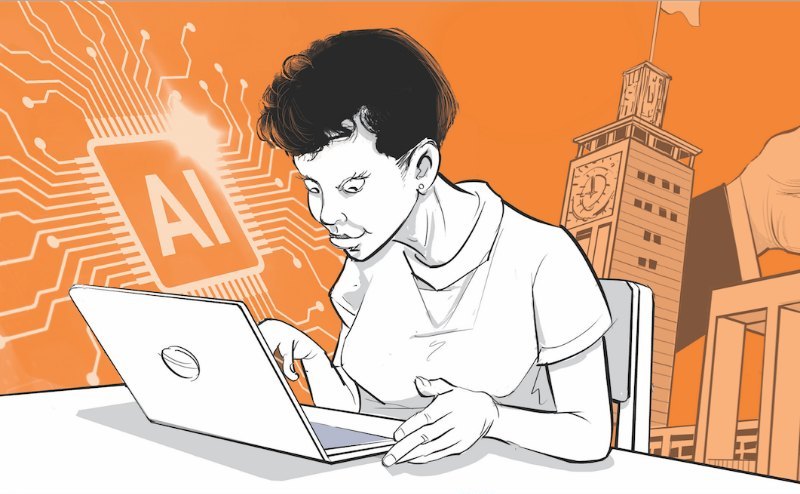
Behind every chatbot answer, every face-unlock on your phone, every social media feed that does not show you something terrible, someone first sat at a screen and made it possible. They drew boxes around tumours so a scanner could spot them. The violent footage you never saw was watched, frame by frame, by people on a Nairobi shift.
The chatbot stopped sounding like a maniac because someone corrected it 10,000 times until it learned manners. Sama has done this kind of work for Fortune 500 companies and, until April, Meta. Kenya's outsourcing industry was worth around $272 million (Sh35.2 billion) in 2025 and is on track for $1 billion (Sh129.5 billion) by 2030. Africa's wider market could touch $20 billion (Sh2.6 trillion) by the decade's end. We are not on the edge of the AI economy. We are its plumbing.
But that position is uncertain. When a big customer like Meta walks away, contracts disappear in a matter of weeks. Earlier this year, Sama joined other BPO players, including Teleperformance and CloudFactory, to form the Outsourcing Alliance of Kenya. That was, quietly, an admission that the industry cannot keep waiting for the next bad phone call.
So what should government do?
First, treat outsourcing firms the way we treat tea factories or clothing exporters. They are part of the country's real infrastructure, not a favour we do for foreign investors. Under the Business Laws (Amendment) Act 2024, outsourcing firms that set up in special economic zones already pay just 10 per cent corporate tax for a decade. Good start.
The next step is to make those breaks conditional. An outsourcing firm that gets more than 60 per cent of its income from one client should not get the full tax break. Putting all your eggs in one basket is a national risk. The tax system should reflect that.
Second, stop sending Kenya's own AI work abroad. The judiciary's new AI assistant Hakimu, the Maisha Namba digital ID system and the Office of the Data Protection Commissioner all need data labelling, testing and safety checks.
If government bought these services from Nairobi outsourcing firms, with proper quality standards, it would create steady local demand. The industry would not live at the mercy of a phone call from Silicon Valley.
The 1,108 jobs lost at Sama are more than the fallout of one contract. They are a warning. Kenya can continue sacrificing families to the fragility of the digital economy, or build the political and moral foundation this moment demands. For this industry is the unseen human backbone of the AI age.