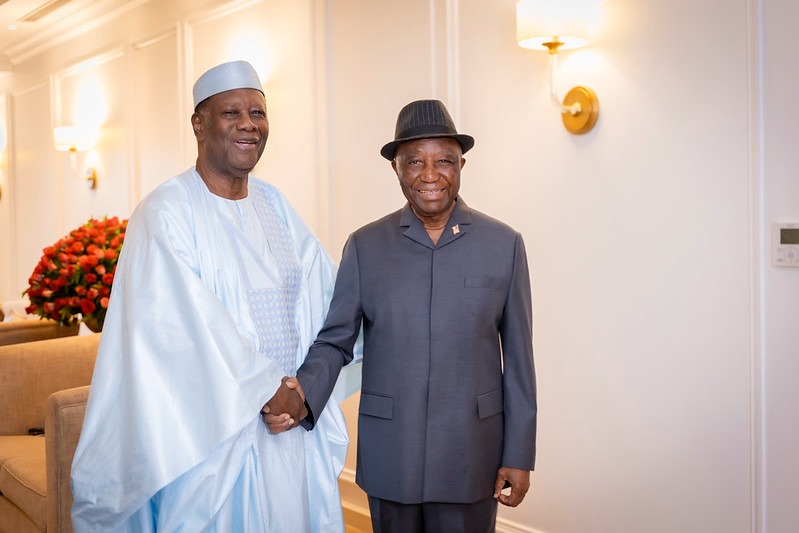
While the spotlight followed well-known global figures, some of the most consequential discussions unfolded away from the cameras where Côte d’Ivoire President Alassane Ouattara emerged as a key voice shaping conversations on investment, development finance, and Africa’s long-term growth path.
From the moment he arrived in the Kenyan capital, Ouattara’s engagements reflected the weight of a continent reassessing how it funds its own future.
The inaugural Africa Forward Summit, co-hosted by Kenya and France on May 11 and 12 at KICC and the University of Nairobi, brought together Heads of State, global financial institutions, and private sector leaders to explore new pathways for investment, innovation, and sustainable growth.
For President William Ruto, the summit was more than a diplomatic gathering. It was a statement of intent positioning Kenya not just as a host nation, but as a convening force helping to redefine Africa’s relationship with global capital and development partners.
It is within this broader ambition that Ouattara’s participation became especially significant.
A Diplomatic Moment That Redrew Lines on the Map
Before formal summit proceedings began, President Ruto held bilateral talks at State House with visiting African leaders, including Ouattara.
The discussions culminated in a notable diplomatic breakthrough: both Kenya and Côte d’Ivoire agreed to establish resident embassies in each other’s capitals.
For two of the most influential economies in East and West Africa, the move marked the closing of a long-standing diplomatic gap and signaled a new phase of inter-regional cooperation.
Beyond symbolism, the leaders also explored joint efforts to mobilize financing for infrastructure and development projects across the continent a key pillar of Africa’s emerging development agenda.
The Economist President and Africa’s Financing Future
Ouattara’s influence in Nairobi extended beyond politics. His economic credentials as a former Deputy Managing Director of the International Monetary Fund and former Governor of the Central Bank of West African States placed him at the centre of technical discussions shaping Africa’s financial future.
At a time when many African economies, including Kenya, are grappling with debt pressures, inflation, and constrained fiscal space, his presence underscored a critical question: how can Africa design more resilient and self-sustaining development models? In Nairobi, Ouattara engaged with global financial leaders including IMF Managing Director Kristalina Georgieva, reinforcing conversations around structural reforms, investment attraction, and long-term economic stability.
Lessons from the Africa Forward Summit
President Ruto, in his address to the summit, echoed a growing continental sentiment that Africa must take greater control of its development financing and reduce reliance on external aid and unsustainable borrowing.
The message aligned closely with Ouattara’s own economic philosophy, shaped by decades within global financial institutions.
The alignment between the two leaders reflected a broader shift emerging from the summit: Africa’s development future will increasingly depend on internal coordination, stronger regional partnerships, and innovative financing models rooted in African realities.
As the Africa Forward Summit concluded, one message stood out clearly: Nairobi is increasingly positioning itself as a central stage for Africa’s most important diplomatic and economic conversations.
And in that evolving narrative, the summit offered a clear takeaway; Africa’s future growth will not be defined by speeches alone, but by the strategic alliances, financing decisions, and shared development agenda being quietly shaped behind closed doors.