The
sovereign power of the people of Kenya is not a rhetorical flourish in our constitution. It is the bedrock upon which our democratic order rests. Article
1 declares, with unmistakable clarity, that all sovereign power belongs to the
people. That power is to be exercised directly or through their elected
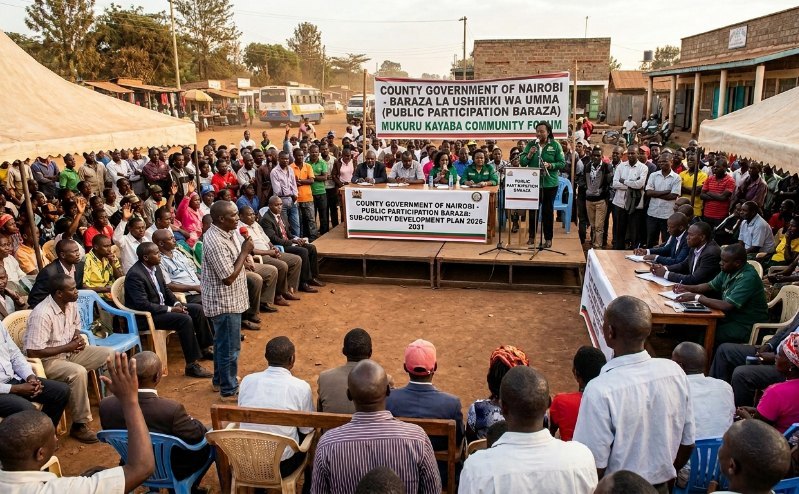
representatives. Public participation is the living mechanism of that direct
exercise.
So one must ask, as the National Assembly considers the Public Participation Bill, 2025, has Parliament truly listened to the sovereign will of Kenyans? Or has it produced a framework that subtly, yet dangerously, reasserts state control over a people’s rights?
On paper, the Bill seeks to operationalise public participation across all levels of government. It designates responsible authorities, mandates notices and requires the processing of submissions. But a careful reading, especially when compared to its 2024 predecessor, reveals a deeply troubling pattern: the systematic removal of safeguards that would have made participation meaningful, enforceable and genuinely citizen-led.
Consider what has been stripped away. The 2024 Bill envisioned an independent Office of the Registrar of Public Participation, empowered to issue a Certificate of Compliance. That certificate would have been a binding obligation on any state organ before a final decision could be made. Without it, participation could be challenged.
The 2025 Bill has erased that office entirely. There is now no independent arbiter. The responsible authority, the very body whose decision is under scrutiny, is left to judge its own compliance. This is not the sovereignty of the people; it is the sovereignty of the bureaucracy.
Equally telling is the removal of the minimum 21-day submission period. In its place, an inserted clause merely requires reasonable time. What is reasonable? A week? Three days? For a complex Bill affecting millions, reasonable becomes a lawyer’s playground and a citizen’s barrier.
The courts have repeatedly held that meaningful participation requires adequate time for study, consultation and response. By deleting a fixed, transparent timeline, Parliament has handed state actors a convenient tool to rush processes and then claim compliance.
The Bill also introduces a vague duty to be courteous, respectful and civil in participation forums. While civility is not objectionable in itself, undefined standards can easily chill robust criticism. The constitution already carefully limits freedom of expression. Adding an extra-constitutional, subjective requirement invites selective enforcement against dissenting voices.
And
what of enforcement? Clause 20 imposes a maximum fine of Sh500,000 for wilful
failure to adhere to the guidelines. For a state department or a powerful
county government, this is pocket change. It is not a deterrent; it is a
licence to disregard the public’s voice, provided the cost is budgeted.
The cumulative effect of these changes is unmistakable. The Bill transforms public participation from a binding constitutional obligation into a discretionary administrative process. The people are no longer sovereign participants; they become invitees to a state-managed performance. The gatekeeping mechanism that the 2024 Bill sought to dismantle has been quietly rebuilt.
Parliament would do well to remember the Supreme Court’s warning: public participation is not a cosmetic exercise. It is a substantive right that goes to the heart of our democratic character.
By stripping the Bill of independent oversight, fixed timelines, and meaningful penalties, the National Assembly is not heeding the sovereign will of Kenyans. It is, instead, preparing a law that may well be declared unconstitutional for failing the very test it purports to meet.
The people of Kenya deserve better. They deserve a law that empowers them, not one that manages them. Until that law is restored to its 2024 standards, this Bill is not a victory for participation. It is a quiet betrayal of the sovereign will.
Social impact adviser, social consciousness theorist, trainer and speaker, agronomist consultant for golf courses and sportsfields and author of 'The Gigantomachy of Samaismela' and 'The Trouble with Kenya: McKenzian Blueprint'