On Friday, August 27, 2010, Kenyans publicly promulgated the 2010 Constitution at the hallowed grounds of Uhuru Park. This is after many years of the struggles to democratise this country from the pre-independence struggles to remove the colonial regime, and then later in the post-independence era too, which culminated in the removal of the dictatorship and authoritarian regime of the former constitution.
Having been amended frivolously and recklessly more than 20 times, the former constitution was only a pale shadow of what the Kenyan delegation had imagined of their country: after having come from London in the three conferences that occurred there in 1961, then 1962 and ending up in the 1963 Lancaster Constitution.
In their masses, all Kenyans from the rich to the poor; all Kenyans with different levels of abilities; from men, women and children; from those living in arid lands to those farming in lush green lands; and, from pastoralists to farmers; they all thronged the Uhuru Park.
As a member of the reference group of 30 Kenyans that worked with and/or monitored the Committee of Experts of eight, I could see, hear and smell the signs of both glorious optimism as well as pessimism of large levels.
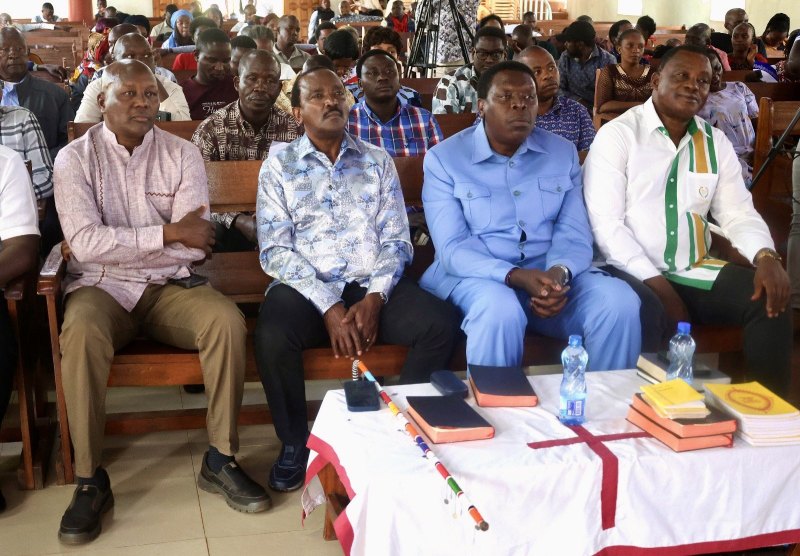
Just for the record, we could not even get the tickets to the event until midnight of that very promulgation. And after getting to the venue, it was problematic getting our dedicated seats, because ‘dignitaries’ like Omar-El-Bashir, were more important than those Kenyans who actually drafted the constitution.
Can you imagine going to the luncheon later at the State House and being asked who you are and that the luncheon is for VIPs yet you have spent two straight years – day and night – drafting the constitution? What a paradox!
Smelling a rat?
On that very day, I left Uhuru Park with mixed thoughts and feelings. Yes, we sang and danced to the great song by Emmy Koskei, Taunet Lelel(New Dawn), but I knew there we as a nation must and shall work very hard to achieve what the constitution guarantees. Two main reasons: the people present in the dias where I was, were all ‘traditionalists’ and favoured the old order of doing things: they were in KANU all along when Kenya was collapsing and heading in the wrong direction since independence in 1963.
Second, on the grounds facing us and dancing all day long, were a multitude of people who were not actually aware of what they had just done in a real sense. They had overturned the regime in what is usually termed a bloodless coup d’etat, but that does not discount the blood and sweat that was spilled when seeking this constitution.
They never knew that Article 1 was revolutionary. That if the elected representatives fail them, with the “delegated power” they gave them, the people still retain the “sovereign power”, and could exercise that power directly. Did they know? Not really, until they noticed that the forest had changed, but the monkeys were still the same.
Changed forest not the monkeys
After two years of implementation, radical bills drafted but passed with huge and impactful amendments, which only diluted them in Parliament. This was the first signpost that Kenyans received from the M-Pigs, as Kenyan activist Boniface Mwangi terms them.
He spilled blood on the streets, of both his and supporters and that of the numerous bulls slaughtered in Dagoretti slaughterhouse. The pigs were consuming the blood in broad daylight and the fire was lit there and then. Blood was on the streets, and yes M-Pigs got the sight and smell of it, but not the signals or symbolism.
Thus, instead of changing their ways as early as then, they continued with wanton destruction of the constitutional edifice, not through amending it, but not implementing it to the letter. Further, by passing horrible and indeed sometimes horrendous bills that were unconstitutional at face value.
And the people or electorate for that matter? They were given all signs not to elect some of these people on the grounds of Chapter 6 of the Constitution but they elected the same persons who had stolen them from election to election. Before the constitution was enacted, and also after in 2013, 2017 and 2022. And now? The chickens have come home to roost.
Gen Zs revolution is here
Born between 1997 and 2012, this group of youth, although not all, are the powder keg that lights up the sky; day and night. In the day, when we can see them. They have shown that the constitution can be protected, defended and upheld as required of all of us, in Article three of the Constitution.
In the night, they are the stars gathering together in the entire republic calculating their next move and the day’s event: whether they will be physical or virtual meetings. Technology is their mobilising tactic. Many members of Gen Zs may have little to no memory of these pre- or post-independence events, and do not care!
The Gen Zs are also notable for being the first generation to be totally immersed in the world of the internet since birth. They have surpassed all generations before them and their numbers and results are telling not just of their youthful frustrations, but those of the entire republic.
Noting all the above, it is crystal clear that the fight for then new constitution has not culminated with the vision and mission Kenyans aspired for, now on the 14th anniversary of implementing the constitution (or lack thereof) as we approach Tuesday, August 27. Is the future destiny of Kenya in Gen Zs bodies, minds and souls? I believe so.
Seasoned political scientist and human rights defender