When Faith Odhiambo took over the helm of the Law Society of Kenya in February, no one could quite predict that she would be navigating the legal fraternity—and the country at large—through one of its most tumultuous periods
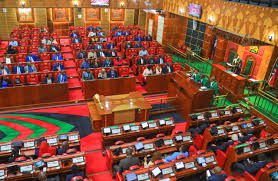
The storming of Parliament on June 25, 2024, was a watershed moment triggered by the passing of the unpopular, and now withdrawn, Finance Bill, 2024.
The passing of the Bill was the straw that broke the camel's back for a Kenyan public whose patience was worn thread-bear by bad governance, corruption and economic hardship.
However, the withdrawal of the contentious Bill has done little to assuage the public’s anger as they demand radical reforms in the country’s governance.
As I followed these developments, I was reminded of a 2005 film, V for Vendetta, based on a novel of the same name by Alan Moore and David Lloyd, which warns society against the dangers of an unchecked political class.
Indeed, the ongoing protests are a manifestation of one of the film’s calls to action: “When injustice becomes law, rebellion becomes duty.”
The noble profession of legal practice is inherently anchored on the duty to ensure a more just society where the rule of law prevails. However, with the onset of globalisation, the legal practice has adopted a more business-minded approach, with ethics sometimes sacrificed for growing profits.
It is these developments that have created a schism between the legal profession and its societal obligations.
However, in just four months of leadership, Odhiambo has brought the LSK’s critical role in upholding the Constitution of Kenya and advancing the rule of law and the administration of justice back into focus.
The law society, as guided by Odhiambo, has been in the eye of the storm of the anti-finance bill and anti-government protests, filing public interest petitions, challenging police brutality, securing the release of protesters and abducted citizens, and remarking on the constitutionality of the government’s response to the protests.
As Kenyans continue to demand better governance from their leaders, our Law Society should insist on legislative and policy steps that emphasise the following three pillars:
One, respect for human rights, particularly the right to life and due process. Two, transparency and accountability with zero tolerance and grim consequences for corruption.
And three, respect and timely compliance with court orders, including a judiciary compliance certificate similar to the clearance certificate issued by the Kenya Revenue Authority, for aspirants of public offices and government departments seeking government funds, private sector or foreign investment.
The winds of change and reform are sweeping through every corner of the country. As one of the 20,000 members of the Law Society, I am proud to see the LSK playing an active and pivotal role in this transformational period for our country.
Managing partner, ADRA Advocates LLP