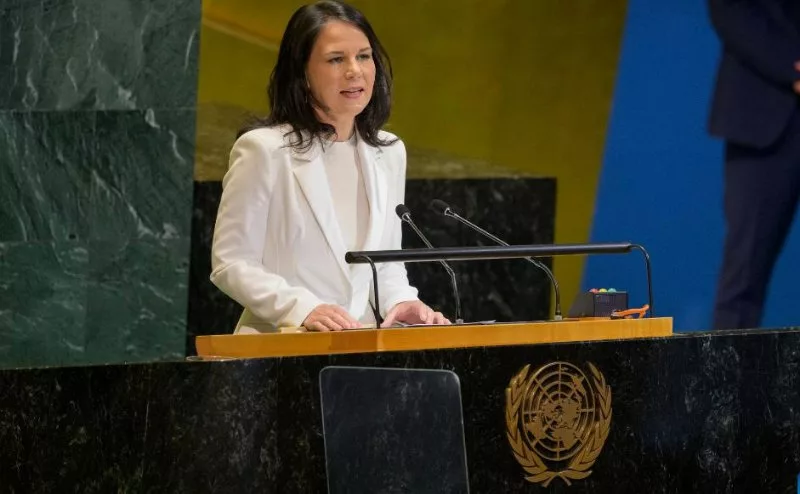
The president of the UN General Assembly, Annalena Baerbock, recently called for a United Nations that would carry the world through the next eight decades, speaking to a much bigger question the world can no longer avoid: Is the UN, in its current form, still fit for purpose?
The organisation was created 80 years ago, after the Second World War, following the ratification of the UN Charter by 29 nations. The world then was different from the one we live in today. For example, there are 193 member states in the United Nations.
Doubtlessly, the United Nations provides a much-needed opportunity for nations to engage in cooperation with each other to tackle pressing global problems. The United Nations, as a platform, could represent an important opportunity, despite shortcomings, provided that the necessary reforms are implemented.
A system designed in 1945 cannot meet the demands of 2026 without evolving. By now, the UN has fallen short of living up to expectations. Hence, the vital importance of making the United Nations system fair, inclusive, effective, functional, authoritative, accountable and seamless.
The UN system must not be preserved in its current state; instead, it should be updated in line with contemporary circumstances. The UN must take concrete measures as a matter of priority to restore its fading effectiveness and authority, and take bolder steps toward comprehensive restructuring.
Today’s challenges are different, and a new way of thinking is required to address them. For example, the world is still far from ending poverty, climate change has emerged as a new threat to humanity and food insecurity abounds. Also, refugee crisis is on the rise around the world, cybersecurity vulnerabilities are a growing concern and freedom of the press is threatened in many countries. Yet the global institution remains outdated in dealing with the challenges.
There is need to take a hard look at how the UN system is organised, including whether there are more effective ways to deliver programmes and humanitarian assistance. Also, the UN must reorganise how resources are mobilised, structured and deployed.
The ongoing reforms dubbed UN80 Initiative, launched by UN secretary general António Guterres just over a year ago, must make the work of the global organisation more coherent, agile and effective.
Particularly, there is need for comprehensive reforms regarding the Security Council, to make it a platform where all of the world enjoys adequate representation. The organisation’s current deeply flawed structure has made it impossible to take the necessary steps to tackle some of the problems that place individual nations and global stability at risk.
The current state of affairs of the Security Council, the UN’s top decision-making body, is neither fair nor sustainable. The council cannot perform its tasks without the implementation of necessary reforms to restructure it and rebuild it according to the needs of the present.
The Security Council has five permanent members: the US, the UK, France, China and Russia. It also has non-permanent member positions, which are held on a rotational basis. Currently, the three African countries serving as non-permanent members of the council include the Democratic Republic of the Congo, Somalia and Liberia. However, the non-permanent members, who are elected for two years, have no real say in the council’s decisions.
The UN Security Council, which has the power to take action, should be restructured and comprehensive changes made to ensure the council attain justice in representation. For example, the absence of permanent African seats on the Security Council is indefensible.
The UN must recognise Africa’s important role and engage the continent more in its affairs. Notably, Africa is helping to shape the future of multilateralism. African countries played a leading role in peace and security, sustainable development and human rights, the three founding pillars of the United Nations.
Africa’s leadership has been evident in many important processes essential for progress around the world. For example, African countries are driving one of the defining debates of our time — how to reform a global financial architecture designed in 1945 for a world that no longer exists. Africa is also driving a UN Framework Convention on International Tax Cooperation so that countries are no longer cheated out of what is rightfully theirs.
The ongoing UN expansion in Nairobi – new offices and conference facility – is a welcome move as it will provide Africa with an opportunity not only to convene UN assemblies, but also to push its vision for a more equal and fairer world. It is an opportunity to replace a global system that was designed without Africa — and still largely operates without Africa — and perpetuates century-old injustices.
The expansion of UN offices in Nairobi signals a global shift, which is really great for Kenya and for Africa. But it comes at a time when financial support to international organisations like the UN is shrinking. The organisation needs to ensure more resources follow the expansion of UN offices in Nairobi to strengthen operations and voice.
Ultimately, it cannot be emphasised enough that the UN needs to undergo comprehensive reforms. A new system is necessary to effectively deal with the deteriorating global situation, economic stability and global human development.
Public policy analyst