

I have had serious reservations with the people who help the country’s leaders confront issues, problems, challenges and crises.
There are moments in operations of any institution when circumstances emerge that threaten the safety and well-being of the people who depend on the institution.
When such a situation happens, the leader of the threatened institution is thrust, like the leader of a platoon in a military establishment, on the forefront.
The threat takes various forms or guises. It can be the death of the leader of an institution; it can be a sudden drop in the fortunes of an institution or a leader. It can be the death of learners in an educational institution; it can be a massive drop in the context of established educational standards that society has agreed on.
The threat can also be political. A protest against this or that policy.
The physical actions—evacuating people, rushing victims to the hospital, arresting the culprits etc—are very important as part of managing the issue, problem, challenge or crisis. Technical ability to minimise the dangerous situation is important.
But it is not complete.
People want information, explanation and assurance. What is going on and why? What is the leadership doing to protect us? Now and in the future.
Just doing and not explaining is worthless leadership.
This is why.
The people affected by the situation are normally anxious. They are afraid. Hopeless. The leader must calm their fears or raise their hopes.
Leadership is communication. Leadership is appropriate communication that shows cohesiveness, care, direction, mentorship.
A look at communication in every civilisation shows that events always generate response—verbal response. History is littered with events that generated some of the finest responses mankind has ever known.
Public communication specialists, in fact, look at great leaders in the context of their speech acts. The Declaration of Independence, Abraham Lincoln’s Gettysburg Address, Churchill's Address on Dunkirk, John F Kennedy's Inaugural Address, Martin Luther King Jr’s I have a Dream, Mandela’s Rivonia trial, etc.
Unsurprisingly, communication specialists see leaders in the context of the verbal responses; the speeches they made during critical periods in the tenures of leadership.
In the final analysis, later generations remember leaders through the words they made dealing with critical situations in the lives of the people.
Great leaders are not remembered because of the brick-and-mortar edifices; they are remembered through the words they uttered during moments of danger.
People remember these words when they are faced with danger, dilemma. They remember them when the faith and belief that carried them along are threatened.
Jesus Christ is remembered for this. When his disciples were apprehensive about what would happen to them in His absence, He said His Father would send them the Holy Spirit to comfort and help them forever. Millions still go back to his words, phrases and sermons for comfort, for guidance, for direction.
Political leaders liberally invoke the words of John Locke, Thomas Jefferson, Abraham Lincoln, Mandela and others to rally people around causes they believe in.
This brings to me our situation.
Our political leaders do not seem to bother with how they respond to the public policy situations we have faced and still face as a nation. They respond to them perfunctorily. There is little clarity and coherence in public discourses on issues and problems with policy implications.
The situation is so bad that when the leaders die, followers grope in the dark. They are not sure what direction he or she would have given on an issue, problem or a challenge, had he been around.
Those working in an institution have no record of the battles the institution has fought and weathered. A political party has no record of founding principles and values of the party beyond anecdotal statements some of their leaders falsely attribute to the respected leaders now dead.
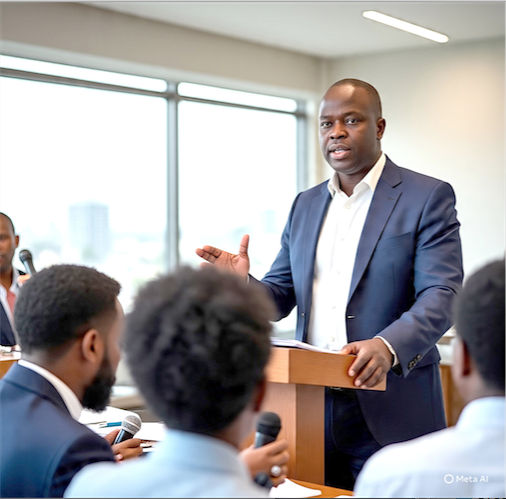
This is unfortunate. Leaders and institutions need two things. First, they should have a high regard to the communications they make, particularly during formal appearances of the leader. Secondly, they should recruit men and women with proven communication skills who would help them to put their thoughts into words.
Communication is about the mediation of thought and action. Action without thought is not leadership.
Leadership is two things: thinking and action. We want to see, feel the policy action. But we want to feel the whys and wherefores of the action—the reason or explanation—of the decisions.
Ultimately, it is words, information and explanation that rally people around a cause, because words give assurance and hope.
Communication specialist