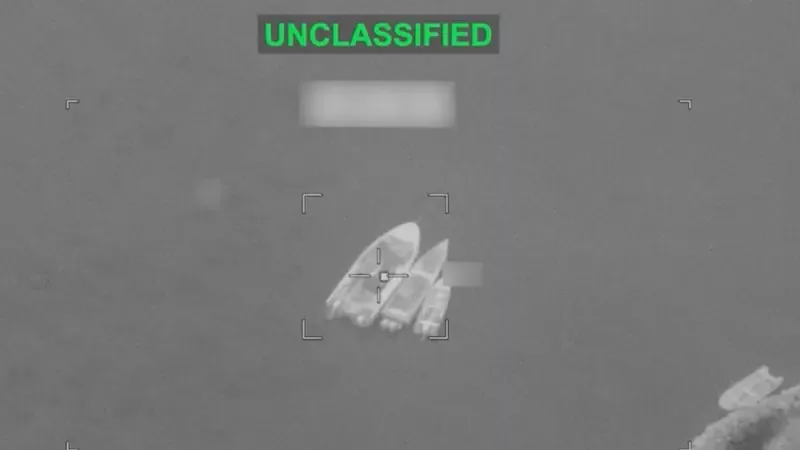

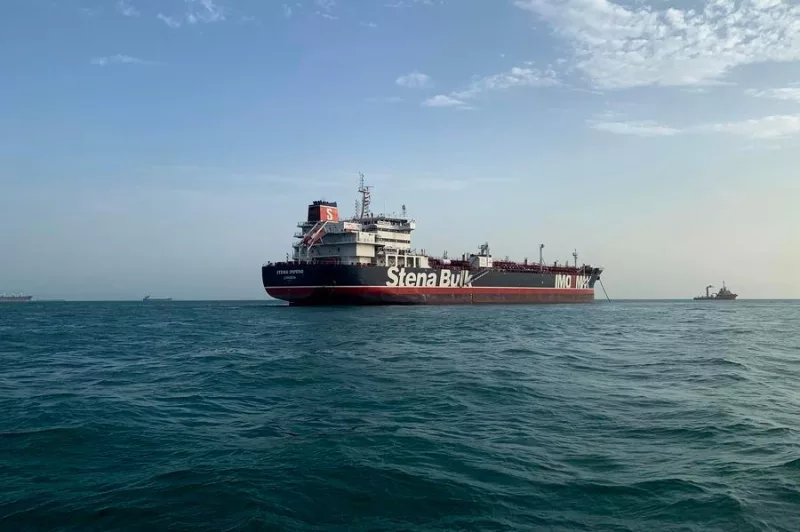
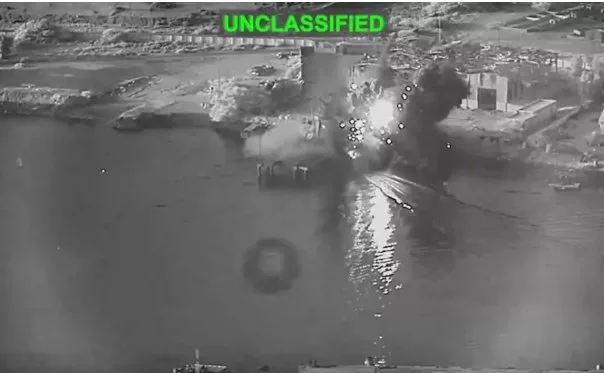
Iran's Islamic Revolutionary Guard Corps (IRGC) says it has hit two UAE tankers in the Strait of Hormuz, as the US carries out a third night of strikes in a row on Iran.
The UAE called the attack "brazen", adding that an Indian crew member was killed and eight others were injured - BBC Verify tracks the tankers' recent movements.
The IRGC also confirmed it had targeted US facilities in Jordan and Bahrain overnight.
Meanwhile the US military says it has completed strikes on targets aimed at degrading "Iran's ability to attack commercial shipping"
Oil prices rose this morning, with Brent crude up by 1.9% at $84.87 (£63.48) a barrel, while US-traded oil rose by 2% at $79.75.
It comes after President Donald Trump said the US was reinstating a naval blockade of Iranian ports and would impose a 20% charge on all cargo shipped through the Strait of Hormuz.
Iranian toll was 'reasonable' compared to Trump's 20% charge, says shipping expert
Donald Trump's 20% toll on ships going through the Strait of Hormuz could see ships paying up to $17 million (£12.7 million) per ship, according a shipping expert.
Richard Meade, editor of shipping journal Lloyds List, tells the BBC that Iran's pricing structure appeared more "reasonable" than Trump's fees, although there is no "international legal basis" for imposing either.
He says a fully laden gas carrier or an oil tanker could be forced to pay between $16 million and $17 million for passing through the strait with the imposed fees.
"For comparison, the Iranian fees initially started out in the range of £1 million to £2 million and then descended back down to around £100,000 to £200,000 per ship in some cases," he adds.
Meade says insurance costs will also be "skyrocketing" as the conflict escalates, just as they were going down.
He adds the problem is "we are yet to see any details" of how Trump will impose the 20% toll, adding the president "has mentioned these things before and then walked away from them".
The continuation of attacks from the Houthis in Yemen will also add further costs for ships transiting oil from Saudi Arabia through the Red Sea and the Bab al-Mandab Strait, Meade says.
What we know about the tankers attacked by Iran
BBC Verify has pieced together the recent movements of the latest two ships hit by strikes - named by the UAE as the crude tanker Mombasa B and LNG tanker Al Bahiya - using satellite imagery.
Mombasa B had not been publicly transmitting its location for over 10 days before the attack. It had departed from Zirku oil terminal in UAE on 2 July and was bound for Khor Fakkan in the UAE, according to data from maritime tracking website MarineTraffic.
Satellite imagery reviewed by BBC Verify shows the vessel conducting a ship-to-ship transfer with another tanker called He Rong Hai off the coast of Fujairah on 8 July. According to maritime intelligence firm TankerTrackers, Mombasa B was loaded with 1.9 million barrels of Emirati oil which it was feeding into He Rong Hai.
LNG tanker Al Bahiya had also not been broadcasting its location for over 14 days and its last known position as per MarineTraffic appeared to be off the coast of western India.
However, analysis by TankerTrackers supported by satellite imagery reviewed by BBC Verify indicates the vessel was near Ras Laffan in the Gulf on 22 June, suggesting its publicly available location data had been spoofed.