
Pakistan's prime minister says a peace deal has been reached between the US and Iran which will end "military operations on all fronts, including in Lebanon".
The deal will be officially signed on Friday in Switzerland, Shehbaz Sharif adds; details of what it contains - and doesn't - are still emerging.
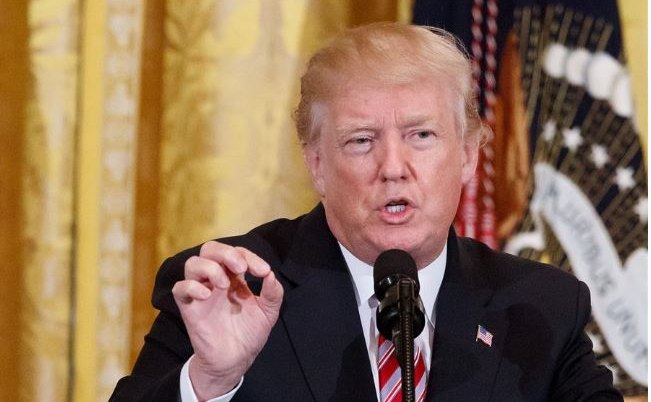
Donald Trump says "oil will flow" once the deal is signed on Friday - oil prices have fallen since the announcement.
Iran's deputy foreign minister says Qatari mediators held "nearly 14 to 15 hours of lengthy talks" in Tehran to reach an agreement on a draft memorandum of understanding between the US and Iran.
”This negotiation process took a long time," Kazem Gharibabadi told Iranian state media on Monday.
"A Qatari delegation was in Tehran yesterday to finalise discussions on the text of the Islamabad memorandum of understanding between Iran and the United States.
"Nearly 14 to 15 hours of lengthy talks took place, during which we presented the Islamic Republic of Iran’s final amendments to the text. Naturally, those amendments were accepted, and the text of the Islamabad memorandum of understanding was finalised.”
The deputy minister said talks on a final deal will happen over a 60-day period where Iran has "several issues to address" with a top priority being the lifting of all sanctions against it.
Finally after what has seemed like countless false starts, a deal has been agreed by the US and Iran.
Both sides have predictably claimed victory. Donald Trump has boldly declared: "This Great Deal will bring Peace and Security to the whole Region." Iran's deputy foreign minister Kazem Gharibabadi hailed what he called his country's military achievements.
All sides, and mediator Pakistan, say the deal will see the lifting of Iran's closure of the Strait of Hormuz and the US blockade of Iranian ports, although this may not be immediate.
That will go some way to relieving pressure on Trump over the harm to the global economy caused by the former, while Iran's collapsing economy will gain some relief from the latter.
Pakistani Prime Minister Shehbaz Sharif says the agreement also calls for the "immediate and permanent termination of military operations on all fronts, including in Lebanon".
That could be a tall order.
Israeli Prime Minister Benjamin Netanyahu has shown no sign so far of being prepared to end Israel's offensive against Hezbollah in Lebanon.
Indeed, twice in just the past week, Israeli strikes on the southern suburbs of Beirut in response to Hezbollah rockets crossing into northern Israel have come close to derailing the whole process.
Iran only just pulled back from responding with another missile attack on Israel in order to get the deal across the line.
It's unclear if the agreement will provide a respite to Lebanon, where two recent ceasefires have failed to take hold.
UN Secretary-General António Guterres has welcomed "the announcement that the United States and Iran have agreed on a peace deal".
"This represents a critical step towards the peaceful settlement of the conflict," a spokesman said.
Japan's Prime Minister Sanae Takaichi was among the latest group of world leaders to praise the deal.
She says Japan "strongly hopes" that "free and safe navigation through the Strait of Hormuz will be ensured in practice, and that a final agreement on Iran's nuclear issue and other matters will be reached as soon as possible."
Australia's Prime Minister Anthony Albanese says he hopes the deal will lead to a "durable and lasting peace".
"While full recovery will take time, restoring this vital trade corridor is essential to easing pressure on energy prices and economies, including in our region," he says.
New Zealand Foreign Minister Winston Peters said it was a "pivotal, constructive deal" and "a step towards reducing tensions and promoting stability in a region that is critical to global economic security".