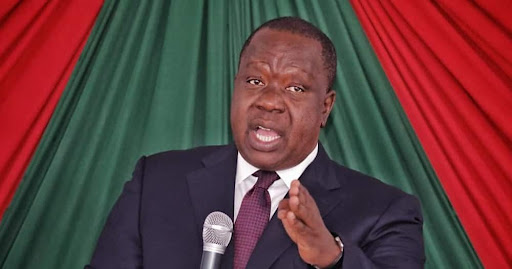
This article is largely prompted by Senator Ledama Ole Kina’s deeply depressing article in last Sunday’s Standard. He alleges, for example, that MCAs who impeached the governor were motivated by resentment at having been outvoted by a woman, and anger at having been blocked from contracts. And the Senate failed to behave judicially and impartially in what was essentially a trial. Party political influence was also clear.
What is impeachment?
The word “impeach” does not mean to “remove from office”. The expression originated in the UK. There, “Impeachment” meant something close to “prosecution” and this was conducted by the House of Commons before the House of Lords as the court. The accused were usually ministers appointed by the monarch. The most famous case was the trial of a Governor General of India. It lasted for seven years and he was found not guilty.
The system was adopted in the United States, and it is still used – including for judges, presidents and governors. Federal judges and presidents are impeached by the House of Representatives before the Senate. The procedure for governors depends on the state’s constitution and law, not on the national constitution. But generally the process is similar: the grounds are often expressed as “High crimes or misdemeanours or malfeasance in office”, and the process involves the state’s lower house prosecuting before its upper house.
Over the last 200-plus years, only 15 US governors have been impeached, of whom eight were convicted and left office, most recently a corrupt governor of Illinois, removed in 2009.
Here the county assembly is the prosecutor and the Senate is the judge. The county assembly does not decide the issue. The Senate is not there to decide, “Do we agree with the county assembly or not?” But, “Has the county assembly convinced us, by argument and evidence, that the Governor has committed such a serious wrong?”
The choice was made to involve the Senate no doubt because under our constitution the Senate has a special role of protecting the system of devolution – not individual counties or their governors, though. Had the matter been left to county assemblies, one wonders what would have happened. Clearly more cases would have ended up in court.
The record so far in Kenya: Governors impeached by their county assemblies but not convicted (they do not use the word convict) by the Senate - Paul Chepkwony (Kericho), Anne Waiguru (Kirinyaga), Mwangi wa Iria (Murang’a), Granton Samboja (Taita Taveta and Martin Wambora (Embu).
Governors convicted by the Senate but reinstated by the courts: Mohammed Abdi Mahmoud (Wajir) and Martin Wambora.
Governors convicted, the courts upholding the Senate’s decision: Mike Mbuvi Sonko (Nairobi) and Ferdinand Waititu (Kiambu).
And, of course, Kawira Mwangaza (Meru) impeached three times, convicted once, case pending in court.
Why did courts reinstate convicted governors? In the Wambora case Justice GBM Kariuki said, “Governors who are popularly elected by the majority voters, who discharge their duties satisfactorily and adhere to the constitution and the law, ought not to be in office at the mercy of the county Assembly. That is not what is intended by the constitution.”
That Court (the Court of Appeal) held that the removal of the governor should be overturned because of lack of public participation; because of the appearance of bias on the part of the Special Committee of the Senate; and because the county assembly failed to prove a connection between the conduct of the governor and the allegations they argued were grounds for removal.
We wait to see the reaction of the courts to the latest impeachment trial of Governor Kawira Mwangaza.
How to improve the situation?
Basically this is a trial. Our national prosecutor – the DPP – decides whether to prosecute a case (according to the official prosecution policy) by asking whether there is a realistic prospect of the person accused being convicted. A county assembly should take the same approach.
To get their governor convicted, the county assembly needs to (i) prove the governor actually did or failed to do certain things, (ii) that those acts or failures were violations of this constitution or other law, or abuse of office or misconduct, or an actual crime, and finally (iii) that they were not any misconduct but gross – exceptionally bad.
Was this the approach taken by the Meru county assembly?
While we certainly do not want seven-year prosecutions like that of the Governor General of India, the Kenyan processes are usually too short. The future of a person, a state officer and the peace of a county are at stake. The Senate is considering overthrowing the democratic will of the people of the county (which no amount of public participation can wipe out). Surely it merits the possibility of more than two days in a committee or the whole house?
If this were a trial in a criminal court for such serious and complex issues, it would surely last longer (though at least the Senate did not adjourn and sat on the issue for longer hours than a court might have done.
If the impeachment hearing is by a committee, it must report within 10 days. The Senate has no time limit.
Various people have suggested here should be a limit on how many times a governor may be impeached.
In Papua New Guinea, for example, it is not possible for the first 18 months of office of a prime minister. Maybe this is too long. But a presidential system is supposed to be more stable than a parliamentary system, and this would be undermined by too easy and frequent impeachments.
Also it is suggested, sensibly, that there should be a limit on the number of impeachments in any one term of a governor, and a minimum interval between. At present the interval is only three months.
The current voting arrangements make it too easy to “convict”.
A majority of the 47 county delegations must vote for conviction – that is 24 delegations. To remove a president by the impeachment process requires a two-thirds majority of all the Senators – the only time that “nominated Senators” have a personal vote. Why is it so much easier to remove a governor?
Originally the County Governments Act said a majority of all the members of the Senate must vote – this would require 34 individuals to vote for removal. The CGA was amended to make it even easier to remove a governor, and take away a power from nominated members.
Would changes require amending the constitution? I suggest not because the constitution does not regulate impeachment of governors – it is all under the CGA.
It has been suggested that mediation between governors and county assemblies should be possible to try to avoid impeachment. Or maybe we need something before things get to the dispute stage. It is most unfortunate that things work out this way – with county assemblies and governors against each other. A sad example of the tendency of at least our politicians to see things as being all about them.
An election in Meru?
Senator Ole Kina suggests we turn to Article 192. This says a president may suspend a county government under “exceptional circumstances”. This could only happen if an independent commission of enquiry recommended suspension (the president appoints such commissions) and the Senate approves it. The suspension could last for only 90 days, and at any time, the Senate could end it. After 90 days, an election for county government (meaning assembly and governor and deputy) must be held.
See the problem with this suggestion? The President is said to have influenced the Senate’s decision. The Senate by a majority of 26 to 2 or 4 against with 11 or 14 abstentions voted to “convict” Mwangaza. Of course, we could hardly expect the President or Senate to go against their earlier positions by requiring the Meru assembly to stand for election this year.