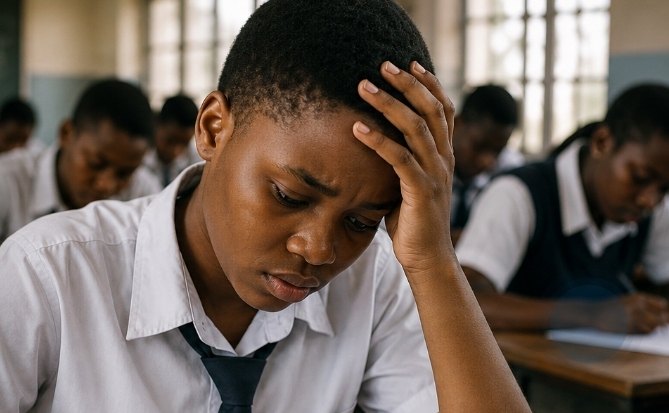
Corruption is a widespread human weakness. However, the vice is endemic in some countries compared to others, which makes all the difference between development and progress.
The negative impacts of corruption are pervasive and affect all the major socio-economic sectors of a country.
The misappropriation of national resources is one of the biggest human rights abuses. Civil servants or anyone in their personal capacity who denies the public services because of theft of public revenue commits a serious crime.
For instance, dilapidated roads result in a high road carnage due to an increase of road accidents. Similarly, lack of drugs in public health facilities leads to a high mortality rate, particularly that of children and other vulnerable demographics.
The annual United Nations International Anti-Corruption Day celebrated on December 9 calls attention to the need for both domestic and global efforts to eradicate the vice as a way of aligning human development with the UN Sustainable Development Goals.
The occasion mobilises and engages various stakeholders from governments and businesses, to civil society, women and youth, in living up to the theme, “Your right, your role: Say no to corruption”.
In some countries, corruption has worsened the Covid-19 pandemic due to theft of both funds and material support by those given the responsibility of allocating them.
In August 2020, the World Health Organization Director-General Tedros Ghebreyesus equated corruption in procurement of personal protective equipment to murder for risking the lives of both the patients and health workers treating them.
This year’s anti-corruption theme also focuses on individual responsibility in fighting graft, implying that one’s rights must go in tandem with the personal responsibility of resisting the vice, as well as blowing the whistle to alert the relevant authorities where it is detected.
China is renowned the world over for its uncompromising anti-corruption stance. Those who engage in corruption do so at their own peril, fully cognizant of severe punishment once caught.
China is among a couple of countries where grand corruption attracts the death penalty. In January this year, a former head of a Chinese state-owned asset management company was executed for taking “especially enormous” bribes to make investments, offer construction contracts, help with promotions and provide other favours.
It takes two to tango. Fighting corruption is easier said than done, even for self-righteous countries that point fingers at others for being corrupt.
For instance, in November 2020, China and the US were involved in a moral and political conflict after China sought the deportation of corruption suspects who had taken refuge in America.
With the lack of an extradition treaty between the two countries, it was estimated that about 100 most-wanted corruption fugitives had fled to the US in 2011 for obvious reasons using forged documents.
However, such deliberate hindrances do not deter China’s unrelenting anti-corruption purge. According to a report released on November 9, 2020 by the National Supervisory Commission and CPC's Central Commission for Discipline Inspection, between 2014 and June 2020, 7,831 fugitives were extradited to China from more than 120 countries and regions, including some of the most notorious corruption suspects with Interpol’s Red Notices. Further, illegal assets worth 19.65 billion yuan ($2.82 billion) were recovered.

Transboundary cooperation is necessary to curb corruption globally. Currently, China has signed treaties and agreements with 81 countries in the fight against graft through extradition of corruption suspects, judicial assistance and asset recovery, among other deterrent and punitive measures.
Ultimately, fighting corruption cannot be divorced from good governance and a sound democratic culture. This best practice was recently outlined by a top CPC official in the Central Committee Policy Research Office, Tian Peiyan, who in a press conference stated that no one in the country is exempt or immune from punishment for any violation of the laws or Party discipline.
He noted that a total of 10 deputies to the National People's Congress (NPC), China's top legislature, have been removed from office since the start of the 13th NPC in 2018 due to malpractices.
President Xi Jinping has led China’s anti-corruption purge from the front, not sparing those he termed in an article published in the 22nd issue of CPC’s “Quishi” journal on November 16, 2020 as “tigers” – high level officials – and “flies” – the low-ranking officials.
Records released by China's Supreme People's Procuratorate reveal that the country’s judicial system closed 28,000 graft cases of embezzlement, bribery and dereliction of duty, involving 33,000 people, including 18 former officials at the provincial level and above.
Such actions speak louder than perennial threats of punishment which many governments are accustomed to in the fight against corruption. Where ‘heads roll’, all citizens regardless of their social and economic status are aligned to the law for fear of dire consequences.
And this is not just about public servants since corruption is a two-way traffic. Private sector players are also equally vulnerable to corruption in pursuit of business opportunities from the government. And they must also play by the rules.









![[PHOTOS] Calm prevails in Kisumu, Homa Bay](https://cdn.radioafrica.digital/image/2026/06/dff8923b-c99a-4f40-a4be-cc996653e4e0.jpg)