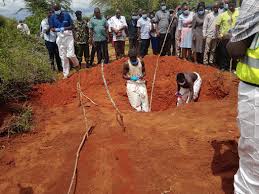
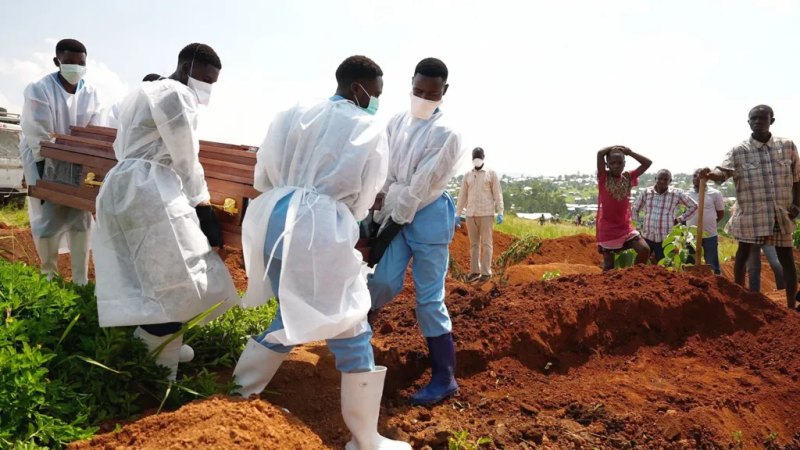
Only 66 DNA samples from more than 400 bodies retrieved from the Shakahola forest have been successfully
matched with samples from families.
The national government says it cannot release the
remaining bodies, which are still lying at the Malindi
mortuary, because families have not yet come forward to
claim them or provide DNA samples.
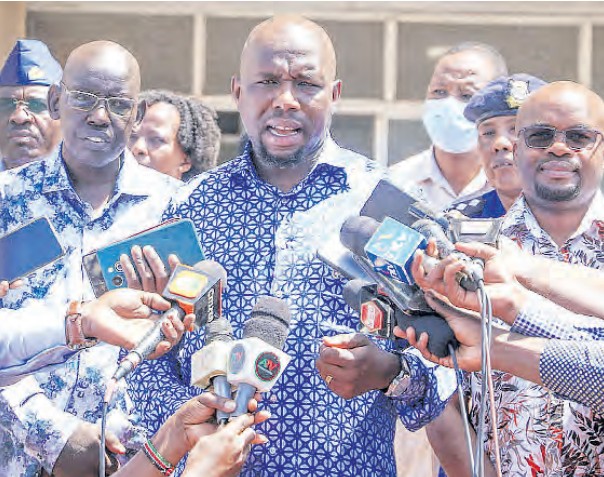
Interior CS Kipchumba Murkomen urged affected
families to come forward and submit their samples.
He made the appeal after a visit to the Government
Chemist laboratory in Mombasa, where he witnessed
the ongoing DNA analysis process.
Last month, there were reports that the delays in
matching the DNA samples are caused by the lack of
funds.
The high costs of tests also hinder the speed of DNA
matching.
This, according to the government chemist, means the
families will have to wait longer to identify the bodies.
However, on Monday, Murkomen said funds are not
the major issue.
“The biggest problem is not funds. More people need
to come out and give their DNA samples for matching,”
the CS said.
He said the only place money is needed is in the government chemist and the DCI lab.
This will help in forensic investigations.
“That is why I visited the government chemist in
Mombasa and we have plans to build a more modern
facility and ensure they get the latest equipment to
ensure future investigations, not only for Shakahola, get
dealt with effectively and efficiently,” Murkomen said.
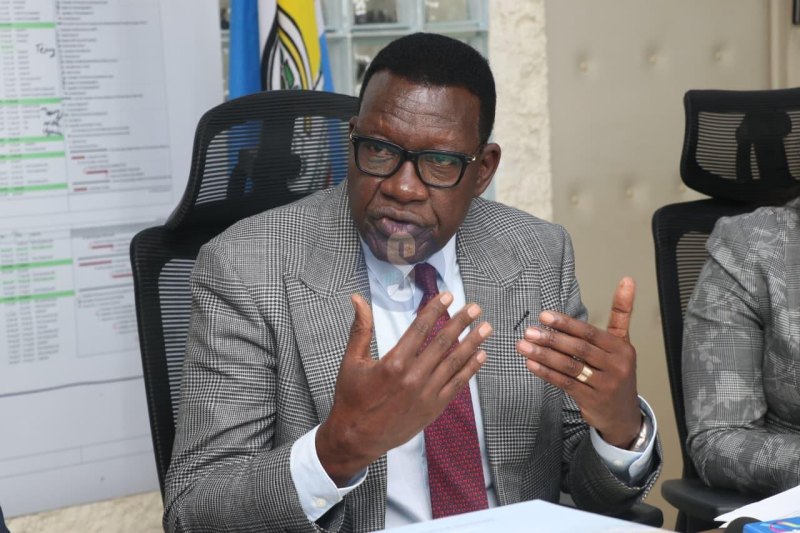
Joseph Kimani, the head of forensic directorate, said
because the Shakahola incident involved exhumed
remains, the DNA in the bodies had become significantly
degraded thereby requiring not only the ordinary extraction protocols.
“You have to use very highly stringent chemical regimens because the DNA within those exhumed remains,
you suspect could be very highly degraded,” Kimani said.
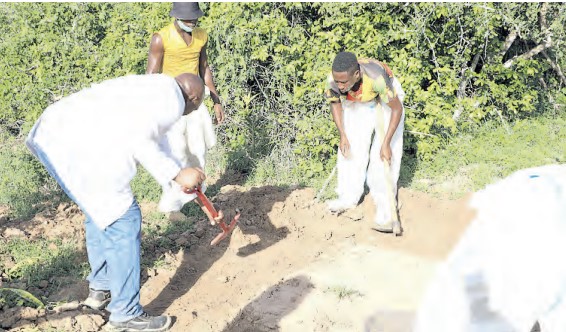
When they were being exhumed, the Shakahola bodies
were at varying stages of decomposition, complicating
the DNA extraction process.
Kimani said there is an abundance of humic acid in
the soil where the bodies were buried which degraded
the DNA much quicker.
He said when the number of bodies from a scene is
high, it makes it extremely tedious to undertake the
DNA process because you require three times the number of bodies to compare with.
Due to the sheer number of bodies collected from the
Shakahola forest, and the deteriorated state of the bodies, a Polymerase Chain Reaction test is required.
However, this test is not available in the country and
the cost of outsourcing it is prohibitively high.
“The procurement processes are lengthy and the kits
are expensive. One kit to just carry out 200 rounds is
almost a million shillings,” Kimani said.