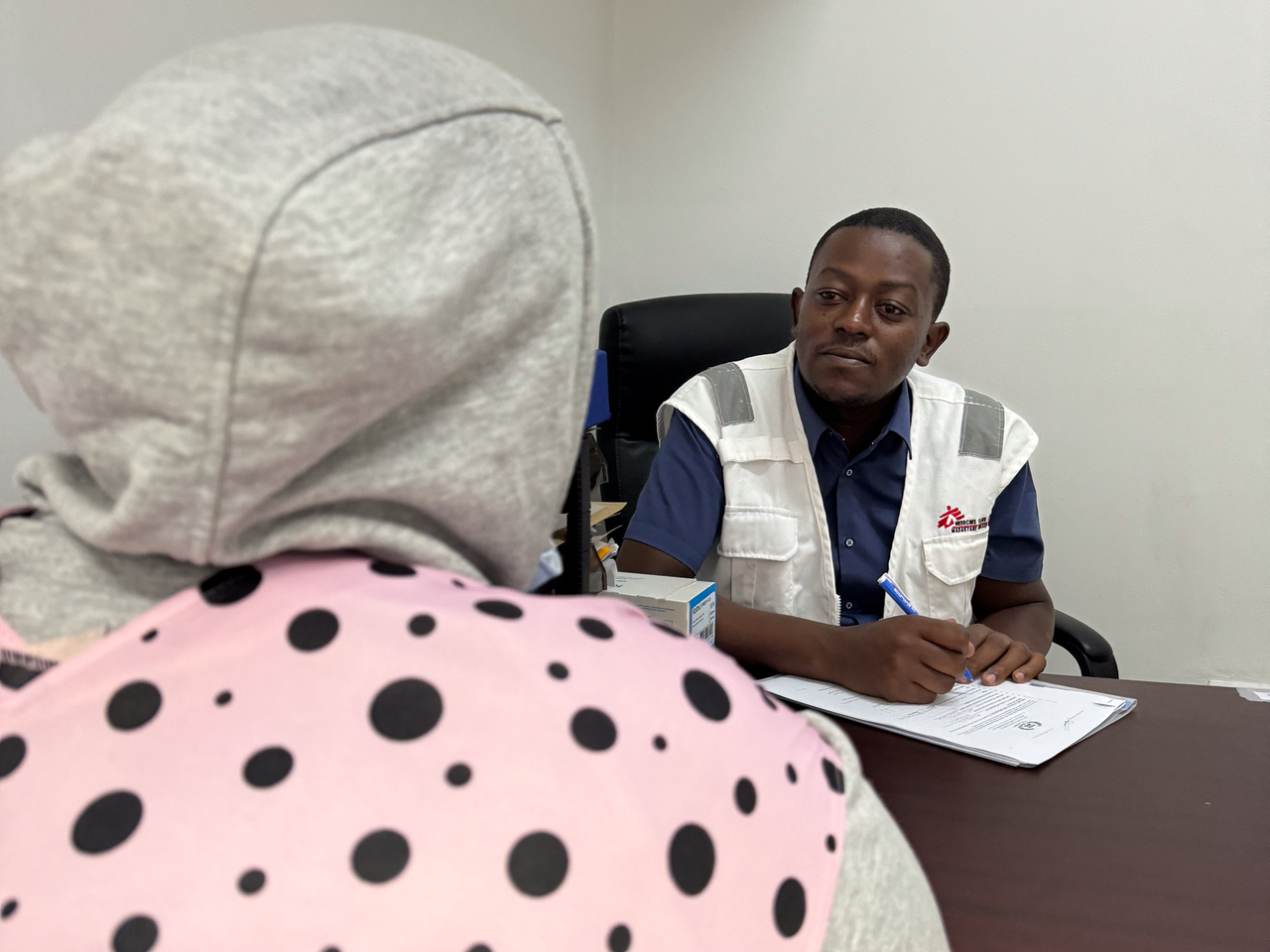
MV* (not her real name) has been to hell and back. Her life in the past six months has been nothing short of a script from a horror movie.
In June MV, 41, was drugged, gang-raped and left for dead in Nairobi, where she had just arrived to take up a house help’s job.
“Waliniharibu (they destroyed me),” she says amid sobs. The criminals not only raped her but also sodomised her.
"I don't understand how all this would happen to
me. Am I a child of a lesser god?”
I meet MV at the Médecins Sans Frontiers (Doctors Without Borders) medical facility in Mathare slums, where she has been receiving treatment.
Our interview is pensive, frequently interrupted by emotional breakdowns. I finally muster the courage to ask her what happened, after several reassurances that her identity will not be revealed.
“It was in June when I received a call from a friend [name withheld], who told me she got a house help job for me in Nairobi. Excited, I borrowed fare and boarded the next bus to Nairobi,” MV narrates.
When she alighted at Afya Centre, she called the woman, who showed up after a few hours, took her phone and promised to come back with her would-be employer.
LEFT FOR DEAD
Minutes turned into hours and soon it was dusk. Not knowing what to do, MV sat on a stone next to the bus stop, still hoping that the woman would show up.
“There was a woman selling jackets next to me and when I asked her if she could give me a place to spend the night, she dismissed me, calling me a prostitute,” MV says.
Stranded, with no money to go back home or a place to spend the night, she held to the elusive hope that her ‘friend’ would show up.
Around midnight, three hooded men approached her. “One of them wore black gloves. He put his gloved hands on my face and the next time I woke up, I was lying next to a river, writhing in pain and in bloodied clothes,” MV says.
“Before I fully regained consciousness, I could hear them say, ‘Huyu hawezi amka tena, amekufa’ [this one can’t wake up, she is dead].”
She lay there until dawn, when she finally mustered a little strength to call for help.
“The first two women dismissed me as a criminal and left. But luckily, another one showed up and took me to Kamukunji police station,” she says.
Police officers at the gender desk were very kind to her. They quickly called an ambulance and referred her to MSF clinic in Mathare, a move she describes as the reason she is still alive today.
At MSF, she was first given food and fresh clothes. “They then put me on medication to prevent HIV infection, pregnancy and sexually transmitted diseases,” MV says.
After two and a half months of treatment and counselling, attempts to reintegrate her back to the society (her home village) in September did not bear fruit because it is the same time that she lost her son, 21, in a road accident.
In October, the woman who lived with her and her son in the village after she broke up with her baby daddy kicked her out.
“She told me she was tolerating me because of the funds she was receiving from my son’s sponsor [a good Samaritan] abroad. This broke me because I was not only mourning my son but had also become homeless,” MV says.
MV decided to call her baby daddy, who sent her bus fare to his place, only for his wife to show up two days later.
“I didn’t know he had remarried. When his wife showed up he pretended not to know me and accused me of spiking his drink in order to have sex with him. He beat me up very badly, a neighbour had to intervene,” she says.
Desperate and without a home, she painstakingly set off for Nairobi to the only facility she knew she could get help from, MSF.
SODOMISED BY GANG OF FIVE
Daniel* left home for Thailand in October last year, hoping for a better life, only to come back with no money and scars of sexual abuse.
To buy an air ticket, he sold all his household items
and borrowed Sh50,000 from a family friend. But he ended up in a trafficking
camp.
“Unfortunately, I did not reach Thailand. They holed us up in a dilapidated camp in Mynamar and subjected us to very little or nothing to eat,” he says.
When Daniel, who identifies as queer, demanded to be taken back to Kenya, the camp supervisors slapped him with a $4,000 (Sh517,000) fee they claimed they had paid his agent back in Kenya.
“They threatened to kill us and throw our bodies into a river if we did not pay that cash,” he says.
Stranded, he was given the choice of death or sexting old white women with the aim of luring them to some Chinese scammers.
“I chose to survive. The goal was to make them trust us with their financial details and once they gained our trust, we would hand over their details to the scammers, who would steal their cash,” he says.
“From the proceeds, they would pay us and if we did not meet the targets, they would physically assault us and threaten to kill us.”

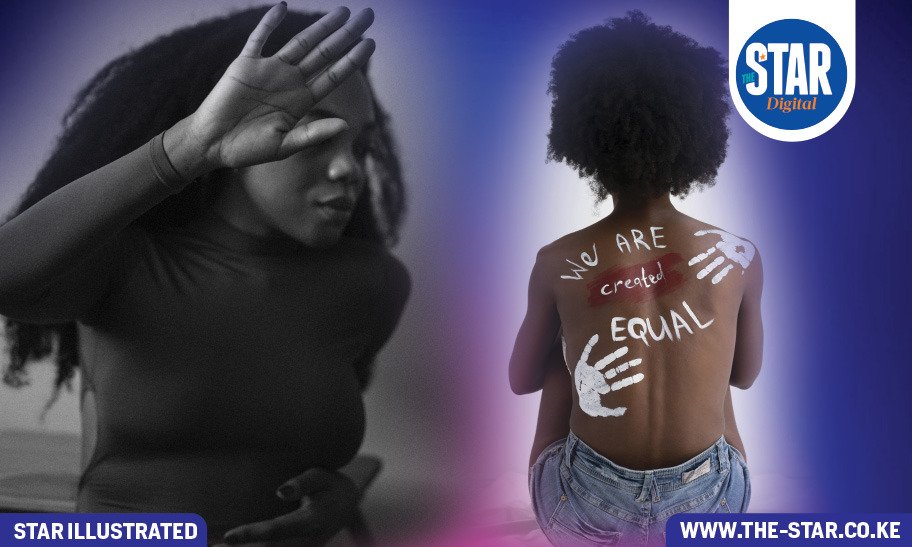
An Infographic about SGBV/ROSA MUMANYI
With time, Daniel saved $3,500 (Sh452,375) and got his passport back. He then used the savings to pay for his freedom.
But before he left, one of the four Kenyans he was with told the supervisors that he was queer and that’s when all hell broke loose.
“At night, when I was just about to go to bed, five of them came into my room. They pulled down my pair of trousers and boxers and gang-raped me,” Daniel says. “It was a horrific ordeal that left me exposed to many illnesses.”
The fear that he could be exposed to HIV and STIs
added to the physical trauma he experienced.
Luckily for him, all the camp victims were rescued and taken to a military camp. The International Organisation for Migration would later pay for their tickets back to Kenya.
“Due to the physical and emotional trauma I experienced, I was referred to an MSF facility in Mathare.”
Because he visited the facility more than 72 hours after the assault happened, he was tested for HIV and was given a Hepatitis B injection and some antibiotics to prevent STIs. He was then counselled and placed in a shelter
In the past year, between November last year and October, MSF treated 3,725 survivors of sexual and gender-based violence.

MSF nurse Emmanuel Makau at the facility in Mathare, Nairobi./HANDOUT
The organisation treats an average of 310 survivors per month, which is 10 survivors of sexual and gender-based violence per day and one survivor every two hours.
“Six in every 10 sexual violence survivors who received care in MSF-supported facilities knew their perpetrator, who was either a family member or a close person. Others were unknown attackers,” the organisation says in a report.
More than 50 per cent of SGBV cases are referred by the police, a clear indication that many people are not aware that SGBV is a medical emergency.
Over the past year, a quarter of survivors of sexual violence treated at the facilities in Eastlands did not seek medical care within the critical 72-hour window.
This hinders emergency care for the prevention of unwanted pregnancies and diseases such HIV and other sexually transmitted infections, MSF says.
“This is because people are only aware that SGBV is a
crime,” says Emmanuel Makau, a nurse at MSF facility in Mathare.
“While there is nothing wrong with reporting to the police, we would like them to know that the 72-hour window is very important because of the medical significance.
“If survivors present to the hospital first, they can get medication to prevent HIV, pregnancy or STIs.”
HANDLING SGBV EMERGENCY
Makau says when an SGBV patient enters a medical facility for emergency care, he or she is first taken to the triage. Here, medics pick up emergencies, such as bleeding or physical injuries, and provide clothing or even food.
The patient is then referred to a psychologist, who tries to get the patient to open up on what happened.
Thereafter, they are referred to a clinician or nurse for examination and treatment.
If it is within the first 72 hours, they are given post-exposure prophylaxis (Pep) to prevent HIV. They are also given contraceptives to prevent pregnancies. This can be given even within 120 hours of reporting.
Antibiotics are also administered to prevent STIs, such as gonorrhea or chlamydia.
“Luckily for MV when she was first gang-raped, she was referred to the facility within 72 hours and we were able to administer all these treatments,” Makau says.
After examination and treatment, a survivor is given medical legal documents to present to the police to begin the search for justice.
Naaman Oyugi, a psychologist with MSF, says while it is important to visit a health facility immediately after suffering sexual violence, all is not lost for survivors who are checked later.
“Most survivors of SGBV go through shame and guilt. The counseling helps to ground them and explain to them why they feel that way,” he says.
Oyugi says intensive counseling starts after one week, and the duration depends on how a patient responds.
“We teach them how to handle the difficult emotions and ways of coping with the incidents,” he says.
While sexual violence — rape, defilement, child
pornography — are criminal offences under the Sexual Offences Act, 2006, many
Kenyans are not aware that SGBV is a medical emergency.
“It is high time the government and other partners sensitised the public on the need to visit a medical facility first in case of a sexual offence,” Makau says.
“This will help prevent the spread of HIV, unwanted pregnancies and STIs.”
![[PHOTOS] The new Ngong –Naivasha Road viaduct](https://cdn.radioafrica.digital/image/2026/06/64d4f771-4432-4aee-ba3c-2f304c4436ec.jpg)



![[PHOTOS] 'Mr Speaker Sir' Gen Z protester in court](https://cdn.radioafrica.digital/image/2026/06/b3e62d8e-25c3-4780-90f9-4eb48b1ce8a7.jpg)