He was meant to be a lawyer, but fate threw him a different
script, and he ran away with it.
“Immediately after high school, I thought I’d be a lawyer. I had the grades for law, but I was called for
the hotel industry,” John Yegon says.
After speaking to a few people close to him, he was
convinced the hospitality industry is where he fitted best.
“I don’t regret it, honestly, because I love the job. It’s
fun. You meet a lot of people and you get to travel a lot,” he says.
He dedicates all his success to God, saying it is not easy
to get into the industry and become a manager at 24 years of age, and then grow
within the management, with record numbers to boot.
Some of the people who trained him are still in the
same position to date.
“It is favour from God, resilience and hard work.
Opportunities have come in at the right time for me,” he says.
But amidst all the success, he now needs to work on
his work-life balance.
The workaholic has to dye his hair black
frequently to hide the greying that comes with the stresses of managing both
his personal businesses and Hotel Sapphire, which he describes as “the go-to
place for celebrities and government officials”.
Yegon was born and
raised in Ongata Rongai in Nairobi about 38 years ago, and schooled in Lukenya
Academy for his primary before joining Moi Forces Academy, Nairobi, for his secondary education.
He got his Bachelor's degree in Hotel and Hospitality
Management at Moi University in Eldoret in 2010, but had short stints at
Infotrak Research Company and Gap Marketing on a Nokia project, before getting
an offer from Sarova Hotels and Resorts to become a management trainee for
about 14 months.
“The foundation I got as a management trainee was one of the
most valuable things that helped me understand the job, that is hotel
management and its operations,” Yegon says.
He got a lot of insight as he
moved around Sarova hotels as a management trainee, gaining different
experiences in separate establishments.
He graduated at the top of his class as a management trainee
that year, 2012, and was posted to Sarova Whitesands Hotel in Mombasa as a
senior front office supervisor.
“Whitesands was one of my biggest teachers of how to manage
a hotel. At the time Whitesands was, and still is, the biggest resort in
Mombasa with 340 rooms,” he says.
Then a youthful 24, Yegon developed a lot of networks, meeting the who
is who in Kenya and Africa then, including the likes of former Prime Minister
Raila Odinga, former President Uhuru Kenyatta, Rwandan President Paul Kagame,
Uganda’s Yoweri Museveni, among others.
“I had only seen these people on TV, but here I was shaking
hands with them because I was the one receiving them as our guests,” Yegon
says.
Within eight months, he was promoted to a resort assistant
manager, basically being an assistant manager to all other departmental heads,
taking charge when they are not on duty.
That taught him a lot about decision-making under the
guidance of veteran hotelier Mohammed Hersi.
In August 2015, he left for Zanzibar, where he became the
Rooms Division manager at Karafuu Beach Resort and Spa, where all departmental
heads reported to him.
Although Zanzibar is extremely seasonal and was a slow place
for Yegon, it opened him up to a whole different market in terms of
hospitality.
“This is a place where, unlike Kenya, where you bark orders
in a fast-paced environment, you have to literally beg someone to do their
work.
“If you just tell someone to do something, they will take
offence. So you have to find a nice language to use to make them do it,” Yegon
says.
There is a language problem because most people do
not speak English, and one has to literally translate instructions to Kiswahili,
and at the same time watch the attitude of the locals towards expatriates.
In Kenya, he says, the ratio of residents to non-residents
is 80 to 20, while in Zanzibar, the ratio is almost two to 98, meaning
non-residents are more than residents in hotel establishments.
“Patience is one thing I learned a lot in Zanzibar. It brought
me down to earth,” he says.
Although the money was good in Zanzibar, being paid in
dollars because he was an expatriate, Yegon says he felt stagnated.
In June 2018, he left Zanzibar to focus on his businesses
in Kenya.
Back at Whitesands, he could see young people
making a lot of money in Kenya, driving big cars and this got him thinking.
He wanted to make extra money and started using his
networks.
“One day, in 2014, as I was waiting to welcome a guest,
there was this slick Range Rover 2014 model that drove in. Everyone was looking
at the car. It was the latest. When the occupant came out, I realised it was a
friend of mine. I got curious and asked how he made money,” he says.
A year later in August 2015, he opened a company, Jaygon
Agencies Ltd. He had another company by then, Nairobi Cars Ltd, which later went
under after employees stole Sh250,000 from him.
He moved to Zanzibar in the midst of trying to establish his
businesses as a side hustle and the motivation to come back to Kenya was purely
to run his businesses.
However, a week after coming back to Kenya, he received a
call from PrideInn Hotels offering him a job to manage one of their
establishments in Nyali, which was a small one.
“I figured because it was a small place, I could manage it
while at the same time concentrate on my businesses,” Yegon says.
He worked for only a month before he was moved to the
PrideInn Mombasa town branch, which he transformed from a sleepy
establishment to a thriving hub in the CBD, moving to the top in TripAdvisor.
“In 2019, we started posting record sales because I had put
everything in place,” he says.
He learnt the business side of the hotel industry
at PrideInn, resulting in him getting two pay rises which he never asked for.
“During the Covid-19 pandemic, PrideInn Mombasa was the only
hotel that did not close. And instead of getting a pay cut, like everyone else,
I got a pay rise,” he says.
He struggled with his businesses at first because
he did not have capital, and all the potential places he had banked on kept
disappointing him.
“My hair turned grey. I was stressed. I got contracts and
tenders but did not have money to work with,” he says.
But where there is a will, there is a way, and Yegon came to
appreciate this saying because it happened to him.
“Money can make you crack your head until a solution comes
up. That is exactly what happened to me. Somehow, I kept finding money to
honour contracts and get paid,” he says.
Today, he has three construction companies that do both construction and logistics.
He also runs a hospitality consultancy company, Elmira
Accord, which has attracted even the biggest parastatals in Kenya for services.
Hotel Sapphire is now the top hotel in Mombasa CBD because
of Yegon’s ingenuity, experience and resourcefulness.

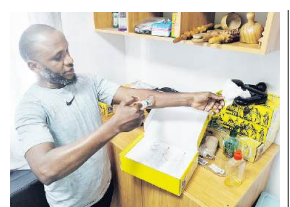
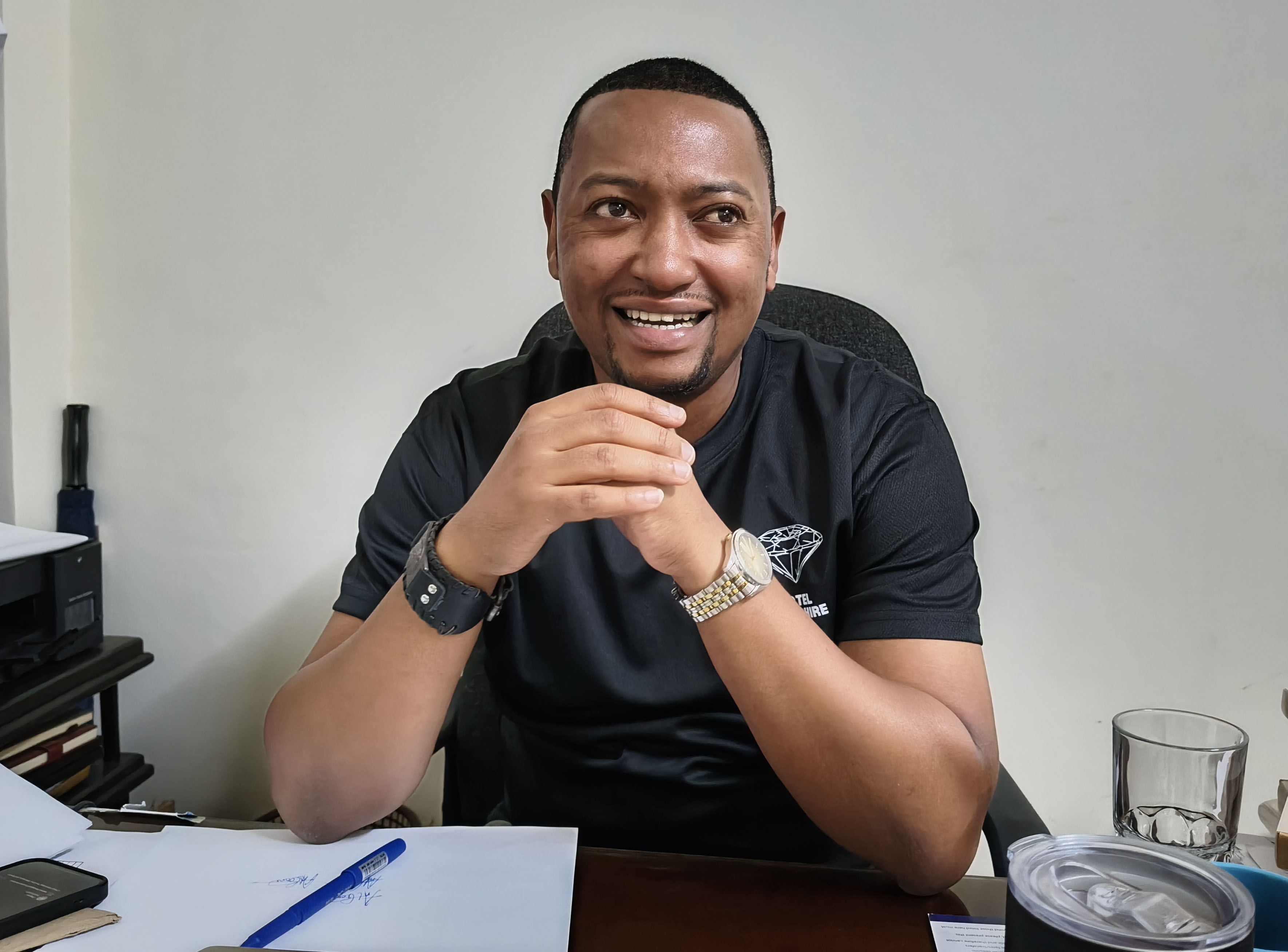 John Yegon at
his office
/BRIAN OTIENO
John Yegon at
his office
/BRIAN OTIENO


![[PHOTOS] The new Ngong –Naivasha Road viaduct](https://cdn.radioafrica.digital/image/2026/06/64d4f771-4432-4aee-ba3c-2f304c4436ec.jpg)