Inside a restoration drive that gives new life to Tana Delta
The land is threatened by environmental change, but a new project led by Nature and the Lamu and Tana River County governments may change that.
by STAR REPORTER
Audio By Vocalize
An aerial view of the Tana Delta. Photo/ Courtesy.
Said Nyara reads the Tana Delta as an open book, its
riverways and wildlife seared onto his very psyche. In the Ozi village, where
the Tana River finally succumbs to the arms of the Indian Ocean, Said is not
merely an autodidact botanical expert or a treasured guide, but a passionate,
stubborn patriot of his fatherland.
"This delta
always gave to us," he murmurs, his voice a calming whisper over the
rustling orchestra of mangroves. "Agriculture, fishing, grazing… our
lifeblood. Today," he pauses, the shadow crossing his face, "it is
crying."
Salt intrudes now onto once fertile grounds, a cruel
reminder of shifting weather. Rivers, once blood-giving vessels, vanish in the
parched earth before ever reaching the ocean. The rains, once regular callers,
now are fickle guests.
The land, a jewel in Kenya's biodiversity crown, is
threatened by environmental change as much as it is by the blunt instrument of
unsustainable development.
But in this speeding crisis, a powerful counter-narrative
is taking hold, driven by Said and a growing chorus of resilient people who see
not collapse, but a precious second chance.
An amazing revolution is afoot, fuelled by Nature Kenya's
commitment and the spirit of cooperation of the Lamu and Tana River County
Governments. People are resisting, empowered by an extraordinary mix of
science, robust culture, and stubborn resolve. And their weapon of choice? The
Green Heart Project – a decade-long initiative expertly designed to wed
prosperity and sustainability in one of Kenya's most environmentally sensitive
landscapes.
Imagine over 28,000 hectares earmarked for
people-focused, sustainable development. It is not an aid initiative; it is a
revolution from the ground up, a "green boots" campaign that is
bringing life to the Delta.
Farmers in the Tana Delta harvest simsim. Photo/Courtesy
Green pastures will fund beef production, which feeds
into a new Garsen meat-processing factory to generate over Sh4 billion a year
on the premium "Green Heart" brand. Sun-baked lands are reserved for
vegetable farming, with the promise of an incredible Sh4.3 billion each year
from tomatoes, kale, onions, and cassava. Paddy fields will once more be green,
yielding an estimated Sh500 million each year, alongside fruit orchards
brimming with mangoes, bananas, and papayas, yielding an estimated Sh1.2
billion each year.
And this vision is already literally changing lives, one
empowered citizen at a time.
Simon Ndima is a chilli farmer whose one acre now earns Sh60,000
every week, a far cry from the unpredictable pay of the past. Maliam Miyesa
began with a free incubator and some chicks too. Now she is the proprietor of a
thriving 700-head poultry enterprise, a tangible reality of her hard work and
success of the project. She has a house and has just purchased a car – tangible
symbols of a transformed life.
"I planted maize and just hoped for the rain,"
remembers Ali Dido (pictured tending to sunflowers), one of the recipients, his voice charged with emotion.
"I plant sunflower, cassava, and fruit trees now – and I earn money
year-round." This shift towards climate-resilient agriculture, along with
expert guidance, is not only holding the Tana Delta together; it's building it
up.
What truly distinguishes the Green Heart Project is its
dedication to a people-first ethos. Steering clear of large-scale, top-down
approaches, the project actively diffuses risk and wealth via small-scale,
locally controlled businesses. And the knock-on benefits are spreading. "Our
agricultural initiatives are unequivocally raising yields, reducing emissions,
and significantly increasing income for local communities," explains
Rudolf Makhanu, Nature Kenya's Ecosystem Restoration Manager.
Dr Paul Matiku, Nature Kenya's Executive Director, points
to the integrated vision: "This is really about reconciling livelihoods
and landscapes. We are showing that it is actually possible to love people and
the planet in one breath."
Above all, the vision is accompanied by government policy
that is finally being put in place with diligent oversight by regulators.
"We need to multiply these outstanding success stories – in crop
production and eco-tourism, through livestock and even honey production,"
emphasises Kennedy Olwasi, Deputy Director, Ministry of Environment. "It
is green business in action, and it is working demonstrably."
Beatrice Zawadi displays a Gala goat breed in the Tana Delta.
At the county level too, the commitment is steadfast.
"Conservation is not a barrier to progress; it opens doors – for jobs, for
peace, for genuine prosperity," states Mwanajuma Hiribae, Tana River
County Secretary. "We are all wholeheartedly invested in this."
The Green Heart Project's success extends to the realm of
beekeeping, a model strategic partnership that pays off. Nature Kenya recognised
the economic obstacles keeping many communities away from embracing this
sustainable lifestyle. They stepped in, providing the initial investment in
beehives that was crucial. But technical know-how and necessary on-the-ground
management come from African Beekeepers Limited, under the management of their
Managing Director, Ernest Simeoni.
"We have a direct stake in the complex management of
the beehives," explains Simeoni, pointing to the harmony between the two
organisations. "The community supplies the necessary land and adds
critical labour, especially protecting the hives. This collaborative effort
creates a high level of ownership and assures the long-term sustainability of
these honey-producing ventures. It's not a matter of sharing hives; it's a
matter of creating prosperous, locally-operated businesses." This
collaboration ensures that the beekeeping enterprises are not handouts but
sustainable sources of income anchored in local engagement and informed by
expert expertise.
Despite the material success, Said Nyara is deeply
concerned. "There are references to vast sugarcane plantations," he
alludes. "Such a project may compromise all that we have taken great pains
to build."
Instead, Said envisions a different kind of development,
one that is organically linked to the Delta's natural beauty. He envisions a
30-room eco-lodge, owned and operated by the community. "With a relatively
modest investment of just Sh5 million," he says, "we could create
many jobs, provide strong protection to this valuable land, and show the entire
country the real, sustainable potential of the Tana Delta."
By 2030, the statistics forecast the establishment of
19,000 new jobs and value worth Sh8.7 billion. But these numbers themselves do
not paint the complete picture of this change. They don't depict the silent
pride that glows in Maliam's eyes, the strong grip of hope in Simon's
handshake, or the unshakeable flame in Said's voice as he looks out across the
Delta towards sunset. We are not asking for much," he says, eyes fixed on
the horizon. "Just a chance to do it right."
This is premium content
Subscribe to Continue Reading
Help us continue bringing you unbiased news, in-depth investigations, and diverse perspectives. Your subscription keeps our mission alive and empowers us to provide high-quality, trustworthy journalism. Join us today to make a difference!

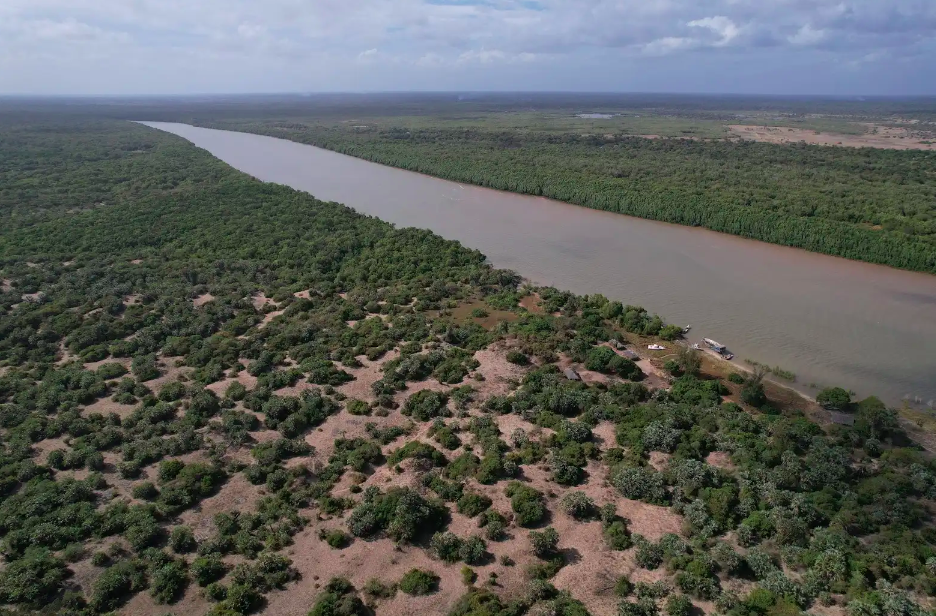 An aerial view of the Tana Delta. Photo/ Courtesy.


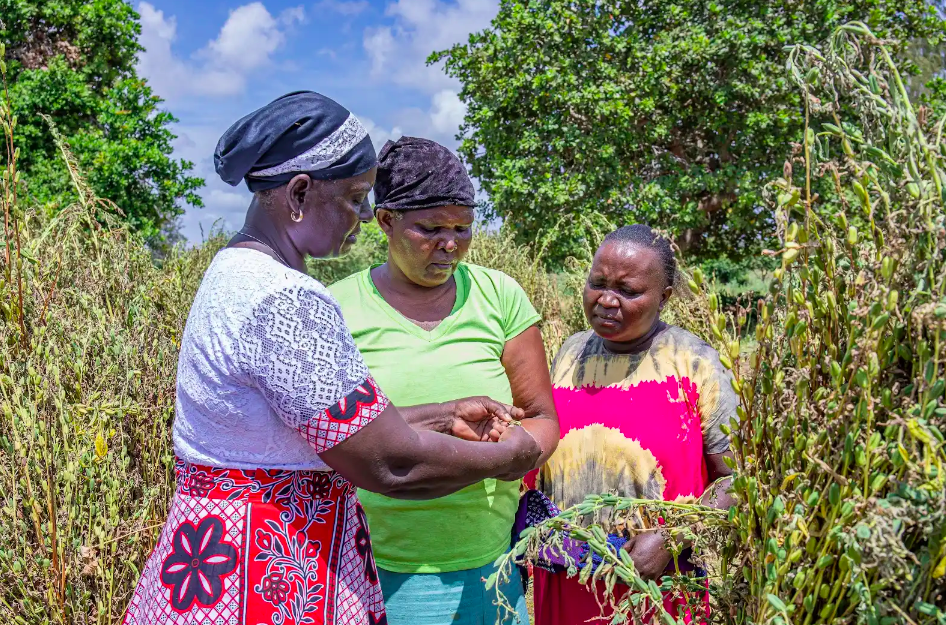 Farmers in the Tana Delta harvest simsim. Photo/Courtesy
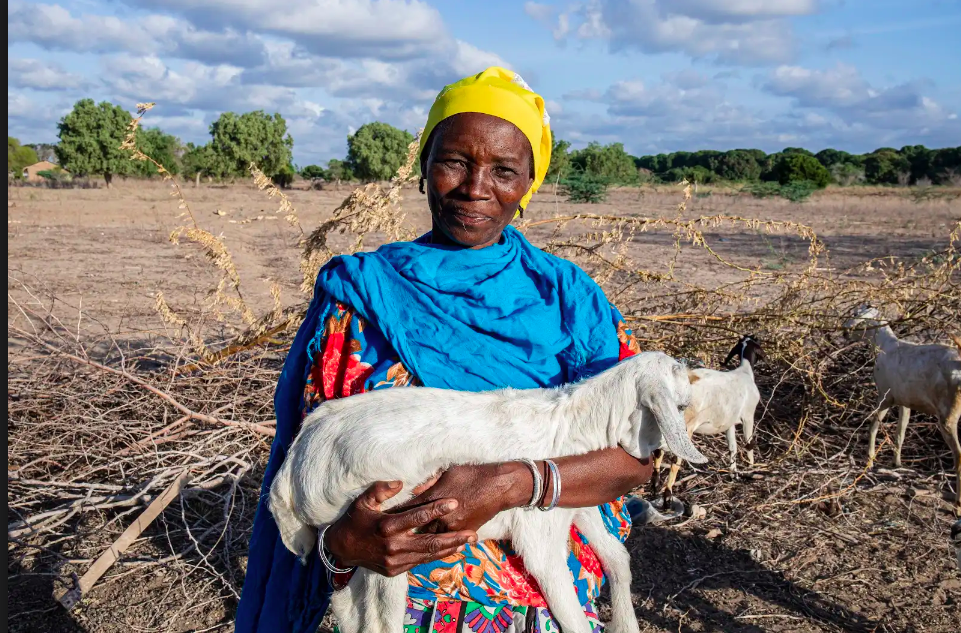 Beatrice Zawadi displays a Gala goat breed in the Tana Delta.