When President William Ruto ascended to office in August 2022, one of the immediate actions he took was to change government-backed maize flour subsidies from consumption to production.
Rather than giving millers money to enable them to reduce the cost of maize flour, the new administration started subsidising inputs, particularly fertiliser.
This change of tack, the President said, was imperative as the subsidies for unga had serious systematic weaknesses and made little economic sense.
The taxpayers, the new administration reckoned, had already spent about Sh4 billion on the subsidies, yet Treasury could hardly account for this huge sum.
“The previous programme of subsidising consumption was not sustainable at all, especially in light of the huge burden of debt we are grappling with,” Ruto said.
In addition, the subsidy programme was increasingly saddling the country with more debt, which was already at staggering levels.
He further claimed the programme had deliberately been designed to benefit and enrich a few.
“The maize subsidies have not benefitted the intended beneficiary who is the common mwananchi,” Ruto said.
“The subsidies were meant to reduce the price of a two-kilo packet of flour from sh230 to Sh100."
The subsidised flour, he added, was ever in short supply, and few people found it on the shelves of retail outlets.
The previous programme of subsidising consumption was not sustainable at all, especially in light of the huge burden of debt we are grappling with
CHEAP FERTILISER
The impact of switching subsidies from consumption to production was immediate as the price of fertiliser dropped sharply from Sh7,500 per bag to Sh3,500 in the first planting season last year, and later to Sh2,500 during the second planting period.
The fertiliser came as a major relief for farmers, who were being heavily weighed down by the astronomical costs of production.
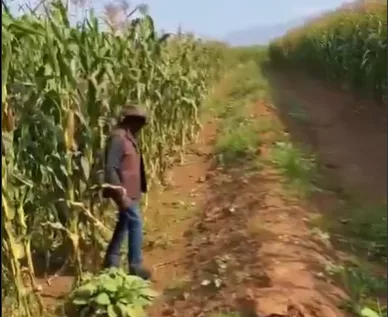
With subsidised fertiliser, Kenyans took to their farms with vigour, and the result was a bumper harvest last year.
It is estimated that total maize production in 2023 was about 65 million bags, a significant jump from the 44 bags harvested the previous year.
While sufficient rains played a major part in the rise in maize yields, the measures Ruto’s administration put in place contributed in no small way to turning around the fortunes of maize farmers.
For instance, an additional 200,000 acres were put under maize cultivation by farmers, who sought to cash in on the affordable fertiliser.
Following the significant rise in production, the price of maize flour has dropped by more than 50 per cent from as high as Sh250 per two-kilo packet to Sh120.
The sharp fall in prices of unga, the country’s staple, has gone a long way in mitigating the burden of cost of living, which had shot through the roof.
Slightly more than a year since taking office, the Kenya Kwanza administration has also rolled out multiple interventions.
These include enhancing extension services and providing quality seeds and pesticides, as well as grain dryers to cut post-harvest losses.
The government is also promoting mechanised farming by buying more tractors, maize planters, rotavators and harvesters.
“We are shifting the responsibility of agricultural productivity from farmers to experts by revitalising extension services,” says Dominic Menjo, food security adviser at the Presidential Economic Transformation Secretariat (Pets).
For a long time, he says, “Farmers have been left to their own devices, yet they do not have the requisite skills to optimally cultivate their farms.”

Pets, headed by Augustine Cheruiyot, is closely working with relevant ministries to revive and reinvigorate various agricultural value chains, as well as other pillars of Kenya Kwanza’s agenda.
“We are committed to delivering on the President’s agenda, which is anchored on bottom-up economic transformation agenda (Beta),” Cheruiyot says.
He said his secretariat is constantly aligning priorities with those of ministries and departments to realise seamless working relationships that drive inclusive economic growth.
“We have made tremendous progress in maize production as well as other various agricultural value chains and already, Kenyans are feeling the positive impact of our agenda,” Cheruiyot said.
A lot remains to be done to fully realise the bottom-up economic transformation dream, however.
“I want to assure Kenyans that the government led by Ruto is up to the task and firmly committed to bringing about real change by stimulating agriculture, which is the mainstay of our economy,” Cheruiyot said.
FARMER DATABASE
Farmers are also being registered on a digital platform known as Kiamis. The aim is to rid the value chain of exploitative middlemen, who have been driving up production costs.
Close to six million farmers have so far been registered on the digital platform in a process designed to develop a comprehensive database of all farmers in the country.
Registered farmers get e-vouchers in form of SMS on their phones from the National Cereals and Produce Board, inviting them to pick their farm-specific share of fertiliser.
The Kiamis platform is part of the government plan to deploy technology in the distribution of affordable and quality inputs to farmers and push for smart, sustainable farming.
This move is informed by the knowledge that inability to access quality inputs has been invariably cited as one of the major hindrances to enhanced agricultural production.
The digital registration also seeks to facilitate the provision of tailor-made solutions to farmers.
“Technology is crucial in mapping out farmers across the country, enabling the government and other players to provide farmer-specific solutions,” Menjo says.
One of the major challenges farmers face is high post-harvest losses.
To address this problem, the government is distributing mobile grain dryers across the country.
Last year, nine of such equipment were given out, starting with the food basket counties.
The first phase of the plan involves the distribution of 100 dryers, targeting 18 major maize-growing counties.
The government plans to deliver 200 dryers, through NCPB, cooperatives and community-based organisations (CBOs) to all the 3.6 million maize farmers.
Poor storage, lack of drying facilities coupled with unfavourable weather elements during harvest have been persistently conspiring to dent farmers’ earnings.
The losses emanate from attack by aflatoxin and rotting of the grains. By using the facilities to properly dry their grains, farmers will cut post-harvest losses, which can shoot up to 30 per cent.
The facilities, with a capacity to dry 14 tonnes of maize grain in two hours, are based at various National Cereals and Produce Board (NCPB) depots.
But, since they are mobile, they can serve farmers as close to their homes as possible.
The equipment will also go a long way in cutting transport costs for farmers who have been ferrying their produce to various NCPB depots for drying.

Agriculture Principal Secretary Paul Ronoh said they are now assured that losses will be greatly reduced with the acquisition of the dryers.
"The losses that we had for years are now minimal. Our main vision was to minimize post-harvest losses, and one of the ways to do this is by supporting our farmers to dry their maize and store it properly," he said in an interview.
For farmers located far from the depots, transport costs have been a major impediment as they are compelled to pay a relatively higher price, undermining their tireless efforts to increase earnings.
The Kenya Kwanza administration is banking on this set of interventions to increase production per acre from eight bags in 2022 to an average of between 15 and 20 bags.
This will, in turn, enhance maize production from 3.7 metric tonnes by 2022 to 8 million metric tonnes in 2027, which is a 116 per cent increase.
The plan also targets to expand land under maize cultivation from an estimated 2.2 million hectares currently to 2.5 million hectares in five years.
Other measures include aggregating the produce, keeping them in modern stores after being properly dried, and establishing soil-testing laboratories.
Farmers are also being organised in cooperatives to enable them to access markets and affordable credit.
Moreover, the warehouse receipt system is being reinforced by expanding access to storage facilities and maximising the use of existing grain silos.
Ruto said the end-game is to make maize farming more rewarding.
"Our investment in processing and value addition is meant to reduce post-harvest losses, eliminate brokers and encourage the youth to pursue farming by availing a ready market and guaranteed returns," the President said.

FAKE FERTILISER PROBE
Farmers are, however, aggrieved by the proliferation of fake fertiliser in the market, which risks derailing the progress towards production of adequate food.
Agriculture CS Mithika Linturi has came under fire over the scandal, with MPs initiating an impeachment motion.
He, however, survived after a special committee formed to investigate the charges levelled against him to be unsubstantiated.
Detectives summoned several officials from government agencies for questioning including managers from fertilizer manufacturing companies.
As the controversy rages, the government has assured farmers that efforts to transform the sector are firmly on track.
"We will deal with fraudsters trying to undermine our food production programme by selling fake fertiliser," Ruto said.
State House spokesperson Hussein Mohamed said the fake fertiliser fiasco is a small hurdle.
It will not hamper the government’s firm commitment to revolutionising agriculture, enhance farmers’ earnings and transform lives, he said.
“Be assured the fake fertiliser issues will be thoroughly dealt with. The President is keen to deliver on his promise to transform agriculture and end the shame of hunger in our country,” Hussein said.
He added that the measures the government has already instituted have begun to bear fruit as evidenced by increased maize production last year.
Agriculture, the spokesperson said, is one of the five pillars of Beta, whose objective is to foster inclusive economic growth and lift millions of “hustlers” at the bottom of the pyramid.
“The Kenya Kwanza team promised to transform agriculture and other four key sectors identified under Beta, and that is precisely what the government will do,” Hussein said.
The Ministry of Agriculture said they had completed the testing on all fertilisers being distributed under the subsidy programme.
All the inputs meet the required quality requirements, except those manufactured and distributed by one company, it said.
"We are engaging the farmers who were affected and have directed NCPB to move ahead and facilitate them by capturing the data and ascertaining the information so they are assisted," PS Ronoh said.
"I want to assure the public that there will be no more distribution of counterfeit farm inputs, not only fertiliser but also seeds and pesticides in our country.
"What you will only be hearing are people in jail and people in court."