A new report by the Senate Energy committee also blames numerous taxes and levies for exorbitant power bills.
The audit report comes at a time when Kenya Power has been under the spotlight following three separate nationwide power blackouts within three months.
The Energy Committee chaired by Nyeri Senator Wahome Wamatinga has directed Auditor General Nancy Gathungu to conduct a special audit on Kenya Power’s finances, systems and billing systems.
The firm, the country’s sole electricity distributor, has been incurring unusually high losses and grappling with huge debts running into billions of shillings.
Consequently, the firm has attracted several lawsuits, some restricting procurement, thus degrading its operations.
The panel released its report after several months of enquiry into the high cost of electricity.
According to the report, Kenyans are shouldering the cost of losses associated with transmission and distribution of power – otherwise known as system losses – by Kenya Power and Lighting Company.
“The system losses experienced by KPLC are at about 26 percent against an industry standard of 16 percent in the year 2022,” the report states.
The system losses have hit a record in recent years, a scenario that has significantly contributed to the high cost of electricity.
“The system losses experienced by KPLC are at about 26 percent against an industry standard of 16 percent in the year 2022,” the report states.
The percentage losses translate to Sh37 billion. The panel wants the audit to conduct a forensic audit on the losses.
System losses are the difference between the total amount of energy bought by Kenya Power and that which it sells to the customers.
They are triggered by meter tampering and bypassing, deliberately false meter readings and unmetered supply – triggered by theft and illegal connections.
They are costly to the consumers as pay high prices associated with their own usage. This is due to factors that include the high cost of diesel used to generate thermal power.
“Kenya Power has put an elaborate programme in place to reduce system losses from the current 26 percent to 16.5 percent in the next five years, which is expected to contribute towards reduction of the cost of power,” the report quotes KPLC’s submission during the parliamentary enquiry.
In July 2013, the cost of electricity was Sh15.78 per kilowatt hour, and in July 2023 the cost of electricity had increased to Sh33.53 per KWh.
In the report, the committee also cites Kenya Power for signing expensive and skewed contracts with power producers that force consumers to dig deeper into their pockets.
Apart from buying power from Kenya Electricity Generating Company, Kenya Power also buys power from independent power producers (IPPs)
IPPs sign power purchase agreements between themselves and Kenya Power.
IPPs generally build, own and operate power stations. They sell the power generated, in bulk to Kenya Power.
In the deals, KPLC signs contracts that are foreign currency dominated, especially by the dollar, a scenario that forces the company to increase the electricity cost because of the depreciating shilling.
In addition, the IPPs' charges to Kenya Power are as high as Sh25 per unit cost of power.
KenGen on average sells power to KPLC at Sh6 per KWh.
“The PPAs signed by KPLC with IPPs were heavily in favour of the IPPs and had very little scope for review, which adversely affected KPLC’s scope for renegotiation and impacted the cost of electricity to the consumer,” the report states.
According to the report, KPLC does not give preference to IPPs that give discounts to it, and by extension to consumers.
“KPLC should dispatch power based on merit order, giving preference to the cheaper power producers,” the committee recommends.
Most of the IPPs are owned by international firms, partly explaining the reasons for the exorbitant prices.
“The Ministry of Energy and National Treasury should encourage local financial institutions and pension funds to invest in the energy sector with an aim of providing local financial solutions,” the report states.
The committee demanded full disclosure of beneficial owners of the IPPs, within 14 days of the Senate’s adoption of the report.
They include Rabai Power Plant Limited, which is owned by British, Danish and Dutch citizens, and sells a unit cost of electricity to Kenya Power at Sh21.50.
Others are Triumph Power Generating Company, Thika Power Limited owned by Africa Infrastructure Fund, Iberafrica Power (EA) Limited, Gulf Energy and Kipeto Energy.
The committee recommends completion of the proposed 4001220kv Mariakani substation within three months, which would allow for Suswa to Mariakani through Isinya to be energised and therefore allow more geothermal generated power to flow to Mombasa
As at March last year, Kenya Power owed IPPs Sh38.87 billion.
The committee heard that KPLC has a monthly foreign currency requirement of $45 million and 25 million euros to settle its obligations denominated in foreign currencies.
“In view of Sh38.87 billion debts, KPLC should provide a plan on how they intend to service their debt without increase of tariffs within 60 days of adoption of this report,” the report states.
Kenya’s total electricity capacity is 3121MW. It has an energy mix that includes Geothermal, Wind, Solar, Thermal, Hydro and Biomass.
“The Ministry of Energy through KPLC and Independent Power Producers renegotiate the current power purchase agreements with a win-win solution for both parties within 12 months of the adoption of this report,” the committee recommends.
Further, the report reveals how stalled and delayed mega government projects aimed at stabilising the cost of electricity are taking a heavy toll on consumers.
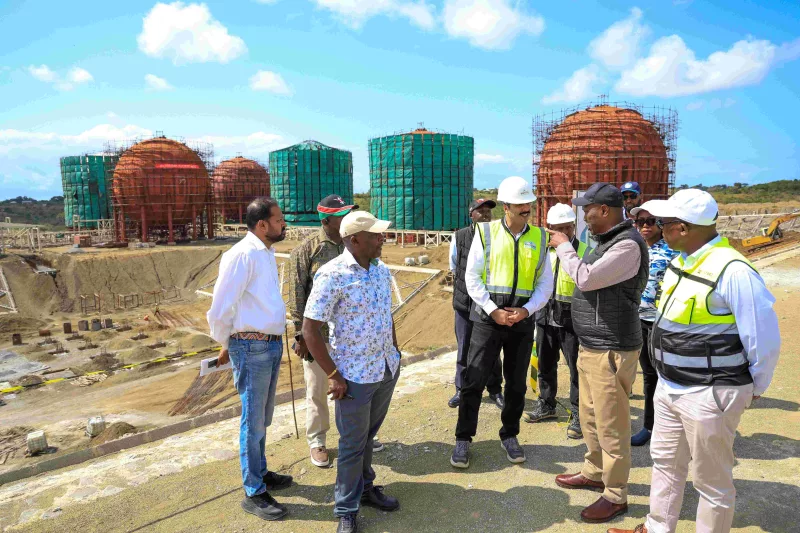
The report shows that several projects undertaken by the Kenya Electricity Transmission Company (Ketraco) to enhance distribution have either been delayed or stalled.
They include the 132KV Narok-Bomet transmission line whose completion would lead to switching off the Muhoroni Gas turbine plant that has the highest cost of transmission in the country.
Others are the Lesson-Toronto line and Garsen-Bura-Hola-Garisa, which have capacity to transmit 220Kv of power.
“The committee recommends completion of the proposed 4001220kv Mariakani substation within three months, which would allow for Suswa to Mariakani through Isinya to be energised and therefore allow more geothermal generated power to flow to Mombasa,” the report states.
The panel also wants the Turkwell-Ortum-Kitale line completed within three months to stabilise power in the western region.
“Ketraco should set aside a percentage of their budget for rehabilitation and maintenance of old transmission lines,” according to the report.
The committee wants the government, especially the National Treasury and the Ministry of Energy, to review levies and taxes, and only retain essential ones.
“The National Treasury and the Ministry of Energy should review taxes and levies on green energy tools like solar panels,” the report states.
The committee faulted the Energy and Petroleum Regulatory Authority (Epra) for failing to submit 27 regulations to implement the Energy Act, 2019 to Parliament for approval.
The regulations are expected to, among other benefits, introduce competition in the energy sector.