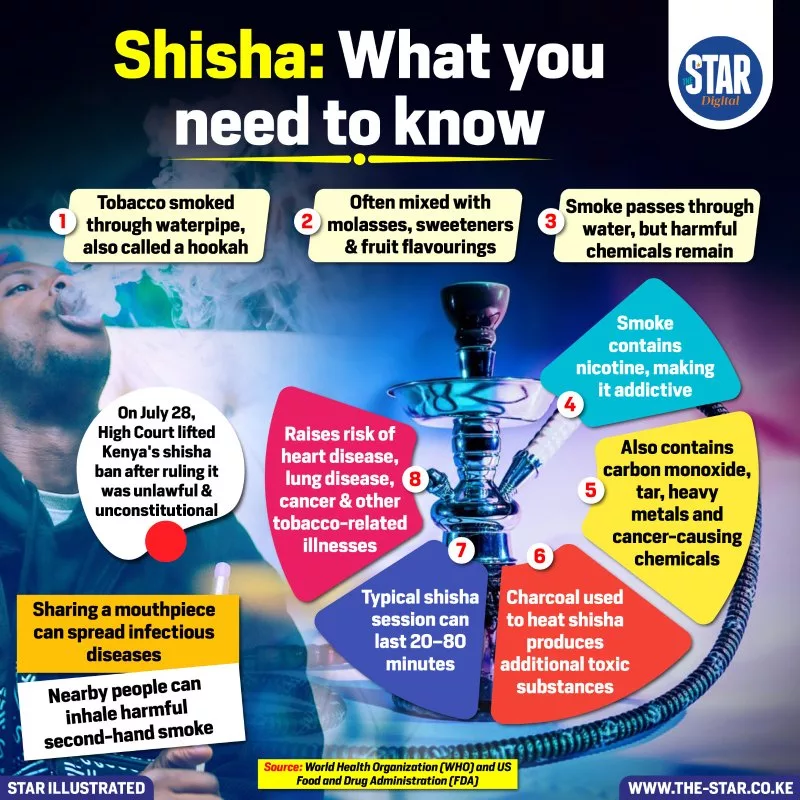
On July 28, Kenya’s High Court lifted the country's shisha ban after ruling that it was unlawful and unconstitutional.
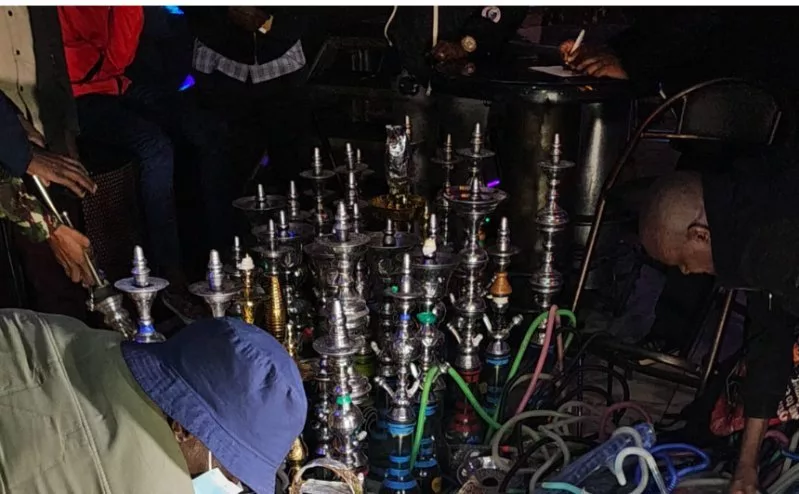
Shisha involves tobacco smoked through a waterpipe, also called a hookah.
The tobacco is often mixed with molasses, sweeteners, and fruit flavourings. While the smoke passes through water before inhalation, harmful chemicals remain in the vapor.
The smoke contains nicotine, which makes it addictive. It also exposes users to carbon monoxide, tar, heavy metals, and various cancer-causing chemicals.
Additionally, the charcoal used to heat shisha produces extra toxic substances during use.
Health risks associated with shisha consumption are significant. It raises the risk of heart disease, lung disease, cancer, and other tobacco-related illnesses.
A typical shisha session can last anywhere between 20 to 80 minutes, prolonging exposure to these compounds.
Beyond individual health risks, social usage presents further hazards. Sharing a mouthpiece can spread infectious diseases among users.
Meanwhile, nearby people who are not smoking can inhale harmful second-hand smoke.