

Kenyans
face the prospect of a wider health crisis after nurses threatened to join the
ongoing nationwide health workers' strike from July 29.
This is after issuing a seven-day strike notice with a list of grievances.
The Kenya National Union of Nurses and Midwives said its members will withdraw services in all county health facilities unless the government resolves issues including the permanent employment of universal health coverage staff, delayed career progression, a new collective bargaining agreement and the implementation of previous labour deals.
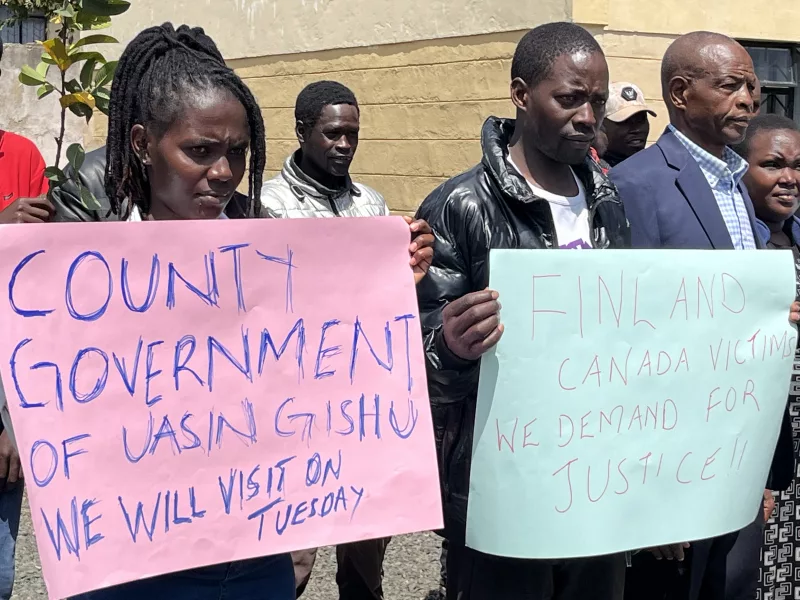
The latest notice comes as thousands of UHC workers continue their strike, piling pressure on both the national and county governments over who should bear responsibility for employing and paying the workers.
In letters addressed to the Cabinet Secretaries for Health and Public Service, the Council of Governors, the Public Service Commission and the Salaries and Remuneration Commission, KNUNM said the government had failed to address concerns affecting nurses despite repeated engagements.
The union wants all UHC staff to be placed on permanent and pensionable terms and retained on the national government payroll instead of being transferred to county governments.
It said all 47 counties are yet to receive payroll support for the workers despite the National Treasury allocating Sh8.6 billion for their absorption and the Ministry of Health indicating that the transition process had been completed.
"To the Kenyan public, we regret the immense disruption and suffering this impending action will inevitably cause to public medical facilities across the nation. However, a demotivated, unprotected, and underpaid nursing workforce is a direct threat to safe patient care," the union said.
Besides the UHC dispute, KNUNM is demanding the immediate implementation of career guidelines for nurses, saying delays have stalled promotions, salary progression and professional development for thousands of staff.
The union also wants the conclusion of the 2025-29 collective bargaining agreement, arguing that prolonged negotiations have denied nurses improved terms and conditions of service.
KNUNM said branch officials across the country had been instructed to mobilise members for industrial action if the listed demands are not addressed before the expiry of the strike notice.
The strike threat comes as the CoG shifted blame for the ongoing UHC workers' strike to the national government, accusing the Ministry of Health of failing to honour agreements reached with counties.
CoG chairperson Ahmed Abdullahi said county governments had not received the funds agreed upon to absorb UHC workers into their payrolls.
"If the national government respected all the agreements that we have had with respect to UHC, there would be no UHC worker out there demonstrating or striking," Abdullahi said.
"All we're saying is, let every person keep their part of the bargain. Put this money where we've agreed it should be put, and we'll pay the UHC workers."
His remarks mark the latest escalation in a dispute that has seen the national and county governments trade blame over responsibility for the more than 7,400 UHC workers recruited under the programme launched during the Covid-19 pandemic.
President William Ruto had directed county governments to place the workers on permanent and pensionable terms after Parliament approved billions of shillings for the exercise.
However, health unions have accused governors of refusing to implement the directive despite the budget allocation.
Abdullahi insisted the dispute should be resolved through intergovernmental structures rather than street protests.
"This matter can only be solved through the intergovernmental architecture. It cannot be resolved through demonstrations in the streets," he said.
He
also rejected calls to return healthcare services to the national government,
saying health remains a devolved function under the constitution.
"The
solution is not to return health to the national government. In any case, the
national government hospitals are not run any better than county hospitals. KNH
is not under county governments," he said.
"To take health back to the national government requires a referendum. It is Kenyans who can do that, not us."
The governors' position sharply contrasts with that of the Health Unions Caucus, which has maintained that county governments have failed to implement court orders and previous agreements governing UHC workers.
Health Unions Caucus chairperson Peterson Wachira said governors were responsible for placing the workers on permanent and pensionable terms.
"Despite ourselves having demonstrated for more than six months and gotten a budgetary allocation of Sh8.9 billion to confirm the universal health coverage staff on permanent and pensionable terms, the governors have refused to do so," Wachira said.
"This is a strike against neglect and inaction by county governments on what they should do."