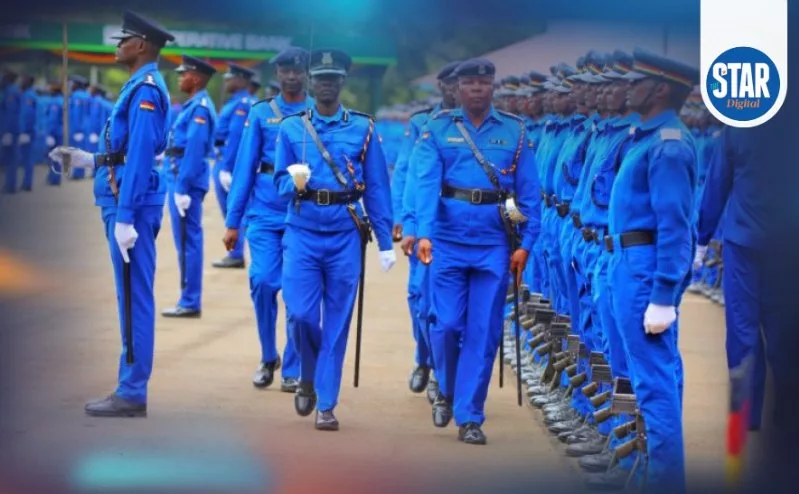
The government has completed the final phase of a three-year salary review for police officers.
The review, which also benefits officers in the Kenya Prisons Service, marks the end of a phased implementation that began in July 2024 after President Ruto approved recommendations aimed at improving the welfare and working conditions of uniformed officers.
Police Constables, the largest cadre in the National Police Service, received some of the biggest salary increases under the latest review.
Officers in the entry-level, Pay Grade One (PG1), have received a Sh1,890 increase in their basic monthly salary, raising the minimum pay from Sh27,470 to Sh29,360.
The revised salary scales indicate that officers across all pay grades have received salary adjustments, although the actual increase varies depending on an officer's salary notch within each grade.
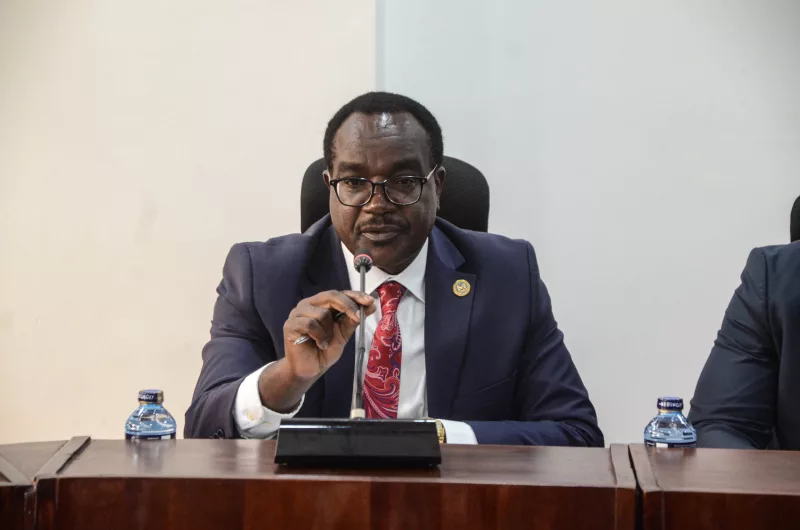
Interior Cabinet Secretary Kipchumba Murkomen had recently assured officers that the government would honour its commitment to complete the final phase of the salary review during the current financial year.
"We committed ourselves that the third and final phase of the salary review will be implemented this financial year. We have kept that promise because the welfare of our officers remains a top priority," Murkomen said during a recent engagement with officers.
The salary review stems from recommendations made by the David Maraga-led Taskforce on Police and Prisons Reforms, which President Ruto established in December 2022 to examine the welfare, remuneration, housing, promotions, medical cover and overall working conditions of officers in the National Police Service (NYS), Kenya Prisons Service (KPS) and the NYS.
The task force found that poor pay, inadequate housing, delayed promotions and limited welfare support had negatively affected morale and recommended a phased salary review over three years to ease the financial burden on the government.
Speaking while receiving the task force report, Ruto pledged to implement its recommendations.
"Our security officers deserve better working conditions because they play a critical role in safeguarding our country. We will progressively implement the recommendations of this report to improve their welfare and effectiveness," Ruto said.
The revised salary structure classifies police officers into 10 pay grades, beginning with Police Constables in Pay Grade One (PG1), Corporals (PG2), Sergeants (PG3), Senior Sergeants (PG4), Inspectors (PG5), Chief Inspectors (PG6), Assistant Superintendents of Police (PG7), Superintendents of Police (PG8), Senior Superintendents of Police (PG9) and Assistant Inspectors General of Police (PG10).
Under the revised salary structure, Police Constables (PG1) recorded the highest increase, with the minimum basic salary rising from Sh27,470 to Sh29,360.
Those in PG2 also received a Sh1,890 increment, bringing their minimum salary from Sh33,690 to Sh35,580.
Officers in PG3-PG10 each received an increase, with the minimum basic salary for Sergeants (PG3) rising from Sh44,595 to Sh46,380.
In the higher grades (PG5–PG10), the annual increments rise progressively from about Sh1,590, Sh1,670, Sh1,730, Sh1,760, Sh2,060, Sh2,290, Sh2,600, Sh2,770, Sh2,970 and Sh3,000, depending on the officer's grade and position within the salary scale.
Senior Sergeants (PG4) get an increase from Sh48,815 to Sh50,600; Inspectors (PG5) from Sh53,290 to Sh55,075; Chief Inspectors (PG6) from Sh59,710 to Sh61,495; Assistant Superintendents of Police (PG7) from Sh64,780 to Sh66,565; Superintendents (PG8) from Sh74,780 to Sh76,565; Senior Superintendents (PG9) from Sh87,140 to Sh88,925; and Assistant Inspectors General (PG10) from Sh96,930 to Sh98,715.
Besides the revised basic salaries, officers will continue to receive enhanced facilitative allowances approved by the Salaries and Remuneration Commission (SRC).
These include house allowance, commuter allowance, prisons allowance, housing supplementation, entertainment allowance, extraneous allowance, domestic servant allowance and annual leave allowance, with the amounts varying according to an officer's pay grade and duty station.
For instance, a Police Constable (PG1) is entitled to a monthly house allowance of Sh9,500 in Nairobi, Sh7,000 in Cluster Two towns and Sh5,500 in other areas, in addition to a Sh3,000 commuter allowance and a Sh7,000 prisons allowance.
Senior officers receive correspondingly higher allowances.
Officers also receive commuter allowances ranging from Sh3,000 for PG1 officers to Sh12,000 for officers in PG10, alongside prisons, housing supplementation and other allowances where applicable.
The phased salary review was designed to prioritise junior officers who form the bulk of the country's security workforce.
As a result, lower ranks received relatively bigger salary adjustments compared to senior officers.
Government officials have maintained that improving officers' welfare is central to ongoing security sector reforms, arguing that better remuneration will boost morale, professionalism and service delivery.
Besides salary enhancements, the Maraga Taskforce also proposed reforms touching on police housing, promotions, healthcare, insurance, modern equipment, counselling services and improved career progression.
Implementation of the wider reforms is ongoing, with the government saying a significant number of the recommendations have already been rolled out.
The latest phase concludes the three-year salary review programme recommended by the Maraga Taskforce. The wider reform agenda, including housing, healthcare, promotions and equipment, is still being implemented, according to the government.