Feed industry calls for reforms to make animal food affordable
Manufacturers have raised concern over the continued rising cost of raw material prices
by AGATHA NGOTHO
Audio By Vocalize
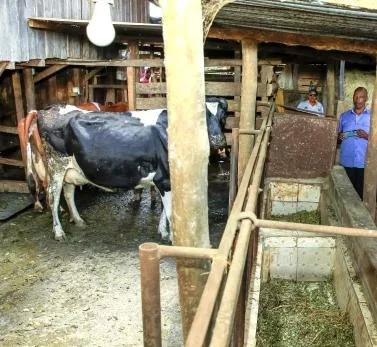
Experts call for inclusion of GMOs to address animal feed crisis./FILE.
Feed millers are calling for science-based solutions to
improve access to affordable, high-quality feed ingredients to restore
competitiveness of the livestock industry across the region.
Animal feed manufacturers from Kenya and across Africa have
raised concern over the continued rising cost of raw material prices over the
past four years.
Association of Kenya Feeds Manufacturers (AKEFEMA) chairman
Joseph Karuri noted that commercial feed prices have risen by approximately 30
per cent, increasing production costs and threatening the sustainability of
poultry, dairy, pig and beef enterprises.
“Today, most surviving manufacturers are operating at only
50 to 60 per cent of their capacity,” he said.
Karuri said the impact on farmers is devastating because
feed makes up the vast majority of their expenses.
Speaking during a side event organised by the International
Service for the Acquisition of Agri-biotech Applications (ISAAA) at the ongoing
AKEFEMA Feeds Exhibition and Confrence (AFEC), Karuri said the global market
has plenty of feed, but there is a catch: most of it is genetically modified
(GM).
About 80 per cent of global soybean and 30 per cent of
global maize are biotechnology products.
While countries like the United States, South Africa and
several European nations have safely used biotech feed for decades, Kenya’s
farmers remain locked out.
Although the Kenyan government lifted its ban on biotech
imports in 2022, court challenges have kept the policy suspended. Consequently,
local manufacturers cannot import cheaper, widely available GM yellow maize and
soybean meal.
The side event was on biotech feed and what opportunities
exist for African animal feed manufactures.
It sought to create awareness on how readily available and
affordable biotech feed ingredients are, and their potential to reduce feed
production costs. In addition to enhancing understanding of the safety and
nutritional benefits of biotech feed commodities.
"If Kenya and Africa want to build competitive
livestock sectors, we must ensure access to safe, affordable and quality feed
ingredients," said Dr Margaret Karembu, Director of the ISAAA AfriCenter.
"If scientific assessments have confirmed these
products are safe, their source should not be a barrier."
She said two major hurdles stand in the way of cheaper feed:
misinformation and local trade barriers.
Karembu said GM crops have been safely grown and eaten
globally for over 30 years, yet fear-mongering still stalls progress.
"Misinformation has become a big business," she
noted, calling for better public awareness to help people make decisions based
on science.


 Experts call for inclusion of GMOs to address animal feed crisis./FILE.