 AI generated
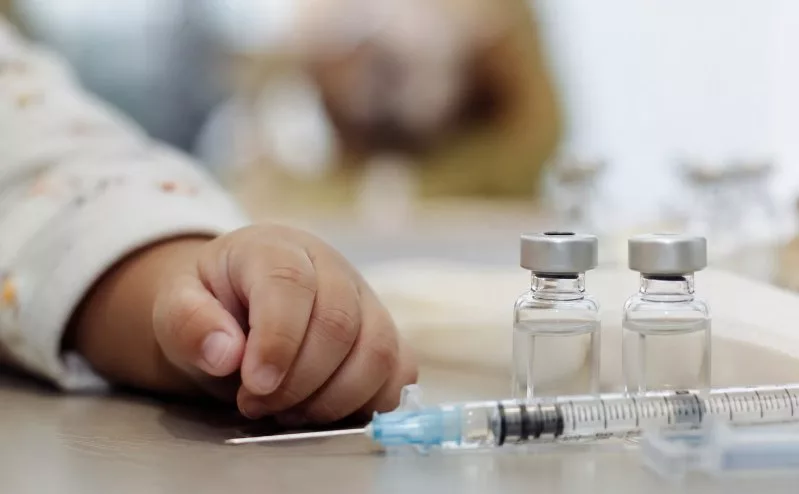
The world vaccinated about 1.5 million more babies against deadly diseases in 2025 than the previous year, but millions of children are still missing life-saving immunisations, leaving them vulnerable to outbreaks of diseases that vaccines have long been able to prevent, a new report has shown.
The estimates released by the World Health Organization (WHO) and Unicef show that childhood immunisation is continuing its slow recovery from the setbacks of the COVID-19 pandemic.
It says about 110 million infants completed the full three-dose diphtheria, tetanus and pertussis (DTP) vaccination schedule in 2025, roughly 1.5 million more than the previous year.
However, the agencies warn that the progress remains uneven, with conflict, displacement, poverty and growing vaccine hesitancy continuing to prevent millions of children from receiving routine vaccines.
Although global vaccination coverage improved slightly in 2025, it remains below pre-pandemic levels, highlighting the challenges of reaching children who continue to be left behind.
An estimated 13.5 million babies did not receive a single routine vaccine during their first year of life, while millions more missed doses needed to complete their immunisation schedules.
The consequences are already becoming evident. WHO and Unicef say gaps in immunisation are contributing to outbreaks of vaccine-preventable diseases, particularly measles, with large or disruptive outbreaks reported in 57 countries during 2025.
"Governments and health workers have helped global vaccination rates bounce back after dropping significantly during the COVID-19 pandemic," Unicef executive director Catherine Russell said.
"But millions of vulnerable children are still being left unprotected due to conflict, displacement, and poverty. We must reach every child, and we must rebuild trust where it is fraying. No child should suffer from a disease that a simple vaccine can prevent."
According to the agencies, children living in countries affected by conflict and humanitarian crises remain among the hardest to reach, as damaged health systems, insecurity and displacement continue to disrupt routine immunisation services.
The report points to Syria and Sudan as examples of how conflict can shape vaccination efforts in different ways.
While Syria experienced a decline in immunisation coverage over the past year, Sudan recorded significant improvements after expanding access to vaccination despite ongoing conflict, demonstrating that progress is possible even in challenging environments.
WHO and Unicef also warned that declining immunisation is no longer limited to countries facing conflict.
In some middle- and high-income countries, where vaccines are readily available, vaccination rates are slipping because of weakening political commitment, structural barriers and growing vaccine hesitancy.
"Every child, whether born into wealth or poverty, peace or conflict, deserves the life-giving protection that vaccines provide. Immunisation is one of the most cost-effective, most equitable, and most reliable interventions for protecting children's health and well-being," WHO Director-General Tedros Ghebreyesus said.
"Our greatest security begins with ensuring that everyone, wherever they may live, is protected from deadly diseases that vaccines have the power to prevent."
Despite the challenges, the agencies said sustained investment in immunisation programmes over the past 25 years has significantly reduced the number of children receiving no vaccines at all and expanded protection against more preventable diseases in many countries.
However, they cautioned that those gains are increasingly under threat from funding cuts to global health programmes and weakening disease surveillance systems, warning that without sustained investment, recent progress could be reversed.
WHO and UNICEF called on governments and development partners to strengthen immunisation programmes, particularly in conflict-affected settings, tackle vaccine misinformation, increase investment in vaccination services and reinforce disease surveillance systems to ensure every child can be reached.
The agencies said the latest findings underscore a simple but urgent reality: while more children are being vaccinated, millions remain unprotected, leaving preventable diseases with opportunities to spread.