 The Supreme Court /FILE
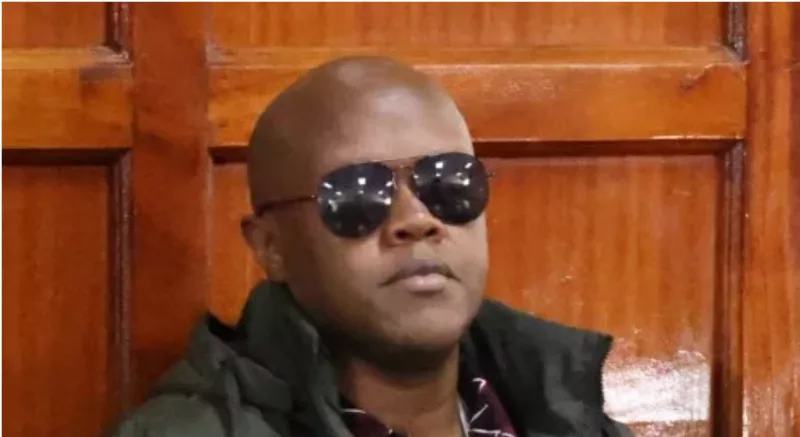
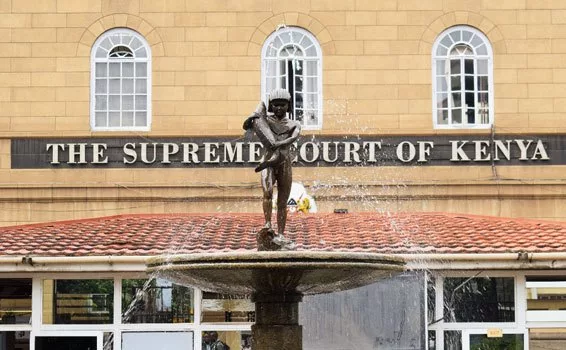
Former Venezuelan diplomat Dwight Sagaray and a co-accused have secured a final opportunity to challenge their murder convictions before the Supreme Court.
Court of Appeal Justices Patrick Kiage, Jamila Mohammed and George Odunga certified that the case involves matters of general public importance, granting the applicants leave to appeal.
Sagaray, the former first secretary at the Venezuelan Embassy in Nairobi and Ahmed Mujivane Omido were convicted for the July 2012 murder of acting Ambassador Olga Fonseca.
Fonseca, 57, was found strangled in her Runda estate residence in Nairobi just weeks after arriving in Kenya to take up her posting.
The High Court in Nairobi prosecuted five people for murder, among them Sagaray and Omido. One of the defendants was later acquitted.
The prosecution called 41 witnesses during the trial. Evidence revealed that Sagaray, who had been overseeing the embassy after the previous ambassador’s recall, harboured animosity toward Fonseca over control of the mission.
The trial court found that the four convicted men held multiple meetings in Nairobi to orchestrate the killing, for which they paid Sh486,000. A separate suspect, Mohamed Hassan, remains at large and has never been apprehended.
The applicants seek to overturn the Court of Appeal’s judgment of March 7 last year, which dismissed their appeal against conviction and a 20-year prison sentence for the murder.
“According to the applicants, their intended appeals qualify to be of general public importance as they intend to ask the Supreme Court to settle with finality several critical questions on diplomatic immunity, its waiver and the concept of residuary immunity, the contours of the common intention principle and the place of motive in criminal law.”
The lower courts ruled that Sagaray lost his protection because Venezuela cancelled his diplomatic passport, terminated his role and waived his status.
The defence argues that the courts confused a cancelled passport with a formal waiver of immunity. Under the Vienna Convention, any waiver of diplomatic immunity must be explicit, clear and unambiguous.
They contend the court wrongly relied on an unofficial translation of a Spanish diplomatic note. Additionally, they argue Sagaray remains protected by "residuary immunity"—which shields a diplomat's official acts even after their service ends.
In granting certification, the appellate court acknowledged that the intended appeal raises “substantial point[s] of law on diplomatic immunity”.
"This court identified the issues falling for determination as: whether or not the first appellant enjoyed diplomatic immunity and could be tried for murder; whether the prosecution proved the ingredients of the offence of murder against the four appellants beyond all reasonable doubt; whether the retracted confession of the fourth appellant was properly admitted in the evidence; and whether the conviction and sentence were safe.”
The court also noted the applicants’ contention that both the trial court and the Court of Appeal failed to determine the second applicant’s alibi defence.
The three-judge bench found that the issues raised warranted Supreme Court scrutiny. These included the proper standard of proof in cases relying on inference and common intention, and the consequences of a lower court's failure to address a defence raised by an accused person.
The Court of Appeal observed that its own judgment "effectively creates a potentially unsettling and confusing precedent by which several accused persons will be convicted for the most serious of crimes based on 'guilty by association'".