 JUDICIARY/FILE
Victims of the 2017 Baby Pendo case have urged the High Court in Kisumu to refer their constitutional petition to the Chief Justice for a possible empanelment of a three-judge bench.
They argue that the petition raises weighty constitutional questions regarding the prosecution of several senior police officers.
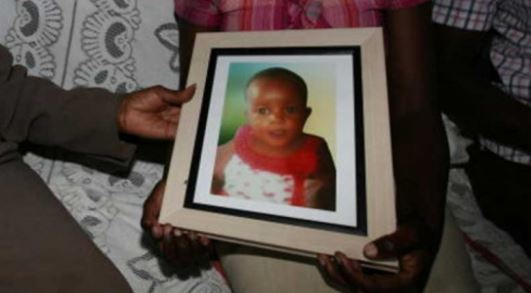
At the centre of the petition before Justice Joe Mkutu Omindo is the death of Baby Samantha Pendo, who sustained fatal injuries during a police operation in Nyalenda shortly after the announcement of the August 2017 presidential election results.
The petition, filed by 44 victims alongside several human rights organisations, challenges the Director of Public Prosecutions' (DPP) decision to discontinue proceedings against eight senior police officers while pursuing charges against four lower-ranking officers.
The victims argue that the decision unlawfully excluded senior commanders who had previously been linked to the case through the principle of command responsibility.
When the matter came up for directions on Wednesday, lawyers representing the victims maintained that the request for an expanded bench should be determined before any other issues raised in the petition.
Senior Counsel Paul Muite, appearing for the victims, argued that the application for empanelment should take precedence over jurisdictional objections raised by the Director of Public Prosecutions (DPP).
"We are of the view that the issue raised in the petition and on the empanelment prayers is what should proceed first," Muite told the court.
He noted that the petition raises significant constitutional questions, including whether the DPP lawfully terminated criminal proceedings against eight senior police officers who had initially been listed among 12 suspects under investigations linked to the Baby Pendo case.
According to Muite, the issues raised in the petition are substantial enough to warrant determination by a bench of three judges rather than a single judge.
He further submitted that even the DPP's objection challenging the court's jurisdiction should be left for determination by an expanded bench if the Chief Justice empanels one.
"The issue of jurisdiction should be considered by the empanelled bench of three judges. I plead that you consider granting us the prayers for empanelment. That should be the priority," he said.
Representing the DPP, lawyer Jalson Makori opposed the application, saying his office had already challenged the petition on grounds that the court lacks jurisdiction and that the issues had already been decided, resulting in them being res judicata.
While acknowledging that jurisdiction could be raised at any stage of proceedings, the judge questioned whether the issue of res judicata could properly be canvassed without delving into matters that may require evidence.
Justice Omido directed respondents opposing the application for empanelment to file their responses before the matter is mentioned on September 28, 2026, for further directions.
Notably, in the related criminal case where four remain on trial, the High Court ordered measures to safeguard the identities of victims and witnesses after concerns were raised over unredacted court documents.