
Kenya and India will convene a high-level health investment
roundtable to accelerate local pharmaceutical manufacturing, vaccine production
and healthcare innovation.
This comes at a time the government seeks strategic
partnerships to support the rollout of Taifa Care and strengthen the country's
health security.
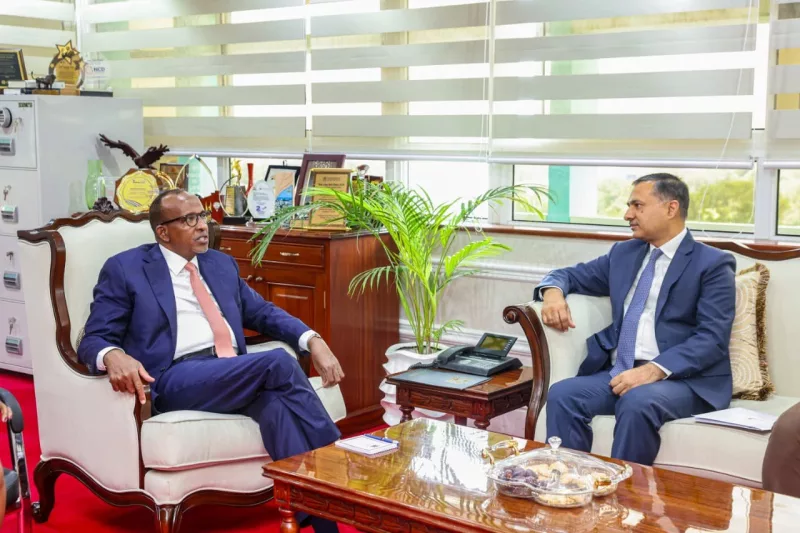
The initiative emerged from bilateral talks between Health
CS Aden Duale and Indian High Commissioner Adarsh Swaika.
Following the meeting at Afya House, the two sides agreed to
bring together key government stakeholders to identify investment opportunities
and deepen cooperation across the health sector.
The proposed summit is expected to focus on attracting
investments in pharmaceutical manufacturing, technology transfer and healthcare
innovation, positioning Kenya as a regional hub for medical production, while
reducing dependence on imported medicines and vaccines.
The two countries also committed to fast-track the
Kenya-India MoU on Cooperation in the Field of Medicine, which will provide a
framework for collaboration with clearly defined priorities, implementation
timelines and measurable outcomes.
Speaking after the meeting, Duale said Kenya is keen to
leverage India's globally recognised expertise in pharmaceuticals, healthcare
innovation and digital public infrastructure to support ongoing reforms aimed
at achieving Universal Health Coverage through Taifa Care.
"As Kenya advances Universal Health Coverage through
Taifa Care, we see immense opportunities to deepen our partnership with India
in ways that will strengthen health security, innovation and sustainable
development for the benefit of our people and the wider region," Duale
said.
The discussions covered a broad range of priority areas,
including health financing, digital health systems, telemedicine, specialist
medical training, clinical fellowships and professional exchanges to improve
healthcare delivery and build a more resilient health system.
Duale also briefed the Indian delegation on Kenya's ongoing
health reforms, including the implementation of the Social Health Insurance
Fund, which he said has so far registered more than 31 million Kenyans.
Beyond expanding access to healthcare, the partnership is
expected to support Kenya's ambition of building domestic manufacturing
capacity for essential medicines and vaccines. This is an area the government
has increasingly prioritised since the Covid-19 pandemic exposed Africa's heavy
reliance on imported medical products.
India, often referred to as the ‘pharmacy of the world’, is
among the world's largest producers of generic medicines and vaccines, making
it a strategic partner as Kenya seeks to develop local pharmaceutical
production, strengthen supply chains and improve access to affordable
medicines.
The two governments further explored collaboration on public
health preparedness and health security amid increasing regional disease
outbreaks, with a focus on strengthening surveillance systems, emergency
preparedness and rapid response capabilities.
Officials said combining India's expertise in pharmaceutical
manufacturing, digital health and medical innovation with Kenya's strategic
position as East Africa's economic hub could create new opportunities for
investment, technology transfer and regional healthcare services.
The meeting was attended by Public Health PS Mary Muthoni,
Health director general Patrick Amoth and acting Kenya National Public Health
Institute CEO Kamene Kimenye.