The Kajiado government has accused the Kenya Wildlife Service of frustrating ongoing efforts to transfer the management of Amboseli National Park to the devolved unit.
Governor Joseph Lenku said KWS was openly sabotaging President William Ruto's directive on the takeover of Amboseli National Park.
“We wish to ask KWS to keep off our Amboseli. While all transfer functions were completed in November 2025, the revenue-sharing arrangement was to take effect on July 1,” he said.
Lenku said KWS had refused to allow county government staff to access the park gates to enable the revenue-sharing arrangement to take effect.
“We will collect our revenue and do not radicalise a peaceful community.”
Through its communications officer, KWS urged the governor to allow a case filed in court to proceed.
Lenku, however, insisted the community would take over Amboseli peacefully or otherwise.
He said the county had given KWS one week to stop harassing its staff.
“We are telling KWS you cannot make the President's pronouncement be in vain.”
Lenku, who was flanked by group ranch officials, said the community was feeling provoked beyond its tolerance point.
He said their patience was running out.
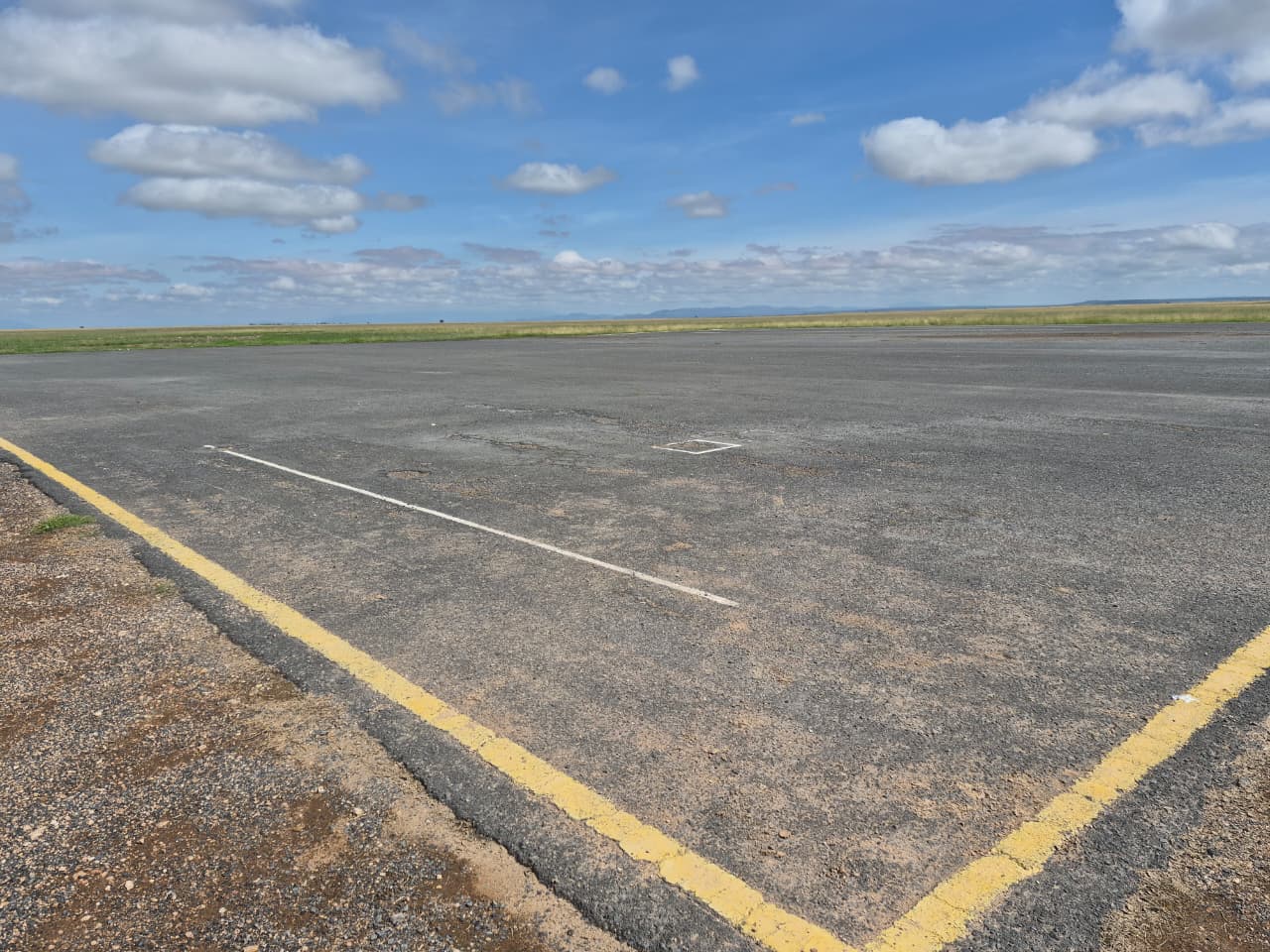
The governor also accused KWS of allegedly allowing the park to deteriorate, adding that critical roads, including the one connecting the airstrip to the lodges, were in poor condition.
“The watercourse that connected the airstrip to Ol Tukai, which is the main artery in the park, is completely gone. In fact, we fear its total collapse in the next few weeks. All other tourist roads have been allowed to deteriorate.”
Lenku said the deterioration could be a ploy to portray the county government as incapable of managing the park.
The governor also claimed 12 elephants had died within the ecosystem under questionable circumstances.
He said all the legal hurdles surrounding the transition of the park had been completed.
“We will continue, as the Maa nation, to be peaceful people, but we will protect our rights. We want to ask the government to know KWS is sabotaging this process.”
Lenku said the takeover report indicated that 40 per cent of the revenue would go to the county government, 40 per cent to communities and 20 per cent to the conservation area authority.
The county expects to generate Sh700 million in annual revenue.
The national government officially transferred the management of Amboseli National Park to the Kajiado government on November 8, 2025.
President Ruto described the move as historic, saying it settled the long-standing ownership and management dispute over the park.
He expressed confidence in a community-led approach to conservation.
“This is not a weakening of conservation; it is a renewal because conservation led by the people lasts longer, works better and heals deeper,” the head of state said.
Ruto said the 51-year dispute over Amboseli's management had posed a serious challenge, leaving the local community excluded from restoration efforts and the park's benefits.
“I am proud of this moment because I am sure the Maa community are the greatest conservationists. I have no doubt in my mind that Amboseli will be better than what it used to be,” he said.
The handover ceremony coincided with the 3rd Maa Cultural and Tourism Festival at Amboseli National Park, where Ruto was installed as a Maa elder.
During the event, Ruto signed a Deed of Transfer officially returning the park from KWS to the Kajiado government.
Ruto tasked KWS and the Wildlife Research and Training Institute with continuing to provide various services, including security, ecological monitoring and technical oversight, as they do in all protected areas.
He said the Ministry of Tourism and Wildlife would also provide policy guidance and technical support to the county.
The transfer of the park has also stirred intense debate among conservationists, exposing deep divisions over the future of wildlife management.
A section of conservationists fear it could open a Pandora's box by inviting other counties to demand control over national parks within their borders.
Carnivore ecologist Mordecai Ogada, co-author of The Big Conservation Lie, said, “It’s not wise at all. The Kajiado government doesn’t have the capacity to run a Class A national park.”
He warned that Amboseli's pristine ecosystems could suffer under local management.
Others, however, see the transfer as an overdue step towards decolonising conservation and empowering local communities.
Environmentalist Steve Itela described the decision as “progressive on paper”, saying it recognises the constitutional spirit of devolution and gives communities a legitimate voice in managing natural resources.
“It could strengthen local ownership, improve response to human-wildlife conflict and integrate Maasai cultural stewardship into park management,” he said.
Itela said county-led conservation might even expand Amboseli's reach through community conservancies and wildlife corridors, reconnecting fragmented landscapes.
Still, Itela cautioned the shift raises “serious governance and policy questions”.
Without a clear national framework, he warned, Kenya risks fragmenting its conservation model, weakening the KWS's coordination role and creating inconsistent standards across counties.
Jim Nyamu, director of the Elephant Neighbours Centre, said, “You can’t just wake up and hand over everything. It’s a process.”
He called for safeguards and best practices to ensure the transition succeeds.
Nyamu said community-based conservation offers hope but warned that mishandling the process could embolden other counties to seek similar control.
INSTANT ANALYSIS
The proposed formula allocating 40 per cent of revenue to Kajiado county and another 40 per cent to local communities represents a dramatic shift from Kenya's traditional conservation model, where most income flows through national agencies. If successful, it could redefine relations between wildlife, communities and government across Kenya. If it fails, it could strengthen arguments that national parks require centralised management and weaken future calls for devolved conservation.

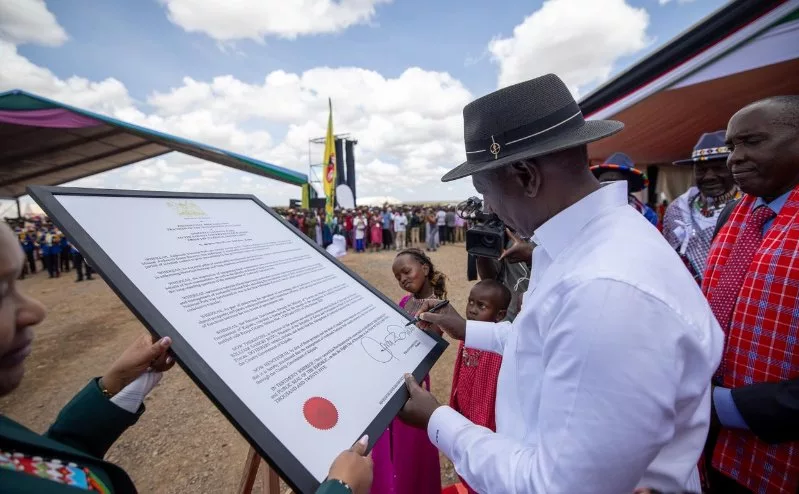 President William Ruto's handover of Amboseli National Park to the Kajiado government on November 8, 2025 /PCS