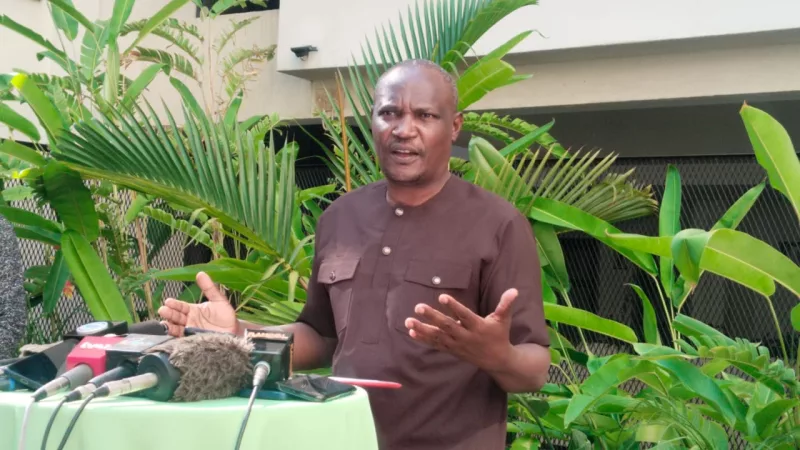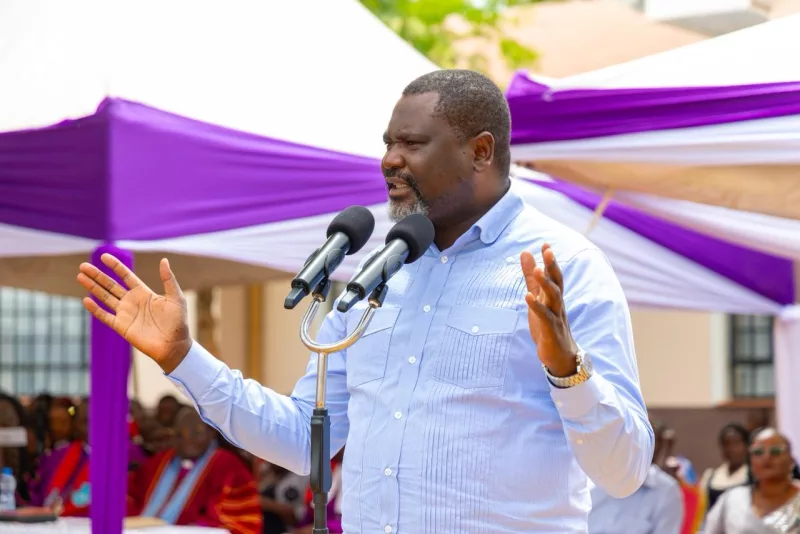
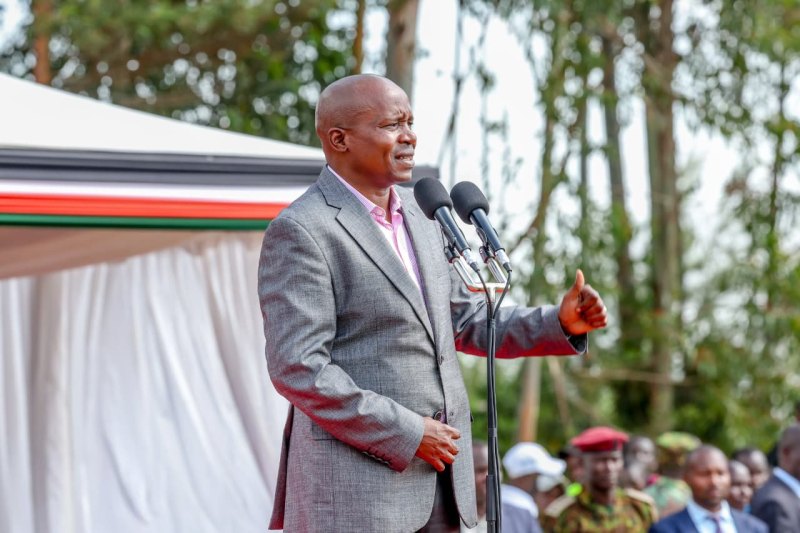
 Deputy President Kithure Kindiki speaking in a past event/FILE
Deputy President Kithure Kindiki has defended the government's decision to partially offload its shareholding in Safaricom and the Kenya Pipeline Company.
Kindiki has said that proceeds from the transactions will be ring-fenced to finance infrastructure projects through the National Infrastructure Fund instead of being used for recurrent government expenditure.
Kindiki was speaking during an interdenominational prayer service in Soliat, Sigowet-Soin constituency, Kericho county, on Sunday.
He dismissed criticism surrounding the sale, saying the government was not disposing of its entire stake in the companies but undertaking a limited divestiture to raise funds for development.
"This is the third sale, and we are not selling all the shares. It's just a small disinvestment," Kindiki said.
He said the current transaction differs from previous government sales because the proceeds will be dedicated to infrastructure projects under an independently managed fund.
"The money that we are collecting from the sale of government stake, we are taking it directly to the National Infrastructure Fund, which is governed by an independent board, and their work is to use that money to build roads, to build dams, to build railways, to build airports," he said.
Kindiki claimed previous administrations had sold government stakes, but the proceeds could not be traced because they were absorbed into recurrent expenditure.
"After the government sold shares, we cannot account for what we did with that money because they used that money to pay salaries, to buy vehicles for government officials, for current expenditure," he claimed.
He added that the current administration had put safeguards in place to ensure the proceeds are not diverted.
"We cannot again use the proceeds of government stake in government-owned entities for current expenditure," Kindiki said.
His remarks come days after National Treasury Cabinet Secretary John Mbadi announced that the government expected to receive about Sh204.3 billion from the sale of an additional 20 per cent stake in Safaricom to Vodacom.
Mbadi said the transaction, concluded after the Court of Appeal cleared the deal, increased Vodacom's shareholding in Safaricom to 55 per cent while the Government of Kenya retained a 20 per cent stake.
According to Mbadi, the proceeds from the Safaricom transaction will be deposited into the National Infrastructure Fund, alongside Sh103 billion raised through the Kenya Pipeline Company's initial public offering.
He said the fund is intended to finance major infrastructure projects, including roads, water infrastructure, energy systems and airports, adding that the money cannot legally be channelled into the Consolidated Fund for ordinary government spending.
Mbadi also said the fund would only begin disbursing money after the appointment of an independent board to oversee its operations.