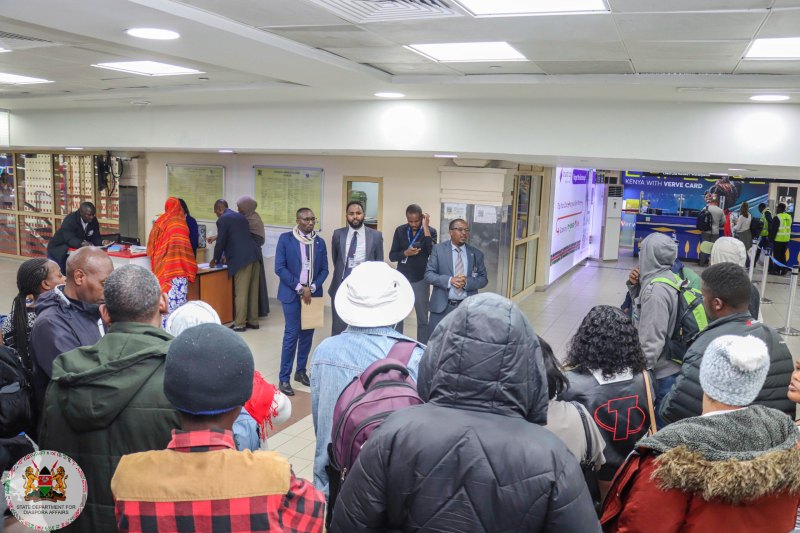
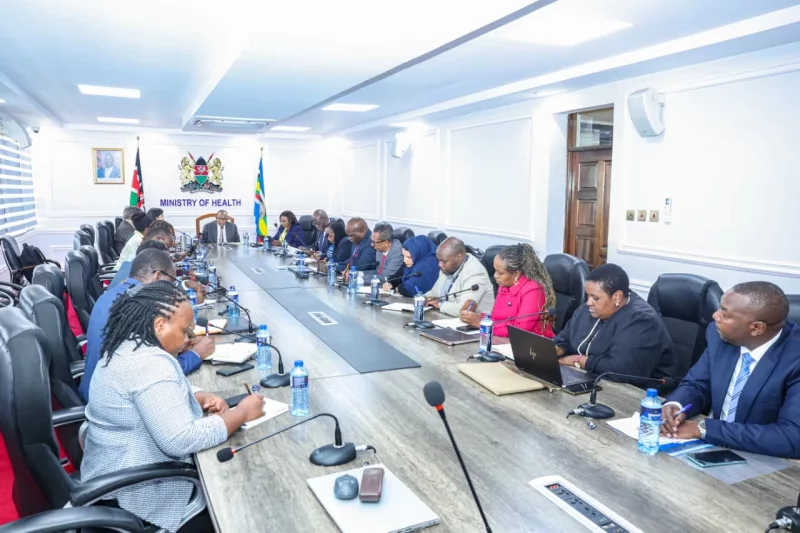
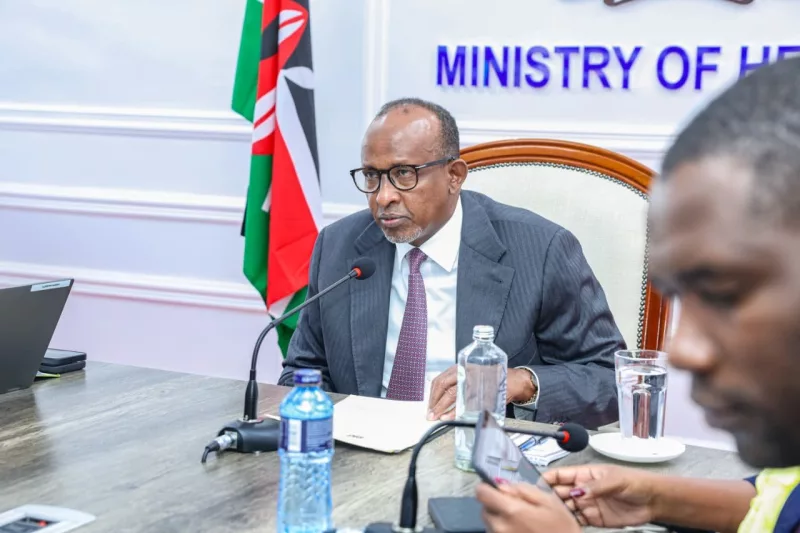
 Health Cabinet Secretary Aden Duale when he chaired the meeting at his Afya House office on July 2, 2026/MOH
Health Cabinet Secretary Aden Duale Thursday chaired a high-level consultative meeting with officials from the US government, implementing partners and other stakeholders to review Kenya's preparedness for a potential Ebola outbreak and coordinate the next phase of support.
The meeting assessed the country's current level of readiness, identified critical gaps and aligned priority interventions aimed at strengthening Kenya's capacity to respond swiftly should an Ebola case be detected.
The discussions come as Kenya remains on heightened alert following the regional outbreak of Bundibugyo Ebola virus disease.
Although the country has not recorded any confirmed cases, the Ministry of Health says it is maintaining heightened surveillance to minimise the risk of importation and ensure rapid detection of any suspected infections.
"While no case has been reported in the country, we remain on high alert, guided by the understanding that preparedness is our strongest defence against public health emergencies," Duale said.
According to the CS, the government has strengthened several key areas of outbreak preparedness, including disease surveillance, laboratory testing capacity, screening at points of entry, emergency coordination mechanisms and the preparedness of frontline healthcare workers.
Through the Incident Management System coordinated by the Kenya National Public Health Institute, 25 counties considered to be at the highest risk have been prioritised for targeted preparedness activities.
These interventions have contributed to an Ebola readiness score of 66 per cent, according to the Ministry of Health.
Duale said preparedness should be measured by the country's ability to act before an outbreak occurs rather than after cases have already been confirmed.
He called on development partners to expedite support for critical areas, including the establishment of isolation facilities, procurement of personal protective equipment (PPE), strengthening laboratory and disease surveillance systems, and deployment of trained frontline health workers in high-risk counties.
"We must continue investing in preparedness because early action is essential to protecting lives and preventing the spread of infectious diseases," he said.
The Cabinet Secretary also acknowledged the long-standing partnership between Kenya and the United States in strengthening the country's health security systems.
He said US support has been instrumental in enhancing disease surveillance, expanding laboratory networks, developing the public health workforce and improving emergency preparedness.
Duale reaffirmed the government's commitment to transparency, accountability and coordinated implementation of health programmes through the "One Plan, One Budget and One Monitoring Framework" approach, which seeks to ensure all partners work under a unified national strategy.
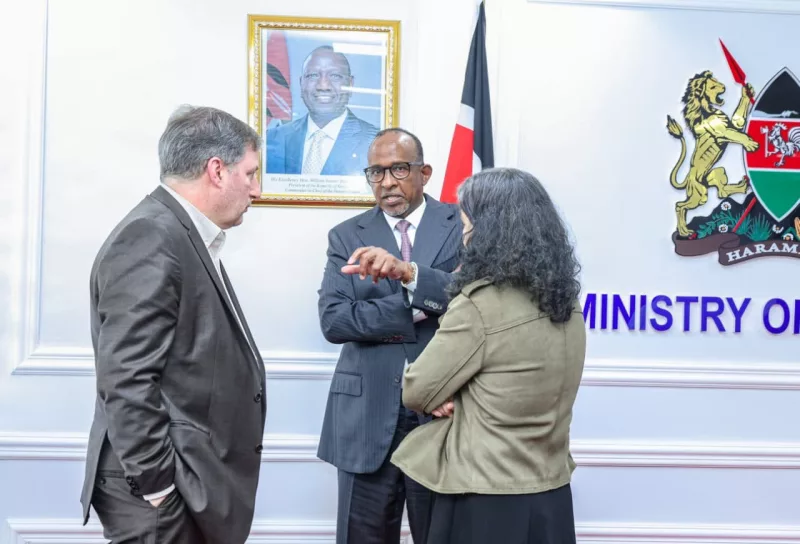
The meeting was attended by Principal Secretaries Ouma Oluga (Medical Services), Mary Muthoni (Public Health), Director-General for Health Patrick Amoth, Acting Country Director for Kenya at the Centers for Disease Control and Prevention (CDCP) Jennifer Galbraith, representatives of the US Department of State, development partners, implementing agencies, heads of directorates within the Ministry of Health and Acting KNPHI CEO Kamene Kimenye.
While Kenya has not reported any cases of the disease, Duale said they will continue strengthening surveillance and preparedness measures as neighbouring countries respond to the regional outbreak.
The Ministry has urged the public to remain vigilant and report any suspected cases promptly while assuring Kenyans that contingency plans remain in place to safeguard public health.