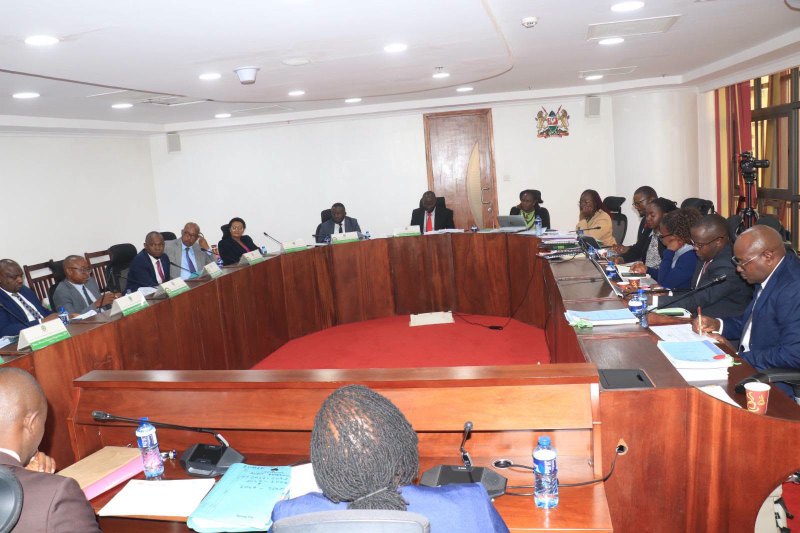
 National Assembly's Public Investments Committee on Education and Governance sitting on Tuesday, June 23, 2026. /PARLIAMENT
A number of Technical and Vocational Education and Training (TVET) institutions have come under sharp parliamentary scrutiny following audit revelations that they have hired more than one-third of their staff from a single ethnic community, in violation of legal provisions.
A report tabled before the National Assembly's Public Investments Committee on Education and Governance by Auditor General Nancy Gathungu reveals skewed hiring practices at several vocational institutions, contrary to Section 7(1) and (2) of the National Cohesion and Integration Act, 2008.
The matter came to the fore on Tuesday during the committee's consideration of Auditor General reports covering the 2018 to 2025 financial years for several government agencies and technical institutions.
Institutions appearing before the committee included Bungoma North Technical and Vocational College, Chamasiri Technical and Vocational College, Musakasa Technical Training Institute and Okame Technical and Vocational College.
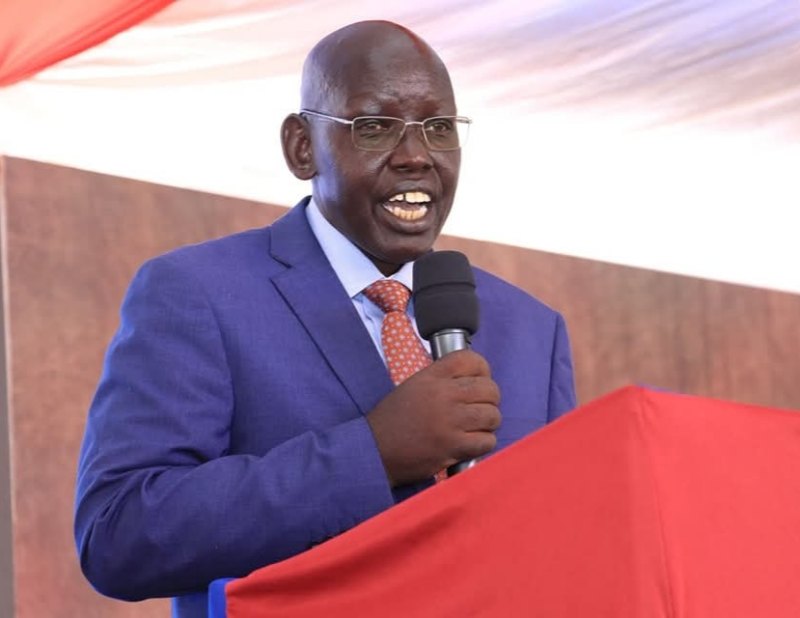
Committee chairman and Luanda MP Dick Maungu warned that Parliament would not tolerate continued disregard of constitutional and statutory requirements on inclusivity.
He said public institutions must uphold national values and ensure equal opportunities for all Kenyans, regardless of ethnicity.
“Public institutions are funded by taxpayers from every corner of this country and therefore recruitment must reflect the face of Kenya. Ethnic imbalance in public service is not only unlawful but also undermines national unity and fairness,” Maungu said.
“The law is very clear that no public institution should have more than one-third of its staff from the same ethnic community. Parliament expects strict adherence and accountability from all public institutions,” he added.
According to the audit report, continued imbalances in staff recruitment within public learning institutions are undermining ethnic diversity requirements and constitutional principles aimed at promoting national cohesion.
At Okame Technical and Vocational College, auditors found that 32 out of 54 staff members, representing 59 per cent of the workforce, belonged to one dominant ethnic community.
The institution's management admitted non-compliance with the law but argued that most job advertisements attracted applicants largely from the surrounding local community.
At Chamasiri Technical and Vocational College, the audit established that 32 out of 73 staff members (44 per cent) were drawn from one ethnic community during the 2024–25 financial year.
A further review of staffing records showed that 45 out of 77 employees (58 per cent) were from the same community during an earlier audit period.
College Principal Lawrence Ongata told MPs that the current staffing composition reflects historical recruitment patterns.
“Management is committed to ensuring compliance with the law in future recruitments,” Ongata assured the lawmakers.
At Bungoma North Technical and Vocational College, Principal Lilian Simali attributed the staffing imbalance to the institution's initial recruitment processes, which relied heavily on personnel sourced from the local community.
Auditors found that 57 of the institution's 76 employees, representing 75 per cent of the workforce, were from one dominant ethnic community.
“Management acknowledges the audit finding and wishes to clarify that the imbalance arose during the initial staffing phase when recruitment relied on locally available personnel,” she told the committee.
She added that the institution was now encouraging qualified applicants from across the country to apply for vacancies in a bid to enhance diversity and regional balance.
Musakasa Technical Training Institute was also put on the spot after auditors established that 59 out of its 78 staff members (76 per cent) belonged to a single ethnic community.
Institute Principal Moses Sakwa told the committee that the institution had initiated corrective measures.
“The staffing composition reported as at June 30, 2025 reflects historical recruitment trends accumulated over several years. However, management has taken deliberate measures to address the imbalance through recent recruitment undertaken during the 2025-26 financial year,” he said.
The law strictly prohibits public institutions from disproportionately hiring staff from a single ethnic community and requires them to reflect the diversity of the Kenyan population.
Under the National Cohesion and Integration Act (NCIA), no public entity is permitted to have more than 33 per cent of its workforce drawn from the same ethnic community.
At the county level, the requirement is reinforced by the County Governments Act, which stipulates that at least 30 per cent of vacant positions in county public service must be filled by individuals who do not belong to the dominant ethnic community within that county.
The committee is expected to compile its recommendations for tabling before the National Assembly after concluding its examination of the Auditor General's reports.
In the meantime, Maungu directed the affected TVET institutions to submit clear compliance frameworks and recruitment plans outlining how they intend to progressively achieve ethnic balance in staffing.
“We cannot continue normalising historical recruitment patterns as an excuse for exclusion. Institutions must develop deliberate policies to ensure future recruitment processes comply fully with the National Cohesion and Integration Act,” he said.
![[PHOTOS] Raila Odinga Stadium construction enters home stretch](https://cdn.radioafrica.digital/image/2026/06/45f6990c-4882-4cd2-b83c-8fc730dcdce5.jpg)