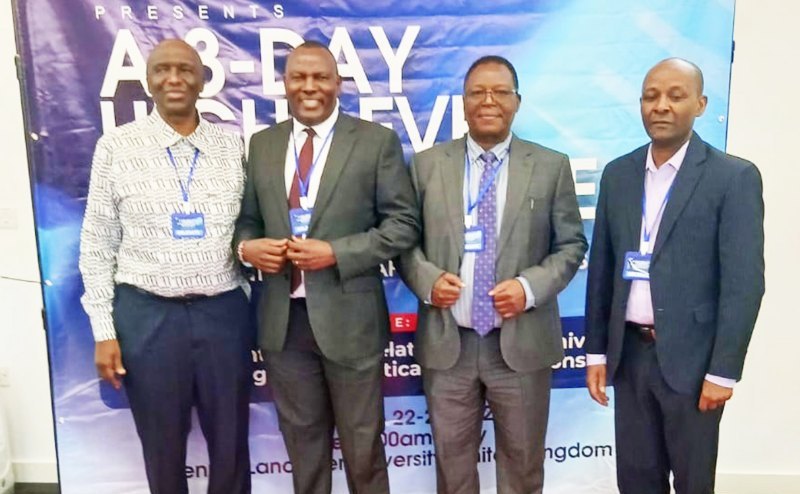
 From left: Mount Kenya University Vice-Chancellor Prof. Deogratius Jaganyi; MKU Council Chairman Dr Vincent Gaitho; Mount Kigali University Council Member Mr Thomas Nganga; and Mount Kigali University Vice-Chancellor Dr Martin Kimemia during the Leadership and Governance Conference in the United Kingdom, which brought together higher education leaders to discuss governance, leadership, and international collaboration in higher education. /PHOTO/JOHN MUCHUCHA
African universities must overhaul their governance models and embrace strategic leadership if they are to remain competitive, financially sustainable and relevant in an era of artificial intelligence, shrinking funding and rising accountability demands, education leaders have been told.
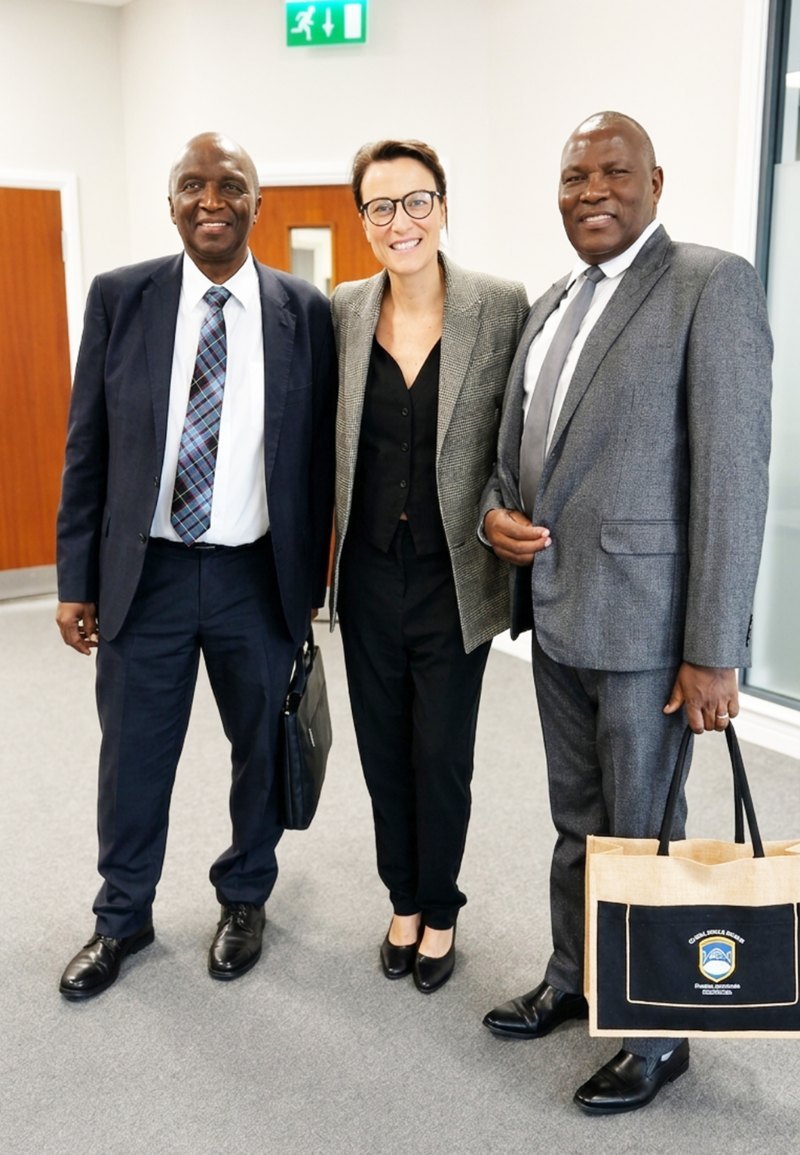 Mount Kenya University Vice-Chancellor, Prof. Deogratius Jaganyi poses for a photo with Prof. Stephanie, Principal in Charge of Transnational Education Programmes at the University of the West of Scotland (UWS), and Dr. Vincent Gaitho, MKU Council Chairman and Pro-Chancellor, during a visit by the MKU delegation to the university in the United Kingdom. The visit focused on strengthening academic partnerships, advancing transnational education initiatives, and enhancing international collaboration between the two institutions. /PHOTO: JOHN MUCHUCHA
"The quality of governance determines the quality of institutional performance," said Gaitho at the forum on leadership and governance within universities.
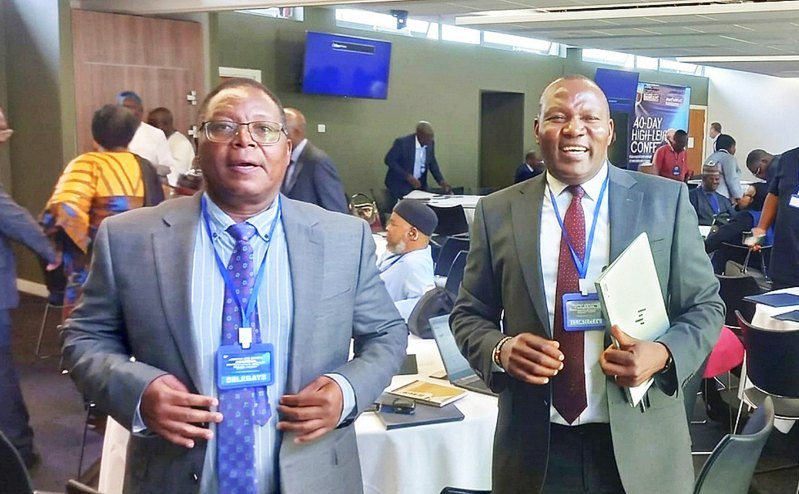 Mount Kenya University Council Chairman Dr Vincent Gaitho (right) and Council Member Mr Thomas Nganga during the Leadership and Governance Conference in the United Kingdom. The conference brought together delegates from Mount Kenya University and Mount Kigali University, alongside higher education leaders from across the globe, to discuss governance, institutional excellence, and international collaboration in higher education. /PHOTO: JOHN MUCHUCHA
He challenged university leaders to rethink the role of governing councils.
"Are our governing councils merely supervising universities, or are they actively shaping their future?" he posed, adding that universities should shift from compliance-focused governance to value-creating governance and from short-term decision-making to long-term sustainability.
"If African universities are to become globally competitive, financially sustainable, innovative and transformative institutions, then governing councils must embrace their role as strategic stewards and leadership teams must embrace their responsibility as drivers of institutional performance."
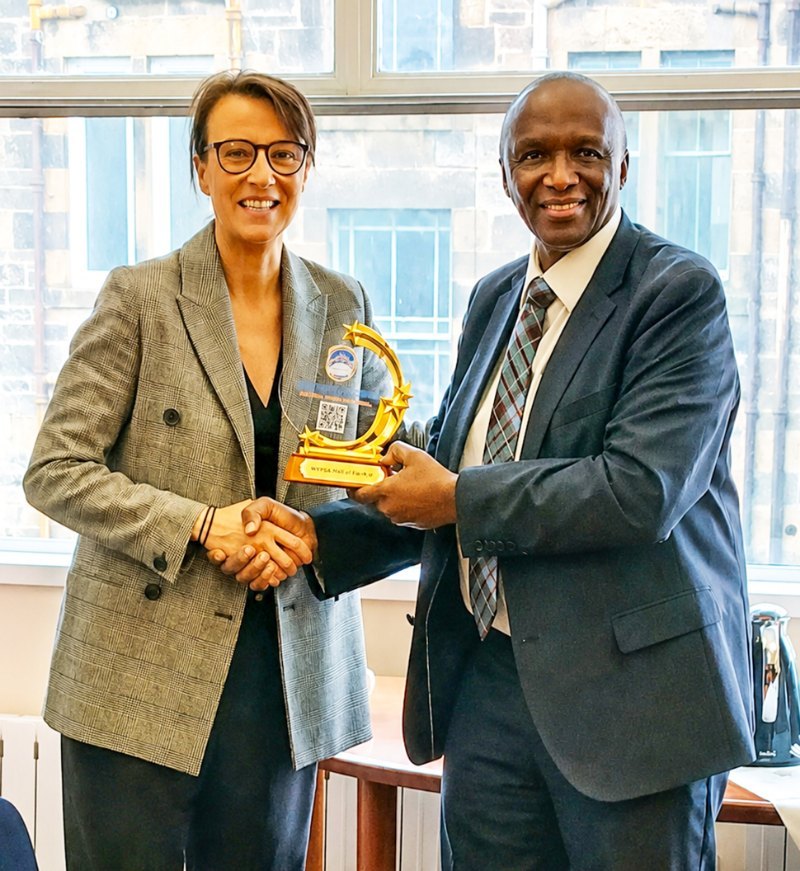 Mount Kenya University Vice-Chancellor Prof. Deogratius Jaganyi presents a token of appreciation to Prof. Stephanie, Principal in Charge of Transnational Education Programmes at the University of the West of Scotland, during a visit by the MKU delegation to the university in the United Kingdom. The visit focused on strengthening academic partnerships, advancing transnational education initiatives, and enhancing international collaboration between the two institutions. /PHOTO: JOHN MUCHUCHA
According to Dr Gaitho, institutional success is no longer determined solely by academic excellence but is "increasingly determined by the quality of governance and leadership.”
He argued that governance should be viewed as a strategic capability rather than an administrative function, saying effective governing councils must strike a balance between protecting current institutional interests and preparing universities for future challenges.
"At the heart of this discussion is the concept of strategic stewardship, which means protecting today while preparing for tomorrow," he said.
Dr Gaitho is leading a joint delegation representing both Mount Kenya University (MKU) and Mount Kigali University (MKU Rwanda) to the United Kingdom. The delegation includes Prof. Deogratius Jaganyi, Vice Chancellor, Mount Kenya University (MKU); Thomas Nganga, MKU Council Member; Dr. Innocent Mugisha, Chairman of Council, MKU Rwanda; and Dr. Martin Kimemia, Vice Chairman of Council, MKU Rwanda.
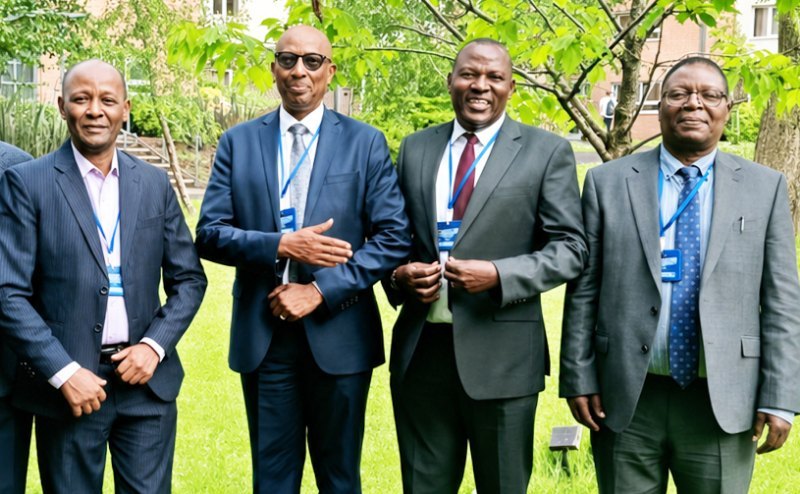 From left: Martin Kimemia, Vice-Chancellor of Mount Kigali University; Dr Innocent Mugisha, Council Chairman of the Mount Kigali University; Dr Vincent Gaitho, Council Chairman and Pro-Chancellor of the Mount Kenya University ; and Mr. Thomas Nganga, Council Member of Mount Kigali University, during the Leadership and Governance Conference in the United Kingdom. The conference brought together higher education leaders to discuss governance, leadership, and international collaboration in higher education./PHOTO: JOHN MUCHUCHA
"Our engagement in such international forums reflects MKU’s commitment to advancing global academic linkages and contributing to Africa’s development agenda through research-driven solutions," he said, adding that the partnership with UWS has also supported capacity building, innovation and staff development, while enhancing MKU’s visibility in global academic networks.
In his presentation, Dr Gaitho outlined five key responsibilities for governing councils, including protecting institutional missions, safeguarding resources, driving sustainability, enabling innovation and monitoring performance.
He said high-performing councils differ from traditional governing bodies by focusing on future opportunities, strategic risks, institutional sustainability and performance outcomes rather than routine administrative matters.
"The era of governing by intuition is over," he said, urging councils to rely on institutional dashboards, financial analytics, risk reports and student success indicators when making decisions.
Dr Gaitho also called for councils to strengthen their collective expertise in areas such as technology, finance, risk management, legal affairs and innovation.
"The question is not, who sits on the council? The question is, 'What competencies does the council collectively possess?' he said.
Dr Gaitho warned that many universities continue to suffer from governance failures caused by councils overstepping management functions, management withholding information from governing bodies and adversarial relationships between councils and university executives.
"One of the most important determinants of institutional success is the quality of the relationship between governing councils and management. The council governs. Management manages. Both lead," he said.
"Good governance creates confidence. Good leadership creates results. Together, governance and leadership create enduring institutions."
The presentation also highlighted the growing importance of digital governance, with universities increasingly required to address artificial intelligence, cybersecurity, data governance and digital transformation.
Dr Gaitho said African universities face a critical moment as AI reshapes learning and work, while traditional funding models become less reliable.
"Traditional funding models are under pressure," he said, urging universities to pursue diversified revenue streams, endowments, research commercialisation and stronger industry partnerships.
He further challenged institutions to prepare graduates for future jobs, entrepreneurship and innovation-driven economies, noting that Africa possesses the world's youngest population.