African governments are stepping up efforts to dismantle
recruitment networks accused of deceiving thousands of young Africans into
joining Russia’s war effort in Ukraine, amid growing evidence of human
trafficking, coercion and exploitation targeting vulnerable job seekers across
the continent.
According to a report by the Africa Center for Strategic
Studies, Russia has developed an extensive recruitment pipeline that has drawn
Africans from nearly every region of the continent through promises of
lucrative jobs, educational opportunities, sports programs and pathways to
citizenship.
Many recruits reportedly discover only after arriving in
Russia that they are being directed toward military service or work in
defense-related industries supporting the war in Ukraine.
The report indicates that more than 1,700 Africans from 36
countries are believed to be fighting for Russia, though the actual figure
could be significantly higher.
Ukrainian officials estimate that approximately 30,000
foreign nationals are currently serving in Russian forces.
Several African governments have responded by launching
investigations, arresting suspected recruiters and increasing diplomatic
pressure on Moscow.
Kenya has emerged as one of the most active countries in
confronting the recruitment networks. Parliamentary inquiries and media
investigations have exposed criminal syndicates allegedly posing as legitimate
overseas employment agencies.
Kenyan security agencies have raided recruitment offices,
rescued prospective victims and increased airport screening measures to prevent
citizens from being trafficked to Russia.
National Assembly Majority Leader Kimani Ichung'wah told
Parliament that recruits arriving in Russia were “basically just given a gun to
go and die,” while warning that transnational trafficking networks remain
operational and continue to alter their travel routes to evade detection.
Kenyan authorities have also opened criminal investigations
into individuals suspected of facilitating the recruitment schemes and are
examining allegations that some officials may have colluded with traffickers.
In southern Africa, concerns have also prompted official
action. In South Africa, allegations that recruits were misled into believing
they would receive security training rather than military deployment sparked
investigations. The revelations contributed to political fallout and police
inquiries into those accused of facilitating recruitment.
Elsewhere, Botswana has become part of a wider international
investigation into recruitment linked to Russia’s Alabuga drone manufacturing
facility, where hundreds of young Africans, particularly women, were reportedly
recruited through work-study programs before being assigned to weapons
production under difficult conditions. Interpol has launched investigations
related to the operation.
Governments in Ghana, Nigeria and other countries have also
publicly raised concerns, summoned Russian diplomats and demanded the return of
their citizens.
Ghana has reported one of the highest confirmed death tolls
among its nationals, with 55 citizens reportedly killed after being recruited
into the conflict.
The growing response follows numerous testimonies from
survivors and families who say recruits were deceived by promises of employment
and higher wages.
According to the report, many were pressured to sign
military contracts written in Russian, had their passports confiscated and were
threatened if they refused deployment.
Survivors have described being sent to frontline combat
zones with minimal training and inadequate equipment.
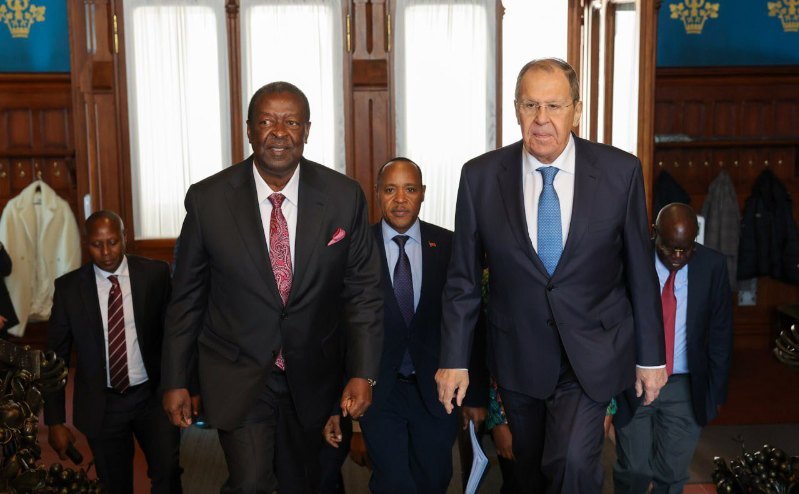
Russian Foreign Minister Sergey Lavrov has previously denied
allegations that foreign nationals from Kenya and other African countries are
being forcibly recruited to fight in the Russia-Ukraine war
“Russia is not forcing anyone to enlist. Just as in the case
of participation in the special military operation, volunteers join this
operation in full compliance with Russian law,” Lavrov said.
The Africa Center report argues that the recruitment schemes
constitute a combination of disinformation, human trafficking and foreign
interference requiring coordinated action across the continent.
Investigators and civil society groups are calling for
greater regional cooperation to track recruiters, share intelligence and
prosecute those involved.
African governments increasingly view the issue as a
transnational security challenge rather than isolated cases of labour fraud.
Analysts warn that without coordinated regional action,
recruitment networks will continue exploiting economic hardship and
unemployment to lure young Africans into a war far from home.
As pressure mounts, African leaders are demanding
accountability from those behind the schemes while seeking the safe return of
citizens caught in a conflict they never intended to join.