
President William Ruto’s insistence that a controversial Ebola quarantine and isolation facility in Nanyuki will proceed is increasingly putting his allies in Mt Kenya in a difficult political position.
Leaders allied to UDA and its affiliate parties are struggling to
balance loyalty to the government with growing public anger over the proposed
facility, which has rapidly evolved from a public health issue into a major
political headache.
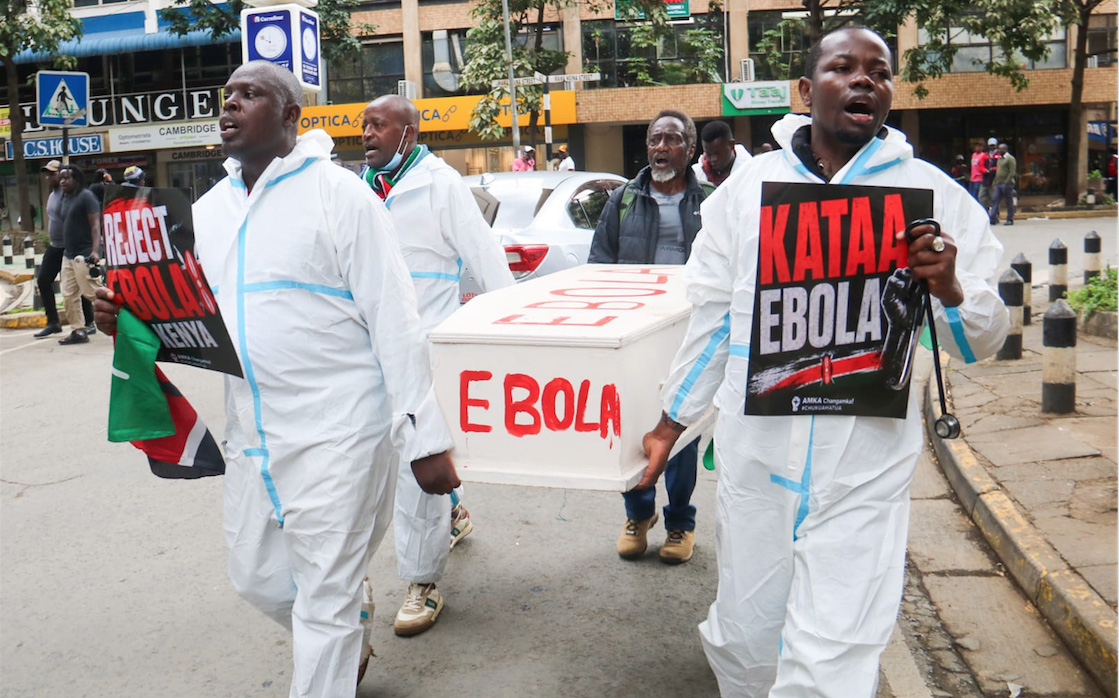
The controversy escalated further this week after an autopsy confirmed
that Sylvester Ndung’u, 17, died from a gunshot wound sustained during
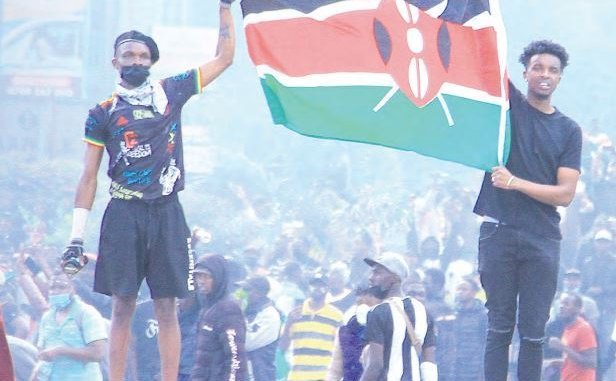
demonstrations against the facility in Nanyuki. At least three people have
reportedly been killed in the protests.
The deaths have heightened tensions and anger in Laikipia and attracted
widespread local and international attention, sustaining pressure not only on
the government but also on elected leaders from the region.
For Ruto’s allies in Laikipia and the wider Mt Kenya region, the issue
presents a difficult balancing act. Supporting the project risks alienating
constituents who view it as an imposition on the community, while openly
opposing it could place them at odds with the national government.
The political sensitivity of the matter extends beyond Laikipia. Nanyuki
borders Nyeri and Meru counties and hosts significant populations from both
regions, turning the issue into a broader Mt Kenya concern.
Nyeri Governor Mutahi Kahiga has already weighed in, saying residents
and their elected leaders must be consulted and reassured before any such
facility is operationalised near their borders. His position is notable given
his recent warming relations with President Ruto.
The proposed 50-bed facility is intended to quarantine and isolate
Americans potentially exposed to Ebola in the DRC as part of broader
preparedness arrangements.
However, the proposal has triggered fierce opposition from residents,
who argue it unfairly transfers public health risks to the local community.
Many residents say they feel betrayed by elected leaders, whom they
accuse of failing to adequately consult the public or defend the region’s
interests.
The controversy presents a particularly delicate challenge for Ruto, who
has seen support in parts of Mt Kenya erode ahead of the 2027 General Election.
In May, a host of elected leaders from Laikipia, including several
allies of the President, openly opposed plans to establish the facility.
Those who publicly rejected the proposal included Senator John Kinyua,
Governor Joshua Irungu, Laikipia East MP Mwangi Kiunjuri, Laikipia North MP
Sarah Korere, Laikipia West MP Wachira Karani and Woman Representative Jane
Kagiri.
The leaders warned that the facility could create fear among residents,
damage the county’s image and expose locals to unnecessary health risks.
In one of the strongest statements, Senator Kinyua questioned why
Laikipia had been selected for the facility.
“We reject this proposal. Why can’t those exposed be taken to their
countries if Ebola is not a deadly disease? Are Kenyans and more so the people
of Laikipia lesser human beings?” asked Senator Kinyua, who is allied to former
Deputy President Rigathi Gachagua.
Gachagua has sensationally claimed the facility at the Laikipia Air Base
is a political scheme by Ruto to “wipe out” communities in Mt Kenya.
The leaders’ opposition reflects wider public sentiment in a county
whose economy depends heavily on tourism and agriculture.
Analysts say the protests have exposed deeper frustrations that extend
beyond concerns about Ebola preparedness.
Andrew Franklin, a former US Marine and Nairobi-based security
consultant, said the demonstrations reflect longstanding grievances that have
simmered in Laikipia and northern Kenya for years.
“These protests and demonstrations are legitimate expressions of
discontent in a county with numerous potential flashpoints and latent crises,”
he said.
He pointed to the presence of the British Army Training Unit Kenya
(Batuk), activities of the Northern Rangelands Trust, unresolved land disputes,
competition over grazing rights and water resources, and perceptions of
neocolonial influence as some of the factors fuelling public anger.
“The Ebola Quarantine Centre, situated in the off-limits KDF Laikipia
Air Base, is a blatant example of how ‘Nairobi’ treats citizens in the counties
of northern Kenya,” he said.
“Local activists have lots of grievances with which to incite protest.”
Health economist Beatrice Kairu said the backlash highlights the risks
of undertaking major public health interventions without adequate public
participation.
“Any decision that affects millions of Kenyans means citizens must be
consulted,” Kairu said.
“Remember this facility was going to be constructed within a community.
You need to engage the community, sensitise them, talk to them and create
awareness. But when things are done in secrecy, suspicion will arise.”
Her remarks mirror concerns raised by residents and local leaders. They
have accused the government of failing to adequately consult the community
before advancing the proposal.
The issue has also become politically sensitive because it cuts across
traditional party loyalties. Several leaders opposing the facility are
considered key allies of Ruto and now find themselves caught between supporting
a government project and responding to mounting pressure from constituents.
Observers warn the controversy risks creating a fresh fault line between
the administration and sections of Mt Kenya at a time when the President is
seeking to rebuild and consolidate support in the region.
The dispute has since moved to the courts. High Court judge Patricia
Nyaundi issued conservatory orders temporarily suspending the proposed
arrangement pending the hearing and determination of a petition challenging the
project.
With court battles underway, protests turning deadly and public
opposition showing little sign of easing, the Ebola centre row is fast emerging
as a politically charged test of the relationship between the national
government and a region whose support will be critical in 2027.