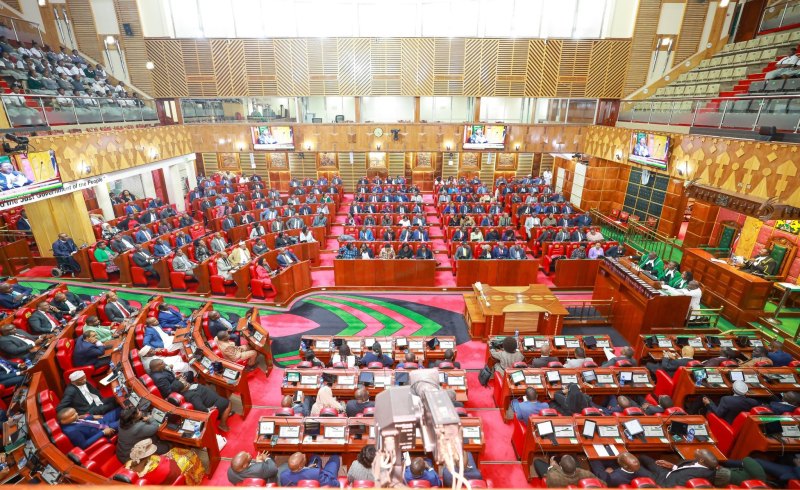
 MPs expected to complete Second Reading and potentially begin clause-by-clause consideration of the Bill.
The National Assembly is expected to conclude the Second Reading of the Finance Bill 2026 on Wednesday, paving the way for a possible Committee of the Whole House session where lawmakers will scrutinise the proposed legislation clause by clause.
The development follows the tabling of the National Assembly Finance and Planning Committee's report on Tuesday afternoon, leaving the Bill's Third Reading, a vote by MPs and eventual presidential assent as the remaining stages before it can become law.
The Finance Bill seeks to raise an estimated Sh120 billion to help finance the government's Sh4.8 trillion budget for the 2026-27 financial year, but has continued to attract criticism from opposition lawmakers and consumer rights groups.
Debate on the Bill got off to a tense start on Tuesday, with MPs engaging in heated exchanges over some of the proposed tax measures and recommendations contained in the committee report.
The political contest over the Bill comes even as the courts declined to suspend its consideration in Parliament despite admitting a petition challenging several of its provisions.
The case was filed Monday by the Consumer Federation of Kenya (Cofek), which has questioned aspects of the Bill relating to consumer protection, privacy rights, public participation and taxation.
In directions issued by the Constitutional and Human Rights Division of the High Court at Milimani, Justice David Mburu certified the matter as urgent but declined to stop parliamentary proceedings.
The judge ordered the petition to be served upon the respondents, including the National Treasury and the Kenya Revenue Authority (KRA), by the close of business on June 17.
The respondents have been given seven days to file their responses, with the matter scheduled for mention on June 25.
Cofek argues that Parliament is nearing the completion of the legislative process and that the disputed provisions could become law before the court determines the constitutional questions raised in the petition.
"The legislative process is ongoing and nearing its final stages, creating a risk that the disputed provisions could become law before the court considers the constitutional issues raised," the petition states.
Among the provisions under challenge are proposals affecting digital payment systems and plans to remove selected VAT exemptions and zero-rated supplies, effectively subjecting them to the standard 16 per cent VAT rate.
According to Cofek eliminating the tax reliefs could increase production and distribution costs for manufacturers, costs that would ultimately be passed on to consumers through higher prices.
Inside the House, debate remained highly charged after the Bill was formally presented by Finance and Planning Committee chairperson Kimani Kuria.
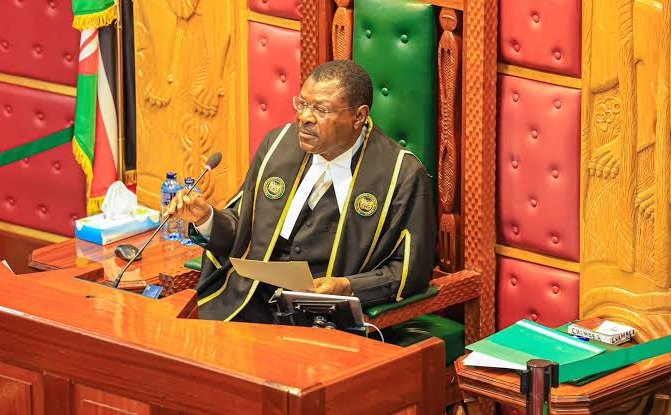
At one point, Deputy Speaker Farah Maalim who presided over the session was forced to intervene and restore order as lawmakers traded accusations and sought to score political points over the proposed tax measures.
One of the most contentious issues remains the National Treasury's decision not to exempt Kenyans earning below Sh30,000 from Pay As You Earn (PAYE) deductions.
Kuria, who is also the Molo MP, told the House that the committee had recommended that the National Treasury "go back to the drawing board" and consider a comprehensive review of the country's PAYE tax bands.
Wednesday's proceedings are expected to be equally intense as MPs seek to build consensus on contentious provisions before the Bill advances to its final stages.
With the 2027 general election drawing closer, political considerations are expected to shape much of the discussion, as lawmakers position themselves ahead of anticipated realignments and campaign battles.
The ongoing court case is also likely to feature prominently in the debate.