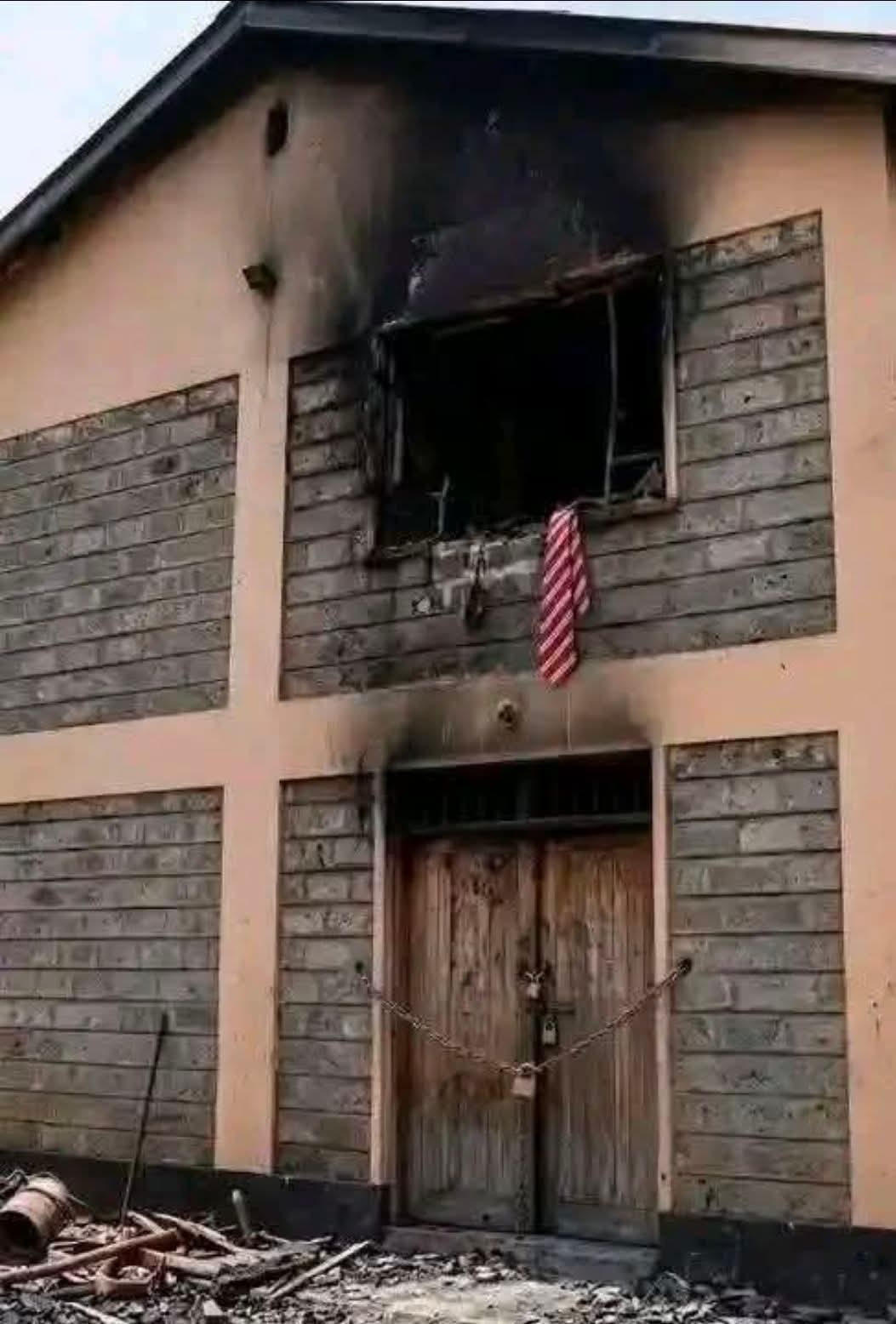
 UTUMISHI GIRLS BURNT DORM/ COURTESY
Utumishi Girls Academy founder Edward Mbugua has called for a national dialogue on the future of boarding schools following the dormitory fire that claimed the lives of 16 students at the institution.
Speaking during a requiem mass for the victims in Gilgil on Friday, Mbugua questioned whether the country's heavy reliance on boarding schools remains the best model for education, arguing that strengthening schools closer to learners' homes could help ease pressure on institutions and reduce long-distance student transfers.
"We should sit down in dialogue and find the way forward," Mbugua said.
"We should have good schools within our areas. If there were good schools in that area, there would be no need of taking your child from the farthest end."
His remarks came as families, friends, government officials and education stakeholders gathered to pay their final respects to the 16 girls who died in the May 28 dormitory fire.
Mbugua said the tragedy should trigger broader conversations about school infrastructure, student accommodation and the growing pressure facing schools following increased enrolment.
He linked some of the challenges facing learning institutions to the implementation of the 100 per cent transition policy, saying learner numbers have in some cases, outpaced available facilities.
"Nobody challenged the government to give them time so that we could build enough classrooms and enough dormitories," he said.
The founder suggested that the country should reconsider the role of boarding facilities in education and instead invest more resources in quality schools within communities.
"Those dormitories can be converted to workshops for training," he said.
He argued that many students are forced to travel across counties in search of quality education because schools near their homes do not offer similar opportunities.
"Why should a child travel from Migori to study elsewhere?" he posed.
Mbugua said improving local schools would not only reduce pressure on national institutions but also lessen the need for learners to stay far from their families.
The former police boss also admitted that responsibility for the tragedy should be shared among various stakeholders, including himself and the school's leadership.
"Myself, I'm to blame. I started the school," he said.
"The POM of the school was also to blame."
He said school management had not sufficiently raised concerns about capacity challenges despite increasing enrolment and growing demand for places at the institution.
Mbugua revealed that Utumishi Girls Academy was established in 2018 following calls from parents for a girls' institution similar to Utumishi Boys Academy.
The school admitted its first students in 2020 after construction and registration processes were completed.
The May 28 fire killed 16 students and injured dozens of others. Education Cabinet Secretary Julius Ogamba previously said 79 students were affected, with several requiring hospital treatment.
As investigations into the cause of the fire continue, Mbugua urged policymakers, education stakeholders and parents to use the tragedy as an opportunity to re-examine school infrastructure, learner safety and the country's education model.
"Without that, we'll be repeating coming here, talking, and then without any progress," he said.