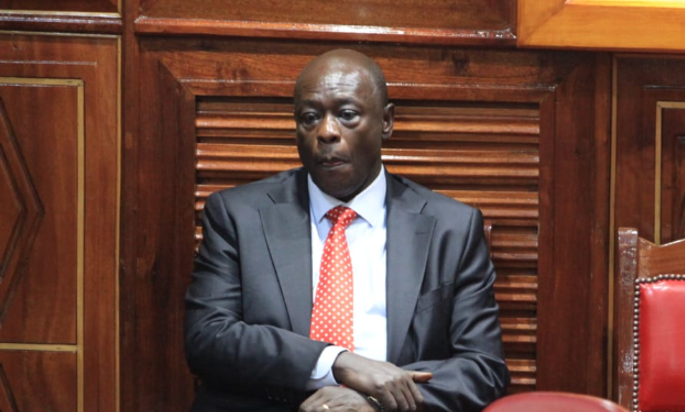
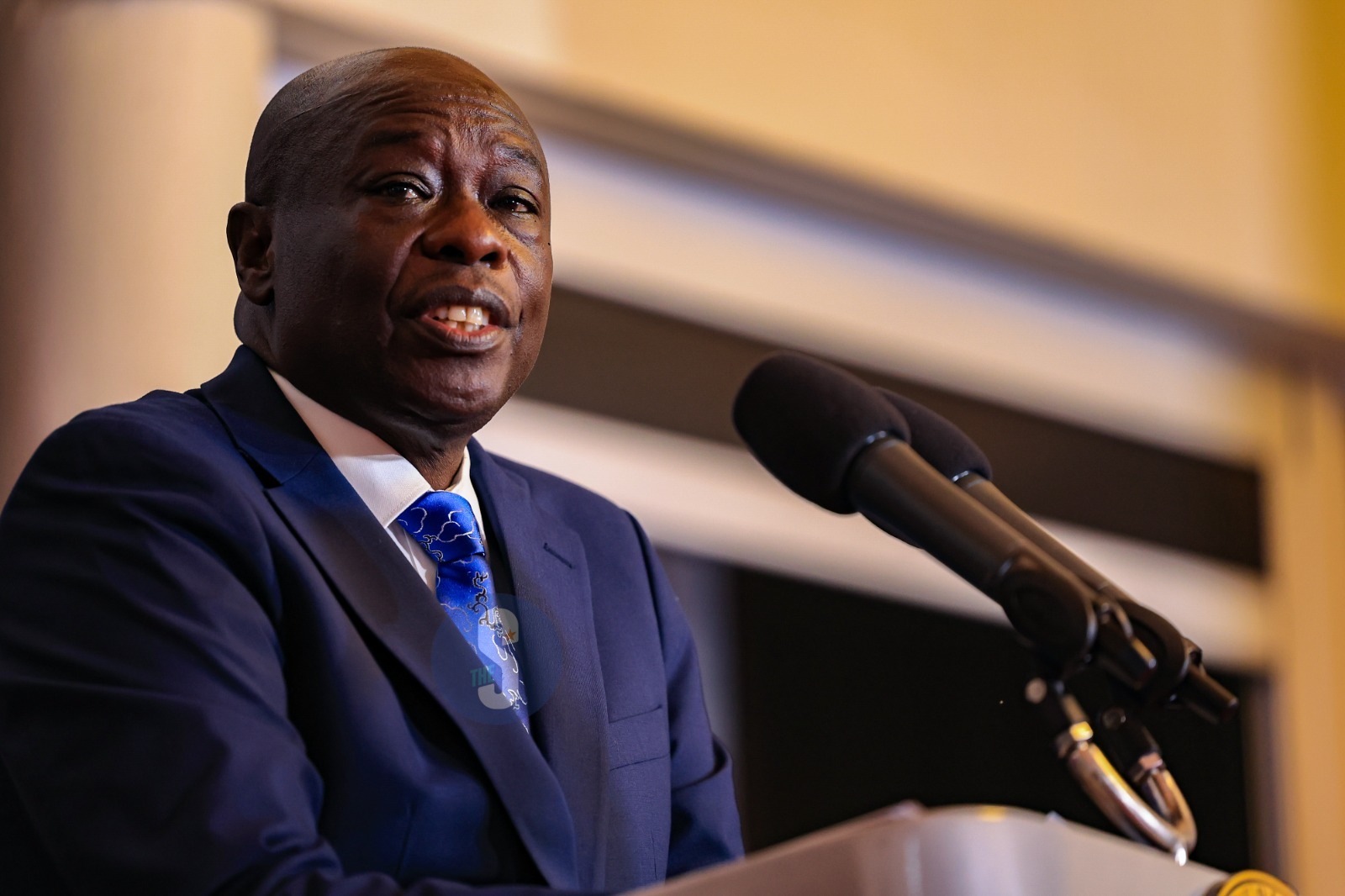
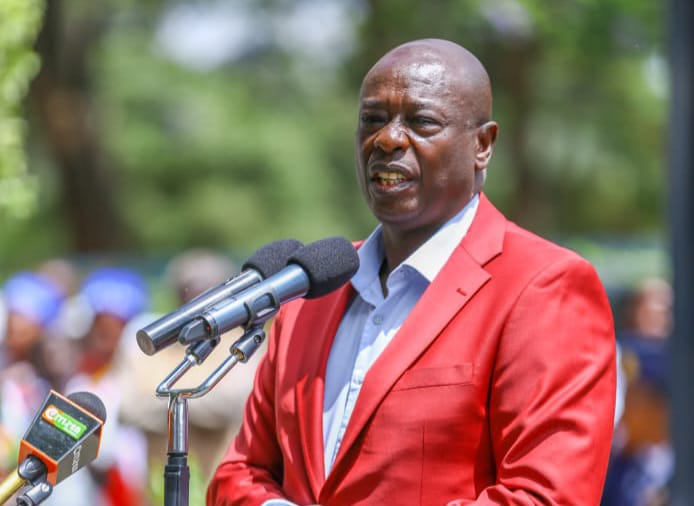
 DCP Leader Rigathi Gachagua/FILE Leader Rigathi Gachagua/FILE
DCP leader Rigathi Gachagua has appealed for prayers as the courts prepare to deliver a landmark ruling on the legality of his impeachment.
The former Deputy President declared he is ready for any outcome, urging his supporters to remain calm whichever direction the judgment goes.
“I ask you to pray for us. We were removed from office against the law and against the constitution,” Gachagua said during a church service at PCEA Muteero Church in Karen, Nairobi.
“Tomorrow [Monday] the verdict will be out and we are ready for whatever outcome.”
A three-judge bench comprising presiding judge Eric Ogola, Freda Mugambi and Anthony Mrima will today render the judgment that will have a bearing on the country’s political landscape.
Addressing congregants on Sunday, Gachagua said he will accept the court’s decision regardless of the outcome, insisting the country is bigger than an individual.
“If the three judges hold that we were treated unfairly and against the law and the constitution and lift the impeachment and let us be, we shall be grateful to God and we shall be grateful that there is a justice system in Kenya at last,” he said.
The former Deputy President expressed confidence in the independence and impartiality of the Judiciary, saying he believes judges will make their determination based solely on the constitution and the law.
“I have confidence that our judiciary system is independent, is impartial and shall give justice to Rigathi Gachagua and millions of his supporters across the country,” he said.
The DCP boss also vowed to move to the appellate court should the judges uphold his impeachment by the bicameral Parliament.
“If the ruling goes the other way, it is still okay. We still have an opportunity to go to the Court of Appeal and follow the remedies that have been provided by the constitution,” the DCP leader noted.
He also urged his supporters to remain calm and avoid any actions that could undermine public order, irrespective of how the court rules.
“I want to urge my supporters across the country, irrespective of the outcome, to remain calm and peaceful.”
“This country is bigger than any one of us and life must move on, irrespective of what people have gone through or are going through.”
The court ruling is expected to determine the next chapter in the prolonged legal and political battle surrounding Gachagua’s impeachment, a case that has attracted widespread public interest and generated intense debate across the political divide.
Analysts say the verdict could have far-reaching implications for the country’s political landscape ahead of next year's general election.
If the High Court finds the impeachment unconstitutional, the implications will be predominantly political rather than practical, given that Gachagua is not seeking reinstatement.
Such a ruling would provide immediate political vindication, allowing him to legally argue that he was unlawfully driven out of office by a heavily politicised legislative process rather than legitimate constitutional infractions.
This narrative is expected to bolster his standing among his core constituency, particularly within the populous Mt Kenya region.
Kirinyaga Woman Representative Njeri Maina, an ally of the DCP boss, yesterday said whichever direction the verdict takes, Gachagua will still remain a political force in the country.
“Tomorrow is a big day. Whatever will happen, you [Gachagua] will continue being our father. Even a year and a half later (since your impeachment), you are still stronger,” she said.
Throughout the crisis, Gachagua has consistently portrayed himself as a victim of a coordinated political witch-hunt and high-level betrayal.
A favourable court declaration would validate this narrative, transforming him from an impeached official into a politically persecuted martyr in the eyes of his supporters.
A court endorsement of the impeachment would also strengthen the position of MPs and senators who voted to remove him.
Legislators who faced criticism from Gachagua’s supporters would point to the judgment as proof they acted within the law and in accordance with their constitutional mandate.
This could help shield them from accusations that they participated in an unlawful political scheme. The ruling would also be a political boost for President William Ruto and his allies.
They would likely argue that the courts had independently validated the impeachment process, undermining claims that Gachagua was a victim of political persecution.
In the case, Gachagua is seeking, among other reliefs, compensation equivalent to the salary and benefits he would have earned had he completed his five-year term from his election in 2022.
His legal team has maintained that the impeachment process was marred by procedural flaws, including what they term a denial of a fair hearing and an overly expedited process.
They also argue the requirement for adequate public participation was not properly met, rendering the entire process invalid.
Also central to Gachagua’s case is the claim he was not accorded sufficient opportunity to defend himself during the impeachment motion.
His lawyers argue that constitutional safeguards were not fully observed, and that the speed at which the process was undertaken compromised fairness.
Parliament and the Senate have also defended the impeachment process, insisting that it was conducted within constitutional timelines and followed due process.
They argued that extensive public participation was undertaken through multiple platforms and that the process met legal thresholds.
The Senate further contended that some of the evidence introduced during the court proceedings, including the doctor’s testimony, was not part of the impeachment record and should not be considered in determining the legality of the process.
The case has become a test of Parliament’s powers against judicial review. Among the key questions judges must decide: Can courts review impeachment proceedings? Did Parliament comply with constitutional procedures? Was Gachagua accorded a fair hearing? What weight should medical evidence carry? Was public participation meaningful? Did Parliament use the correct procedure for removing a Deputy President? Can courts examine the merits of impeachment charges? Was Kithure Kindiki’s appointment constitutional? Is Gachagua entitled to damages? And what happens after the judgment?
INSTANT ANALYSIS
On each question, petitioners argue the Judiciary has supervisory power to review public authority, while respondents insist impeachment is a political process beyond judicial scrutiny. The court’s ruling will define not only Gachagua’s fate but also the limits of parliamentary power and the role of the judiciary in political disputes for years to come.



![[PHOTOS] Ruto pushes for stronger Kenya-EU economic ties in Brussels](https://cdn.radioafrica.digital/image/2026/06/3aebc395-285b-441c-8aa4-33cb538f8d44.jpg)