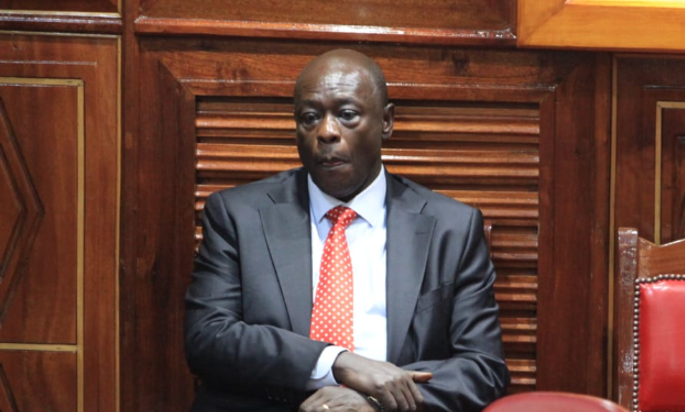

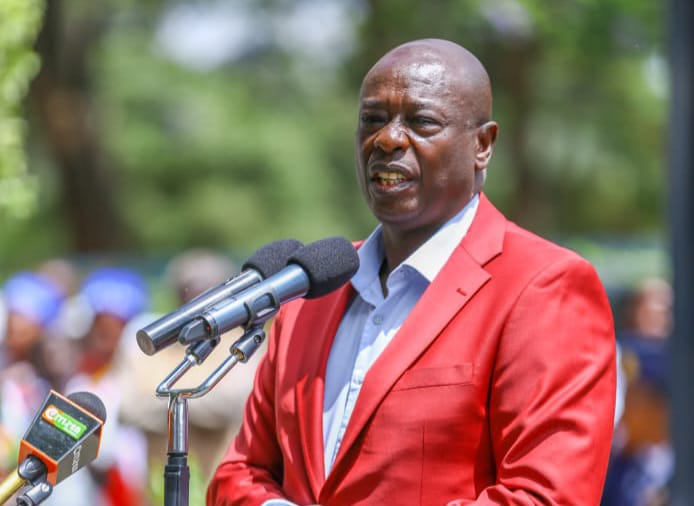
President William Ruto is intensifying efforts to cement political influence in Nairobi through a sweeping infrastructure modernisation programme.
In his bid to secure support from the populous Nairobi vote bloc, the President’s recent interventions target transport, water and urban mobility projects at a time campaigns for the 2027 General Election have started in earnest, albeit not officially.
The latest push comes through partnership with the World Bank in which the national government unveiled 10 projects under the Kenya Urban Mobility Improvement Project.
The Kumip initiative targets Nairobi Metropolitan Area’s chronic transport congestion and urban infrastructure challenges.
The project will expand and modernise Nairobi’s commuter rail system, a long-standing public transport challenge that successive administrations have struggled to resolve despite rapid population growth and worsening traffic congestion.
The Kenya Railways Corporation, which is spearheading the implementation, in a notice this week said the programme seeks to improve urban mobility by strengthening land use planning along commuter corridors and upgrading railway infrastructure.
Among the flagship projects is the development of the Nairobi Central Station-Thika commuter line, electrification of the Nairobi commuter railway network and acquisition of new trainsets, including Electric Multiple Units and Diesel Electric Multiple Units.
The programme also includes construction of prioritised access roads to commuter railway stations, development of transit-oriented projects along rail corridors and establishment of maintenance facilities for rolling stock and spare parts.
The projects are expected to complement the broader Sh80 billion cooperation framework signed earlier this year between President Ruto and Nairobi Governor Johnson Sakaja.
The agreement, which drew mixed reactions, is aimed at transforming Nairobi into a first-world city.
The deal, which was approved by the Nairobi county assembly, also signalled a deliberate effort by the national government to have direct control of Nairobi, a key determinant in national election outcomes.
Political analysts say the renewed focus on Nairobi infrastructure reflects the strategic importance of the capital in Kenya’s electoral politics.
Nairobi remains one of the country’s most influential voting blocs, with its growing youthful population, urban middle class and economically strained informal settlements. As of 2022 IEBC records, the city had 2.2 million registered voters spread across 3,396 polling stations in 17 constituencies. This makes it a key battleground for both Kenya Kwanza and the United Opposition.
The city was also among the regions that witnessed heightened anti-government sentiment during the Gen Z-led protests against taxation and the cost of living last year, exposing growing dissatisfaction among urban voters.
Against this backdrop, the government’s aggressive infrastructure agenda appears aimed not only at solving Nairobi’s long-standing mobility crisis but also at rebuilding political goodwill in the capital.
The projects offer an opportunity to project Ruto’s administration as development-oriented and responsive to urban frustrations. The President has repeatedly said this, in particular speaking about his flagship Affordable Housing Project.
On the other hand, the partnership provides a critical political lifeline for Sakaja as he seeks to strengthen his standing ahead of polls, amid public pressure and criticism. He has faced criticism over garbage collection, drainage, flooding and service delivery challenges in the city.
The commuter rail modernisation programme is expected to particularly target the satellite areas of Nairobi in Kiambu and Machakos counties. These include Thika, Syokimau, Embakasi, Ruiru and Kikuyu.
Beyond transport, the broader Nairobi cooperation framework between the national government and county administration also includes major investments in water, sewerage and housing infrastructure.
Among the planned projects are upgrades to the Ngethu Water Treatment Plant, the Gigiri-Shauri Moyo evacuation corridor and expansion of sewerage infrastructure to address persistent water shortages and sanitation challenges.
The government hopes the projects will help reposition Nairobi as a modern regional commercial hub capable of supporting economic growth and attracting investment.
However, critics argue that Kenya has historically announced ambitious infrastructure programmes whose implementation either stalls or becomes slowed by procurement disputes, corruption allegations and funding constraints.
Others caution that the timing of the projects, barely a year before the next election, could fuel perceptions that development initiatives are increasingly being tied to political calculations, as has happened in Ol Kalou with the relaunch of the train commuter services after 46 years.
Still, the scale of the planned investment underscores how central Nairobi has become to the country’s evolving political landscape.







![[PHOTOS] Ruto pushes for stronger Kenya-EU economic ties in Brussels](https://cdn.radioafrica.digital/image/2026/06/3aebc395-285b-441c-8aa4-33cb538f8d44.jpg)