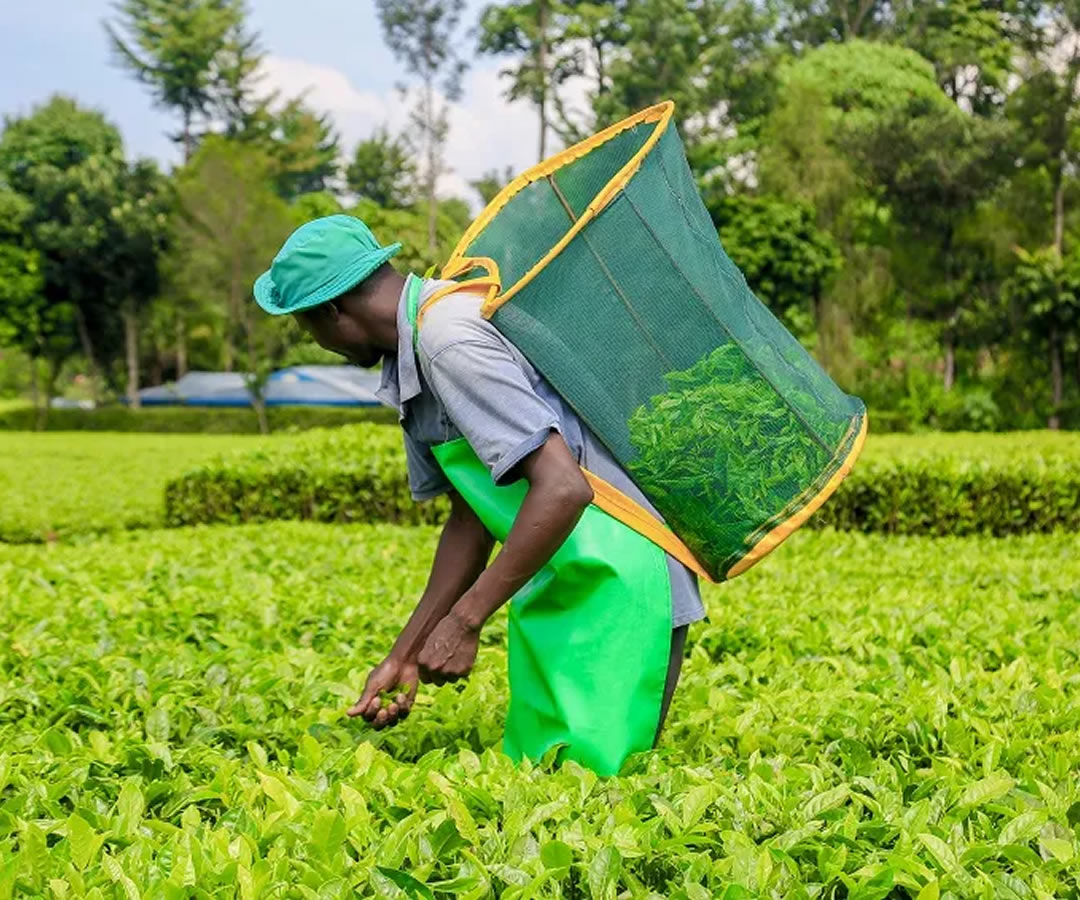
 A worker plucks tea at a farm/COURTESY
Tea sector leaders are raising concerns over a sharp decline in the absorption of Kenyan tea at the Mombasa Tea Auction, which they attribute to the implementation of the Tea Levy Act that took effect in May.
KTDA Zone 5 Director John Mithamo Wasusana says the levy has significantly affected buyer demand, with exporters increasingly opting for teas from neighbouring East African countries.
According to Wasusana, the situation has become critical, citing Monday's auction where only 2.1 percent of tea presented by Rukuriri Tea Factory was sold. The factory was recognized last year for producing the country's highest-quality tea.
“We are completely killing the Kenyan tea farmer. The levy is making buyers prefer even lower-quality teas because Kenyan tea has become more expensive,” said Wasusana.
He spoke during a crisis meeting involving farmers from Ndima Tea Factory in Kirinyaga County, where growers expressed frustration over the new charge amid mounting challenges facing the industry.
Industry players argue that the levy comes at a difficult time for tea exporters, who are already grappling with disruptions in global shipping routes linked to instability in the Middle East, a key transit corridor for tea exports destined for markets such as Iran and Pakistan.
The Tea Board of Kenya (TBK), however, has defended the levy, saying it is necessary to restore funding that was lost when the previous tea levy was abolished in 2016. The board maintains that the charge—set at 0.8 per cent of the auction value or customs value for direct sales—is payable by exporters and not farmers.
TBK says proceeds will be ring-fenced for the tea sector, with 50 per cent allocated to farmer income support and price stabilisation, 20 per cent to research through the Tea Research Institute, 15 per cent to regulatory functions, and 15 per cent to infrastructure development in tea-growing counties.
The Mombasa Tea Auction, one of the world's largest black tea trading hubs, handles between 8.5 million and 11 million kilogrammes of tea every week from Kenya, Uganda, Tanzania, Rwanda and other regional producers.
Sector leaders now want the levy suspended, arguing that declining auction demand could ultimately reduce farmers' earnings despite the intended benefits of the policy.