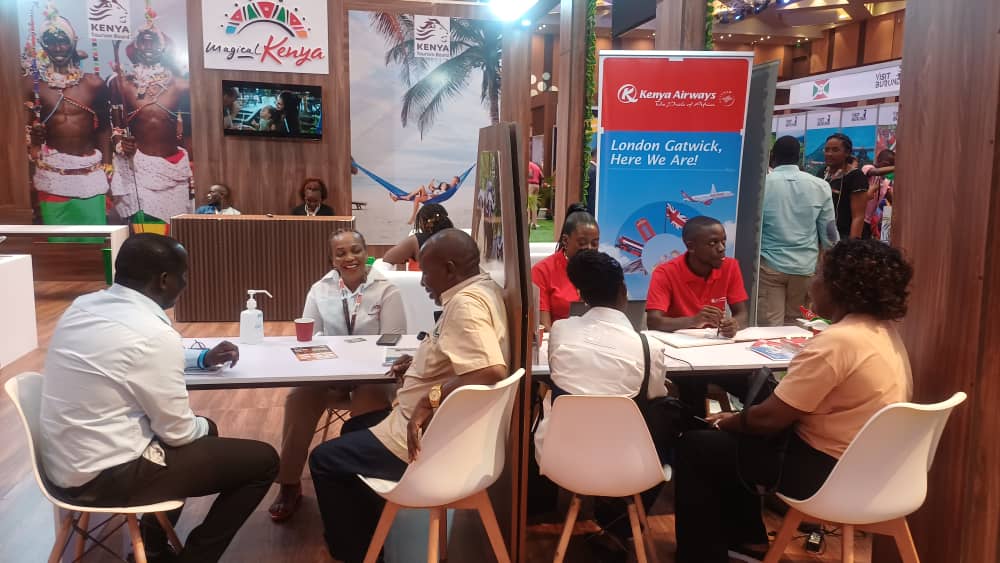
 Participants during the ongoing Pearl of Africa Tourism Expo (POATE) 2026 in Kampala /HANDOUT
The Kenyan Coast is steadily cementing its position as East Africa’s leading tourism and hospitality hub, with rising regional travel from Uganda, Tanzania and Rwanda continuing to fuel growth in visitor numbers and sustain year-round business for hotels and resorts.
The growing importance of the Coast in regional tourism was evident during the ongoing Pearl of Africa Tourism Expo (POATE) 2026 in Kampala, Uganda, where Kenyan tourism stakeholders intensified marketing campaigns and partnership efforts aimed at expanding intra-African travel.
A strong delegation comprising Coast-based hotels, resorts and tourism operators used the expo to showcase Kenya’s diverse coastal experiences ranging from beach holidays and cultural tourism to conferencing, sports tourism and luxury hospitality.
Tourism Principal Secretary John Ololtuaa said the Kenyan Coast remains central to Kenya’s tourism growth strategy because of its unique blend of beach experiences, Swahili heritage, modern hospitality facilities and improved connectivity.
“Uganda remains a key market for Kenya due to its accessibility by air, road and even through Lake Victoria, making visits between the two countries easy. The Kenyan Coast continues to anchor regional travel demand because of its pristine beaches, rich Swahili culture, diverse hospitality offerings, conferencing facilities and enhanced connectivity,” said Ololtuaa.
Uganda remains Kenya’s biggest regional tourism source market, contributing 234,556 visitors in 2025, accounting for 31 per cent of all African arrivals into Kenya.
The figure represented an 8.7 per cent increase compared to the previous year.
Tanzania followed closely with 209,536 arrivals, marking a 7.7 per cent growth from 2024.
Kenya is now targeting a further 27 per cent rise in Ugandan arrivals to hit the 300,000 visitor mark.
The Coast has increasingly become the preferred destination for East African travellers seeking beach holidays, destination weddings, honeymoons, golf tourism and family leisure experiences. Industry players say the growing regional market has helped maintain stable hotel occupancy levels throughout the year, reducing overreliance on long-haul international tourists.
Major international sporting events such as the World Rally Championship (WRC) Safari Rally have also boosted regional tourism traffic into Kenya, attracting thousands of visitors from neighbouring countries.
Ololtuaa attributed the tourism growth to improved air connectivity, visa openness policies, enhanced infrastructure and regional tourism forums such as POATE and the Magical Kenya Travel Expo (MKTE).
“Travellers are increasingly preferring an integrated East African experience combining wildlife safaris, coastal leisure, business events and cultural tourism including festivals. Through the ‘Visit East Africa, Feel the Vibe’ campaign, we are working together as the East African Community to market the region as one destination while easing movement of visitors across borders,” he said.
This year’s POATE brought together hundreds of exhibitors, investors, tour operators and tourism professionals from across Africa and beyond to showcase tourism products and strengthen trade partnerships.
Several Coast hospitality brands participated in the expo, including Neptune Hotels, Reef Hotel, PrideInn, Tamarind, Diamond Leisure, Jacaranda Indian Ocean Beach Resort and various tourism establishments from Kwale County.
Kenya Coast Tourism Association chairman Victor Shitakha said the expo had become an important platform for marketing customized regional tourism packages.
“This expo is critical in helping us market tailored packages for regional travellers, including beach holidays, wellness retreats, destination weddings, honeymoons, festivals, nightlife, MICE tourism and sports tourism experiences,” said Shitakha.
He said Kenya and Uganda were deepening cooperation through joint marketing campaigns and multi-destination tourism initiatives designed to boost intra-African travel.
“A key part of this strategy is the annual Uganda-Kenya conference that brings together tour operators from both countries to identify and market complementary tourism attractions,” he said.
Shitakha noted that tourism stakeholders were increasingly leveraging regional marketing platforms such as POATE, Kili Fair in Tanzania and the Magical Kenya Travel Expo, supported by visa-free travel arrangements, expanded flight connections and improved road networks across East Africa.
The continued growth of regional tourism is now positioning the Kenyan Coast not only as East Africa’s premier beach destination, but also as a strategic driver of intra-African travel, investment and regional economic growth.