He said the standoff and an unsettlecontractor'sor bill have left the facility lying idle despite growing pressure on the country’s
public health system.
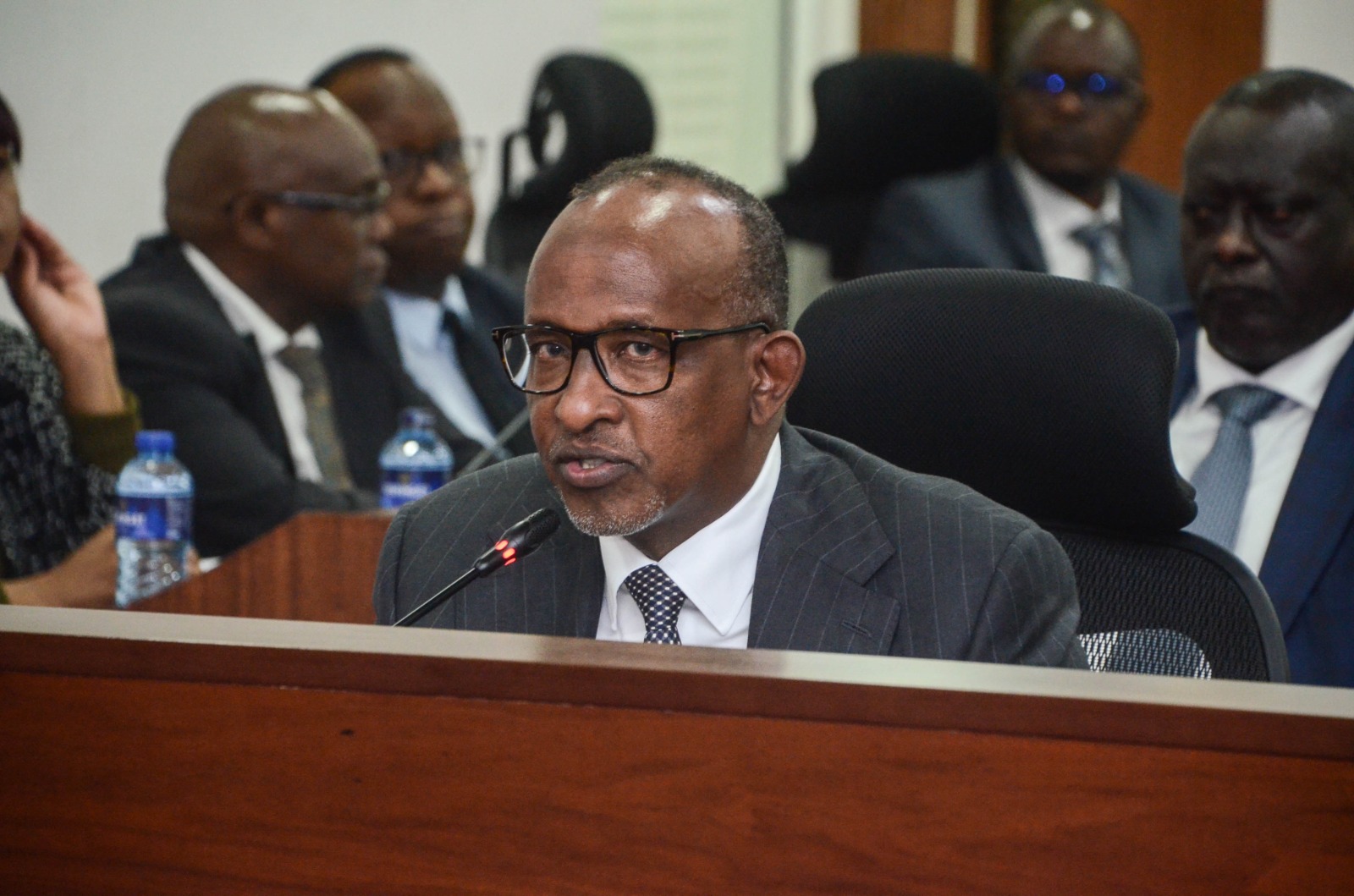
Appearing before the National Assembly Committee on
Health on Tuesday to defend the State Department for Medical Services’ 2026/27
budget estimates, Duale said repeated attempts by the Ministry of Health to
open the National Police Service Referral Hospital had been blocked by police
leadership.
The CS revealed that several proposals aimed at making
the facility functional had collapsed, including plans to place it under the
management of Force Memorial Hospital and later convert it into an annex of
Kenyatta National Hospital (KNH).
“We suggested it be run by Force Memorial Hospital, as
they could help the Kenya Police recruit personnel." The then Inspector General was
infuriated, and the KDF abandoned it,” Duale told the committee chaired by Seme
MP James Nyikal.
He said the Ministry had also explored the possibility
of allowing KNH to manage the hospital to ease pressure on the country’s
largest referral facility, but the proposal stalled.
“I advised the KNH boss not to bother,” Duale said,
saying the Ministry wants the hospital opened.
“At some stage we have to make a decision,” he added.
Duale further disclosed that the contractor who built
the facility has declined to hand it over because a substantial amount of money
remains unpaid.
“It is fully furnished, and something has to be done. It
will look bad on us as a leadership,” he told MPs.
The CS proposed three options for salvaging the
facility, including converting it into a county referral hospital, handing it
over to KNH as a satellite branch, or allowing the National Police Service to
fully manage it for officers and their families.
“We have almost given up. It is difficult to deal with
the police service,” Duale admitted.
Nyikal faulted the delays, saying
the country could not afford to have a medical facility lying unused while
hospitals struggle with congestion and inadequate infrastructure.
“We cannot have a facility fully equipped and lying fallow,” Nyikal said. “It does not matter who gets treated there, but let it work. We need that facility operational,” he added.
Beyond the hospital stalemate, Duale painted a picture
of the health sector’s financial challenges, revealing that the State
Department for Medical Services faces unfunded priorities amounting to more
than Sh104.6 billion in the 2026/27 financial year.
The department, which is spearheading the implementation of
Universal Health Coverage under the government’s Bottom-Up Economic
Transformation Agenda, warned that critical programmes risk stalling without
additional allocations from Parliament.
Among the urgent needs outlined by the CS is Sh2.3
billion to replace outdated kits used by community health promoters for
primary healthcare.
Duale also disclosed that the government owes health
facilities Sh29 billion under the defunct National Health Insurance Fund (NHIF)
scheme, warning that at least Sh10 billion must be released in the next
financial year to prevent disruptions in service delivery.
The Ministry is also seeking a one-off allocation of
Sh2.6 billion to operationalise the East Africa Centre for Excellence in
Urology and Nephrology.
MPs were further informed that the Kenya National Blood
Transfusion Services requires Sh2.4 billion for the procurement of blood and blood
components, with Duale warning that shortages continue to endanger emergency
response and surgical services nationwide.
To sustain free essential and outpatient services at
Level Two and Level Three facilities, the CS appealed for Sh38.1 billion, while
emergency, chronic disease and critical care coverage will require another
Sh15.9 billion.
He further said national referral hospitals require
Sh14.6 billion for personnel emoluments and related operational costs,
cautioning that specialised medical services could be disrupted if the funding
gap persists.
Duale reminded lawmakers that Article 43 of the
Constitution guarantees every Kenyan the right to the highest attainable
standard of health.
“Adequate financing is essential to enable the Ministry
to fully implement this guarantee,” he said, urging MPs to support the
Ministry’s budget requests during parliamentary deliberations.
He reaffirmed the State Department’s commitment to
TaifaCare, digitisation of health services, expansion of national referral care
and local manufacturing of essential medicines, warning that failure to bridge
the funding gaps could derail the country’s push towards Universal Health
Coverage.