
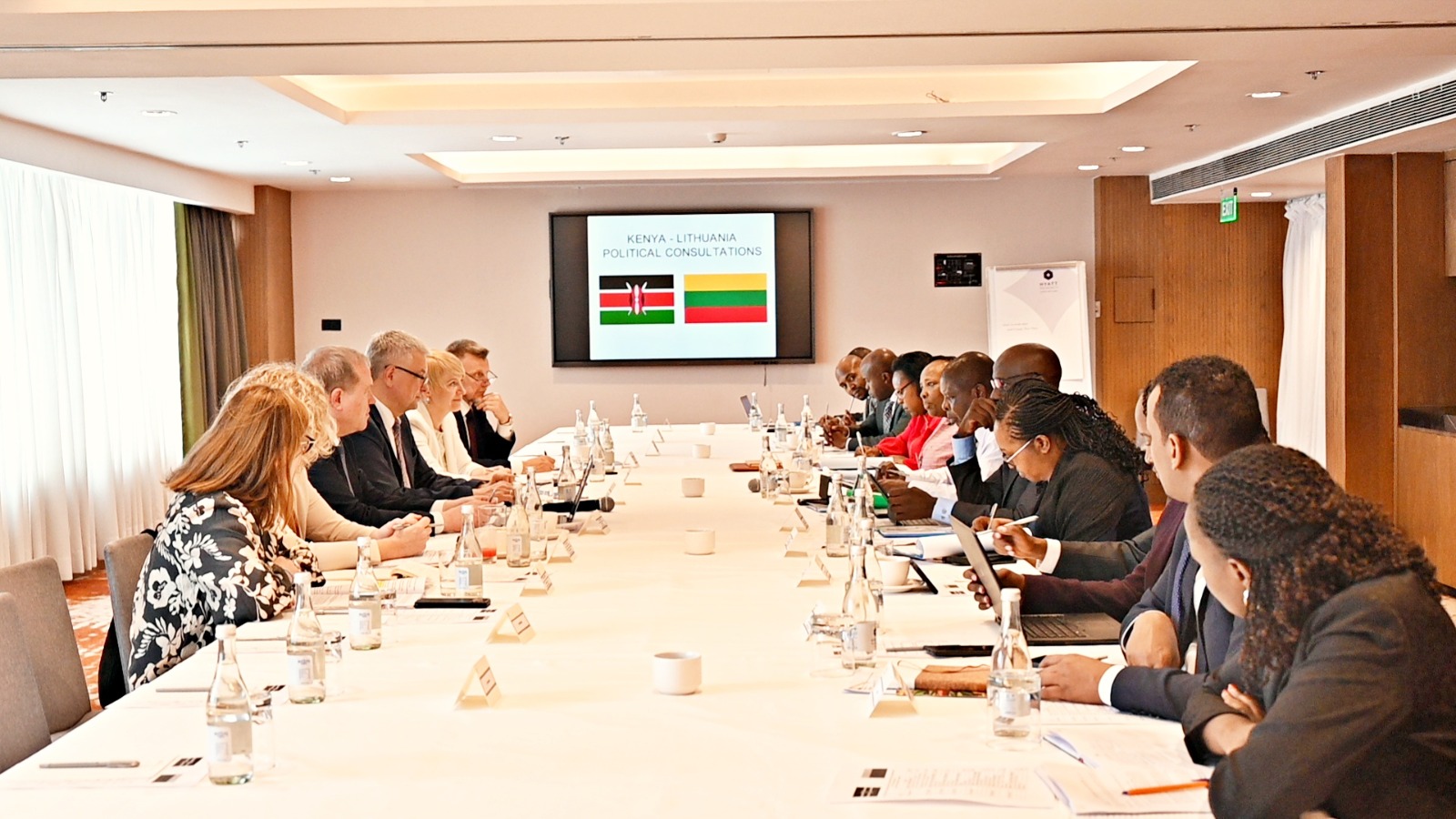
Kenyan and Lithuanian diplomats on Wednesday met in Nairobi
to reaffirm bilateral cooperation.
During the consultations, both sides reaffirmed their shared
commitment to deepen their ties, which, while they were established in the
1990s, have not been exploited until recently.
The meeting provided an opportunity to explore avenues for
expanded collaboration.
Discussions focused on key priority sectors, including
renewable energy, ICT, education, trade and investment, among others, where
both countries see significant untapped potential.
The meeting brought together senior diplomats, led by
Foreign Affairs political affairs director general Amb Josphat Maikara and
Lithuania’s Vice Minister of Foreign Affairs Vidmantas Verbickas.
It was the first structured political consultation between
the two countries since establishing diplomatic relations in 1992.
The meeting follows another high-level engagement in August
2020, where the respective Foreign Affairs ministers spoke on the phone.
At the time, Lithuania Foreign Affairs Minister Linas
Linkevičius discussed with Raychelle Omamo on how to develop cooperation
between the two states, especially on the economic front.
“We would like to maintain an intensified bilateral
relationship, and we see untapped potential for expanding it in various areas,”
Linkevičius said at the time.
“Lithuanian companies still poorly know the Kenyan market,
with the exception of a ICT companies that provide software solutions and
services to African countries, including Kenya.”
He added that they would like to increase exports of digital
technologies and e-government services.
“We can also see an opportunity to strengthen cooperation in
the field of life sciences," he said.
Now, with the setting into motion of the engagements through
the consultations, the two states appear to be deliberately exploiting the
untapped potential.
Nairobi is particularly widening its diplomatic and economic
net to include smaller, strategically positioned countries that offer niche
advantages in technology, markets and geopolitical alignment.
Historically, Kenya’s European engagement has been dominated
by established partners, such as the UK, Germany and France, and other more
prominent EU states.
While these relationships remain central, Nairobi is now
complementing them with outreach to countries that were previously peripheral
to its diplomacy.
In recent years, Kenya has stepped up engagement with
countries such as Azerbaijan, Belarus, the Czech Republic and Croatia, a
pattern that points to a more diversified and interest-driven foreign policy.
Foreign policy analysts opine that Kenya is no longer just
looking at who its traditional allies are, but what specific value each
partnership can bring. This includes technology, access to markets or political
support in multilateral forums.
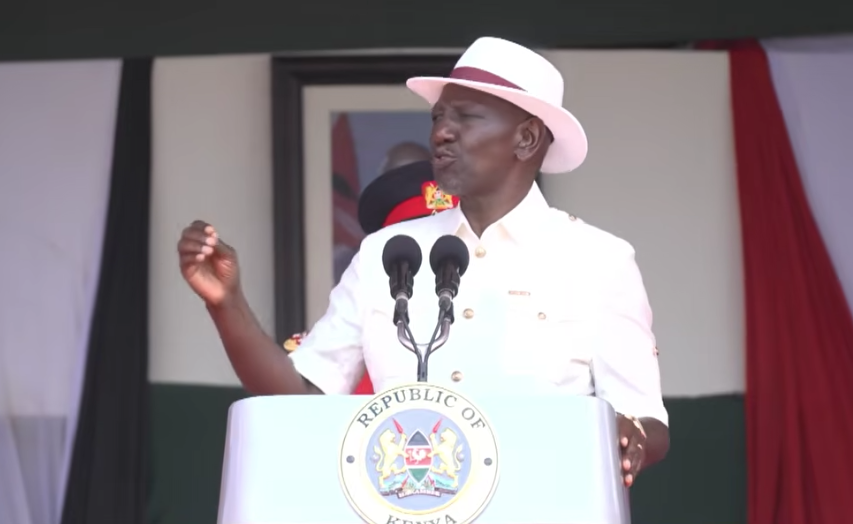
President William Ruto also indicated in his Kenya Kwanza
Manifesto that his foreign policy would go beyond Kenya’s traditional allies to
include those who would have mutual benefits with Nairobi.
Lithuania, for instance, is known for its leadership in
fintech regulation and digital governance, areas where Kenya is actively
seeking expertise as it builds its digital economy.
Azerbaijan, which inaugurated its embassy in Nairobi on June
3, 2025, offers potential cooperation in energy and logistics.
Belarus has historically engaged in industrial and
agricultural technology, while Czech Republic, whose Prime Minister Petr Fiala
visited Kenya in November 2023, brings strengths in manufacturing and
engineering.
Croatia, which Foreign Affairs CS has welcomed their plans
to open and embassy in Nairobi, presents opportunities in tourism, maritime
trade and infrastructure.
The focus on trade and investment during the Kenya-Lithuania
consultations reflects Nairobi’s broader pivot towards economic diplomacy under
Ruto.
Kenya is increasingly positioning itself as a gateway to the
East African Community, offering new partners access to a regional market of
more than 300 million people. In return, these countries provide entry points
into the European Union and Eurasian markets.
This two-way strategy is designed to expand export markets
for Kenyan goods, attract diversified investment flows and build resilience
against overdependence on a narrow set of traditional partners.
The outreach also comes at a time of shifting global
alliances, where middle and smaller powers are playing a more active role in
shaping economic and political networks.
By engaging a wider range of countries, Kenya is positioning
itself to navigate a more complex geopolitical landscape, whereby it is
balancing relationships across different blocs while advancing its own national
interests.