His remarks appeared to push back against Nairobi’s
criticism of its retaliatory strikes.
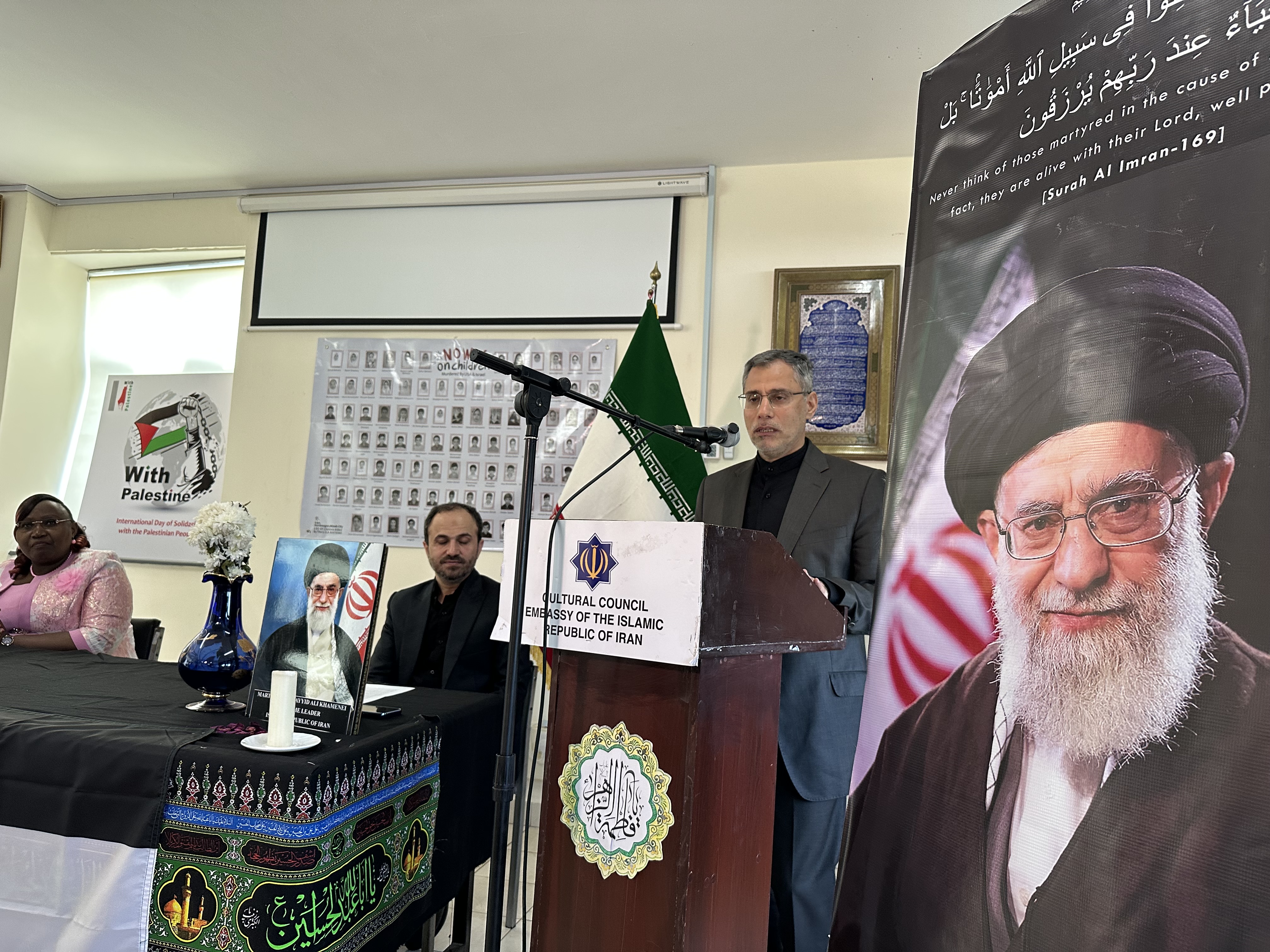
Responding to a question on Tehran’s reaction to President
William Ruto’s stance, Ambassador Ali
Gholampour said condemnation of acts of aggression should be consistent and
guided by international law and the principles of the United Nations Charter.
“It is in accordance with international law and the United
Nations that every country has a responsibility in upholding and protecting
international order and international peace and security for all,” the envoy
said during a roundtable in Nairobi on Thursday.
“There is no doubt that in such cases of aggression, which
is a grave violation of international law, all leaders should not take sides.
When you take a side, it is a matter of concern.”
Gholampour added that when leaders condemn acts of
aggression, their response should not be conditional.
“It should be in the spirit and letter of the UN Charter.
This is something we expect from the government of Kenya,” he said.
President Ruto on March 2 in an X post condemned Iran’s
retaliatory strikes on several Gulf states, warning that the widening conflict
posed a grave threat to international peace and security.
He criticised attacks targeting countries including the UAE,
Qatar, Saudi Arabia, Iraq, Oman, Kuwait, Jordan and Bahrain and called for
urgent multilateral engagement to de-escalate the crisis.
However, the statement triggered debate among foreign policy
experts and online audience, with critics arguing that it focused on Iran’s
retaliation while failing to condemn the earlier strikes on Iran by Israel and
the United States.
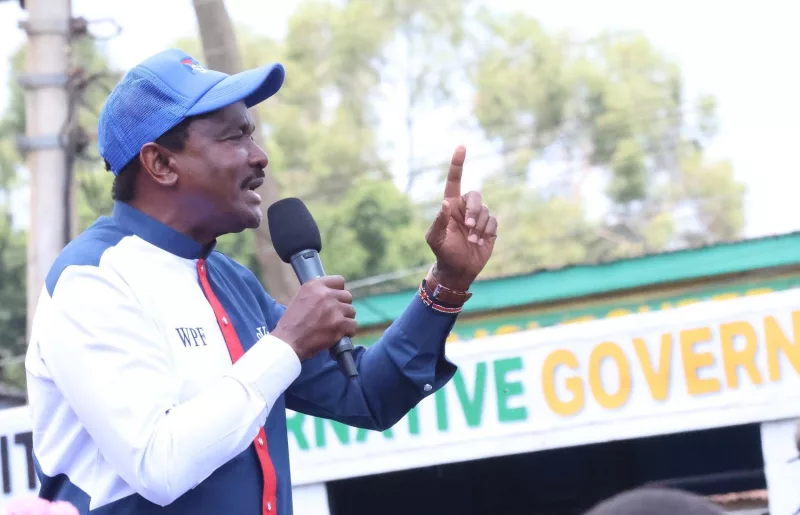
Amid the backlash, the Ministry of Foreign and Diaspora
Affairs initially through PS Korir Sing’oei and later CS Musalia Mudavadi
clarified that Nairobi had not taken sides in the conflict and was only calling
for restraint and dialogue.
Speaking on Monday at Chatham House in London, Mudavadi said
Kenya has deliberately avoided aligning with any party in the crisis and
instead advocates diplomacy and de-escalation.
“Kenya has not aligned with any party in the Middle East
crisis. It has consistently called for de-escalation, dialogue, multilateral
engagement and adherence to international law,” Mudavadi said.
He, however, warned that a prolonged conflict could have
far-reaching consequences for global trade and energy supply chains,
particularly for developing countries.
Disruptions to shipping routes and energy supply lines
through the strategic Strait of Hormuz could have significant economic and
security ramifications, he said. The strait is one of the world’s most critical
oil transit corridors
Mudavadi also noted that the Middle East hosts more than
half a million Kenyan migrant workers, making stability in the region a key
concern for Nairobi.
The Prime Cabinet Secretary said Kenya’s approach reflects a
broader foreign policy strategy aimed at maintaining partnerships across
competing geopolitical blocs.
Under what he described as a “multi-alliance approach,”
Nairobi intends to maintain strong ties with traditional Western partners.
This include the US, the UK and the EU, while expanding
trade and investment links with emerging powers such as China and India, as
well as Gulf states.
“Our aim is not to take sides but to choose mutually
beneficial partnerships anchored in mutual respect and shared prosperity,”
Mudavadi said.
Kenya previously invoked the principles of sovereignty,
territorial integrity and the UN Charter when heavily condemning Russia’s invasion
of Ukraine in New York.
Amb Martin Kimani, the then Permanent Representative to the
UN, delivered a viral speech in the Security Council that drew parallels
between Ukraine’s situation and Africa’s experience with colonial borders,
warning against the "embers of dead empires".
Amb Kimani declared that "the territorial integrity and
sovereignty of Ukraine stands breached," calling Russia's actions an
illegal and unjustified act.
That strong position has since eased, with Kenya now calling
for a political and peaceful settlement of the conflict.
Foreign policy experts have argued for strategic silence on
the crisis as many other African states have done
Africa Policy Institute Prof Peter Kagwanja argues that
Kenya, to continue attaining its interests, needs to be “at ease with ever body
and at war with no body”
“If you are not adding value to silence, they say, keep on
keeping quiet. Kenya should take ‘strategic silence’ in conflict of war
situations where it is not strong or its voice consequential. That is
pragmatism, not weakness,” Kagwanja said.
The stance on the Middle East crisis reflects the complex
diplomatic balancing act facing the government as it seeks to maintain
strategic partnerships, while navigating intensifying geopolitical rivalries.