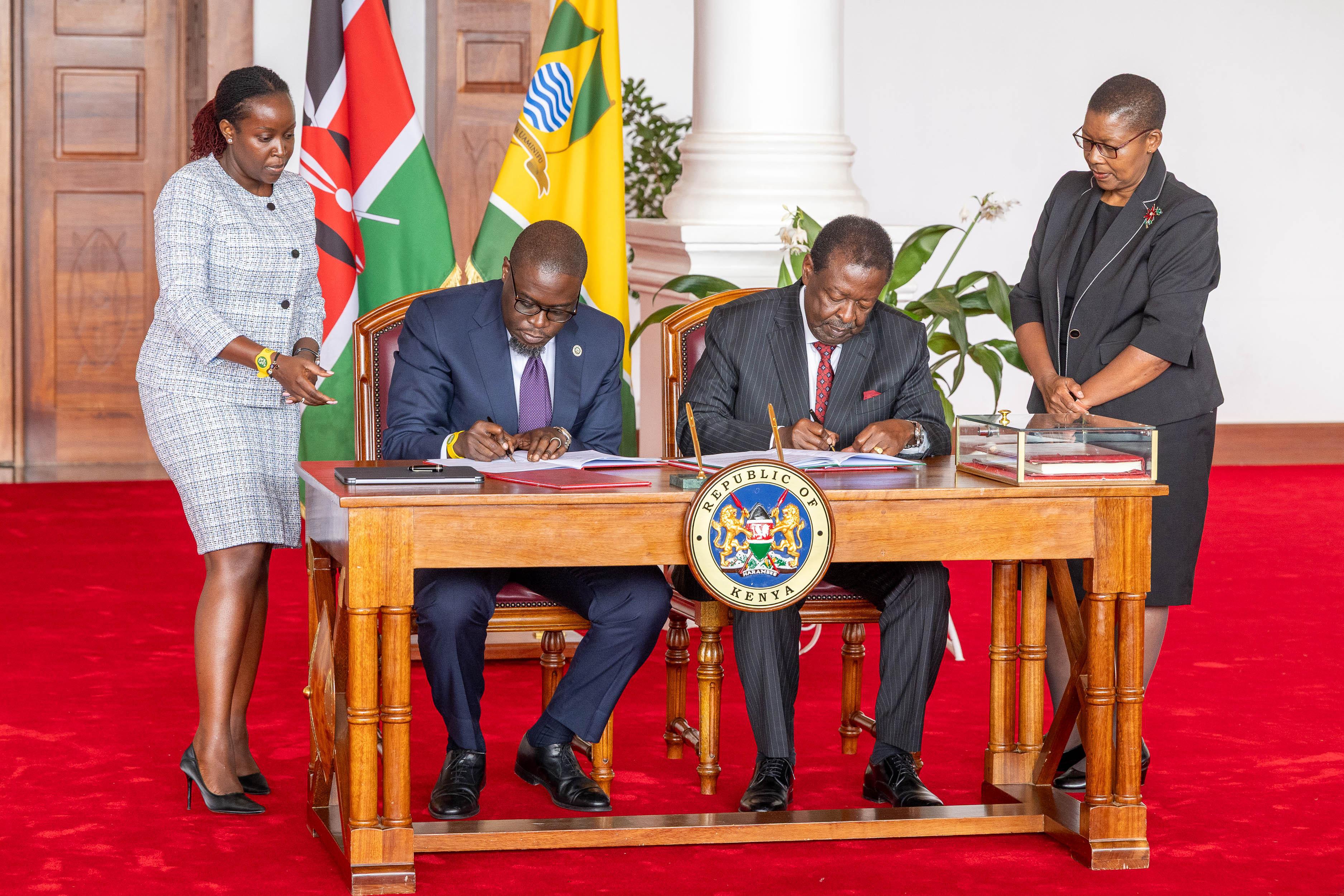
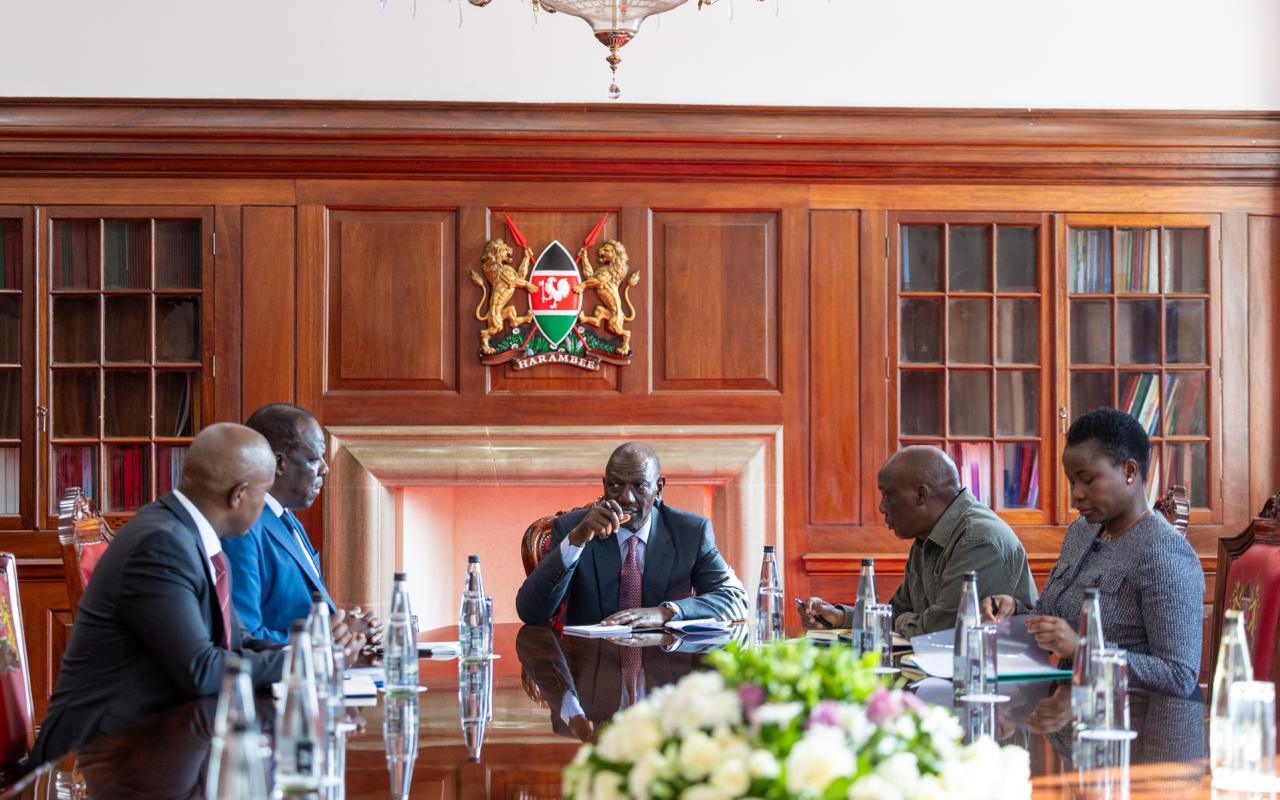
The cooperation agreement signed on Tuesday between
President William Ruto and Nairobi Governor Johnson Sakaja has reopened debate
about the governance of the capital.
The deal has inevitably drawn comparisons with the 2020 Deed
of Transfer that created the Nairobi Metropolitan Services (NMS) under retired
President Uhuru Kenyatta and former Governor Mike Sonko.
While both arrangements seek to address Nairobi’s chronic
service delivery failures, they differ in legal structure, political context
and execution model.
At its core, the Sakaja–Ruto pact establishes a cooperative
framework between the national and county governments aimed at accelerating
infrastructure development without dismantling devolution.
Sakaja secured an additional Sh80 billion in funding
commitments following the signing of the agreement, positioning it as a
financial boost to unlock stalled projects.
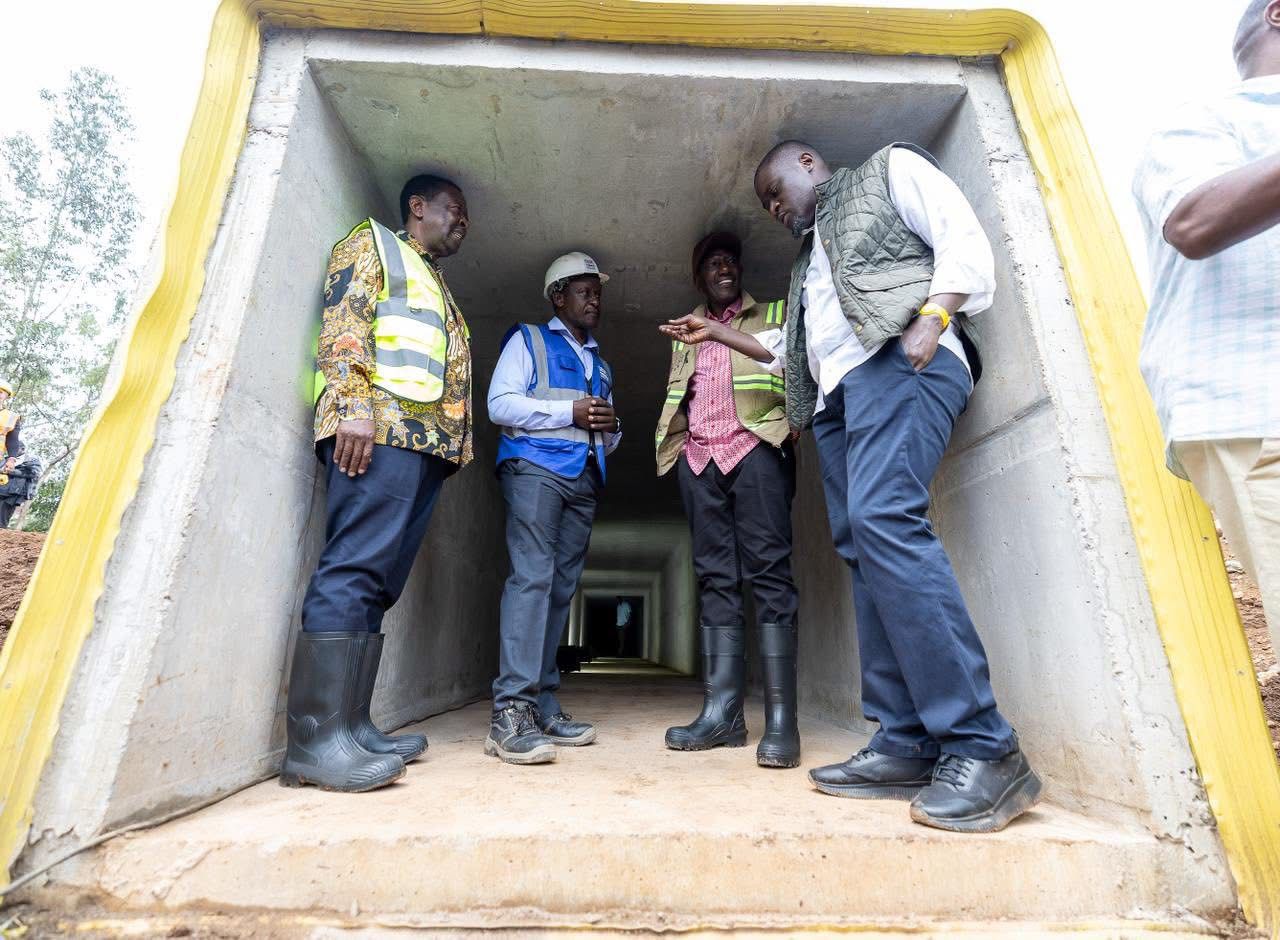
A key highlight of the deal is the Sh1 billion allocated
specifically for improving Nairobi’s stormwater drainage system to curb perennial
flooding.
In addition, Sh9 billion has been pledged for the
construction of two parallel 27-kilometre trunk sewer lines along the Nairobi
River corridor, Sh6 billion earmarked for a new sewer treatment plant with a
projected capacity of 60,000 cubic litres per day, Sh3 billion allocated for
last-mile sewer connectivity, and Sh15 billion set aside for long-term sewer
expansion and upgrades.
In total, Sh34 billion has been committed to sewerage and
drainage-related projects alone — a significant intervention aimed at resolving
flooding and sanitation challenges that have long plagued the city.
Beyond water and sanitation, the agreement aligns Nairobi
County’s plans with the national government’s affordable housing agenda, paving
the way for large-scale urban renewal projects.
Road upgrades, transport integration, water source
development, solid waste management and public lighting are also listed among
priority areas.
Unlike the 2020 Deed of Transfer, however, the new pact is
anchored on Sections 5 and 6 of the Urban Areas and Cities Act, which encourage
cooperation between the two levels of government in managing capital city
functions.
It does not invoke Article 187 of the Constitution, which
allows for the transfer of functions from one level of government to another.
The 2020 agreement between Kenyatta and Sonko was far more
drastic. Signed on February 25, 2020, at State House, the Deed of Transfer
formally handed over four core functions, health services, roads, transport and
public works, utilities and ancillary services, and planning and development ,
from Nairobi City County to the national government.
These functions were managed under the Nairobi Metropolitan
Services (NMS), led by Major General Mohamed Badi.
The move followed persistent crises at City Hall, including
leadership wrangles, corruption allegations, financial mismanagement and
deteriorating service delivery, which the national government argued required
urgent intervention.
NMS was allocated Sh23.9 billion in the 2020/21 financial
year. In May 2020, reports indicated an allocation of Sh26.4 billion to support
Covid-19 response measures.
In 2021/22, it received Sh20.1 billion, comprising Sh12.1
billion for recurrent expenditure and Sh8 billion for development, alongside a supplementary
Sh3.5 billion.
During its tenure, NMS undertook extensive road
rehabilitation, installed street lighting, refurbished health centres and
expanded ICU capacity during the Covid-19 pandemic.
It also worked on market upgrades and decongestion
initiatives. On September 30, 2022, NMS operations formally ended and the
national government handed back the transferred functions to Nairobi County.
Governor Sakaja has sought to clearly distinguish the new
arrangement from that era.
“This is not an NMS takeover. That was a misadventure that
left behind Sh16 billion in debt. This is not a transfer of function. This is a
cooperation that recognises Nairobi as the nation’s capital. The current
financing of the capital is not sufficient, and this partnership is a way to
secure more funds, achieve more projects, and demonstrate that, 13 years later,
the President has heard us,” Sakaja said.
Ruto also moved to calm fears that the agreement represents
a backdoor takeover of county powers.
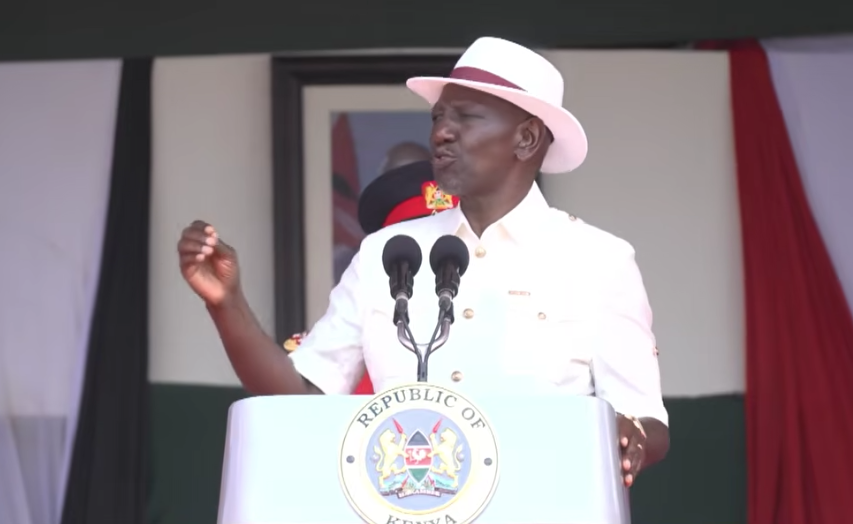
“What we are formalizing today is not a transfer of
functions. Let me repeat there is no transfer of functions taking place. For
the avoidance of doubt, I have no interest in running the city; my hands are
already full. The Governor and his team must continue to run the city. However,
as President, I have an obligation to support and assist the capital city,” he
said.
Yet critics argue that the structure of the pact suggests
deeper national involvement than is being acknowledged.
Nairobi Senator Edwin Sifuna has demanded the immediate
revocation of the agreement, warning that he will challenge its legality if it
is not withdrawn.
“I am demanding that this agreement be revoked in its
entirety,” Sifuna said. “Failing which, I will challenge its legality. In fact
the matter will be brought to the Senate.”
“From its very structure, this arrangement subordinates the
county government to the national executive,” he added. “This is not
cooperation. It is a takeover.”
Sifuna also questioned the 14-day window before the
agreement takes effect, arguing that meaningful public participation cannot be
conducted within such a short timeframe.
He criticised what he described as a clause that limits
civic input to amendments rather than allowing outright rejection.
The senator further claimed that national government
institutions owe Nairobi County more than Sh100 billion in unpaid rent and
other obligations.
“If the national government simply cleared what it already
owes Nairobi, we would have the resources to settle our own pending bills and
fund development projects — roads, markets, drainage, waste management,” he
said.
According to Sifuna, Nairobi has the highest volume of
pending bills among counties, exceeding Sh100 billion.
Whether the new framework will succeed where previous
interventions struggled remains an open question. For supporters, it represents
pragmatic cooperation aimed at fixing a city
For critics, it risks blurring constitutional lines and
setting a precedent for incremental centralisation.