Njoroge: Radio still most trusted voice despite rise of AI
Even in a fast-moving digital age, radio remains one of the most trusted and accessible sources of information
by VICTOR SIMANI
Audio By Vocalize
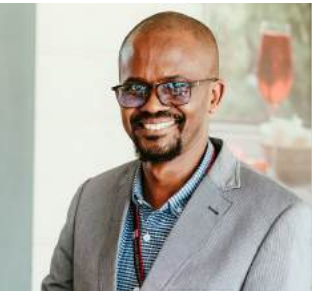
Radio Africa Group Programme Controller James Njoroge /BRIAN SIMIYU
“Wahenga hawamini tunaona redio” (ancestors are in disbelief
that we are watching radio) has become a popular phrase on digital platforms
streaming radio shows.
Even in a fast-moving digital age, radio remains one of the
most trusted and accessible sources of information.
Today, the world marks World Radio Day, celebrated every February
13 to honour radio’s enduring role in uniting communities, amplifying voices,
fostering education and promoting resilience worldwide.
This year’s theme — “Radio and Artificial Intelligence” —
highlights how the medium is adapting to a rapidly changing technological
landscape.
The rise of Artificial Intelligence (AI) is transforming
operations across industries, and radio is no exception.
Several radio stations and newsrooms have adopted AI
policies, integrating the technology into research, proofreading, summarising
reports, monitoring and flagging misinformation, generating show prompts,
fact-checking, audience analytics, trend analysis and translation.
Radio Africa Group Programme Controller James Njoroge says
AI is helping radio stations and newsrooms operate faster and more efficiently.
He maintains that radio will remain relevant for a long time, even as AI tools
gain ground.
“Before, when it came to preparing for a show or researching
a story, you had to go to multiple sources, maybe to old articles, or search
engines on the Internet. What AI has now enabled people in the industry to do
is cut that time short by providing responses from various sources,” Njoroge
said.
He noted that although adoption is still at an early stage,
AI is already reshaping radio broadcasting in Kenya, with some stations
piloting AI-generated presenter voices. However, he cautioned that speed must
not replace accuracy.
“It is collecting information based on what is out there. If
you collect information that is perhaps inaccurate, you still need human
intervention to verify that what you have gathered is factual,” he added.
Amid fears that AI could replace media jobs, Njoroge argued
that professionals who learn to work with the technology are better positioned
to remain relevant in a hybrid newsroom.
“For instance, if you want to do an outside broadcast, you
need physical presenters on the ground. If you are doing a commercial
activation for a client, you need a presenter physically present,” he said.
“AI may read stories and generate them from different
sources. But when it comes to doing investigative journalism or attending press
conferences, you still need human intervention,” he said.
Editors Guild of Kenya President Zubeida Kananu echoed the
view that AI should be seen as an enabler, not a threat, when used responsibly
and ethically.
“I see AI as an enabler, but only if it is used responsibly.
AI becomes a threat when it is adopted without ethics, training or editorial
control. However, when guided by professional standards, it becomes a powerful
tool,” she said.
To stay competitive in an AI-powered world, Kananu said
modern journalists and presenters must strengthen skills in digital literacy,
data analysis, research, verification and fact-checking, ethical
decision-making in technology use, multiplatform storytelling and audience
analytics interpretation.
She urged radio stations to uphold ethical AI use to
preserve public trust.
“In radio, where voice is everything, manipulated audio
poses a serious credibility risk. If audiences begin to doubt what they hear,
trust erodes quickly,” the KEG president said.
The Media Council of Kenya has published tools, guidelines
and laws on its website to guide newsrooms on ethical AI adoption. Chief
executive officer David Omwoyo said the framework is designed to help radio and
other media platforms maintain credibility in a high-speed information
environment.
“Social media and AI have their speed and excitement, but
when it comes to verifying serious matters, audiences return to mainstream
media,” Omwoyo said.
Trust remains radio’s greatest asset in Kenya. Unlike many
digital platforms, radio has built strong, long-term relationships with
communities across the country.
“In the era of AI and deepfakes, our commitment must be
clear: technology may evolve, but truth, ethics and accountability remain
constant,” Kananu said.