


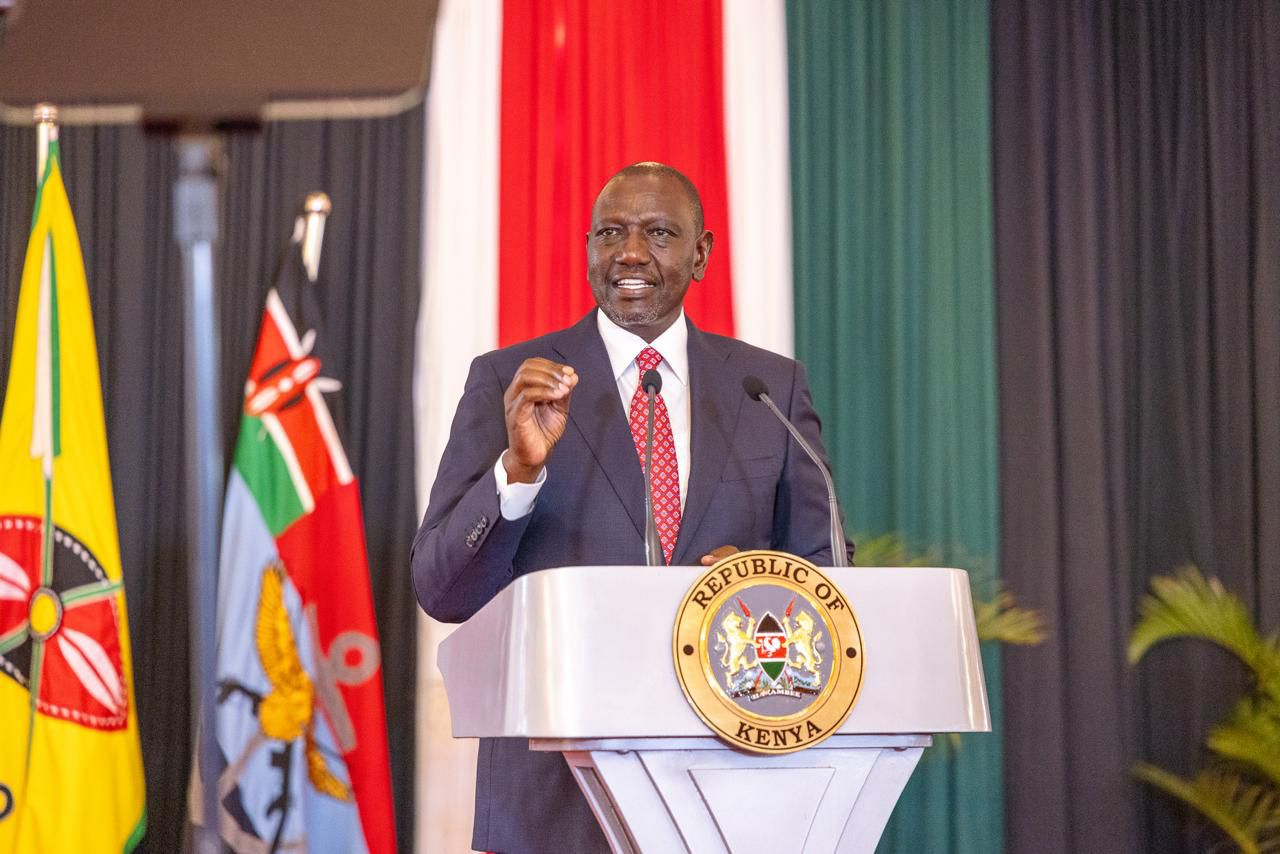
President William Ruto has unveiled an expansive national
strategy to confront alcohol and drug abuse, describing the crisis as a major
threat to Kenya’s health, security, and economic future and pledging decisive
government action beginning in 2026.
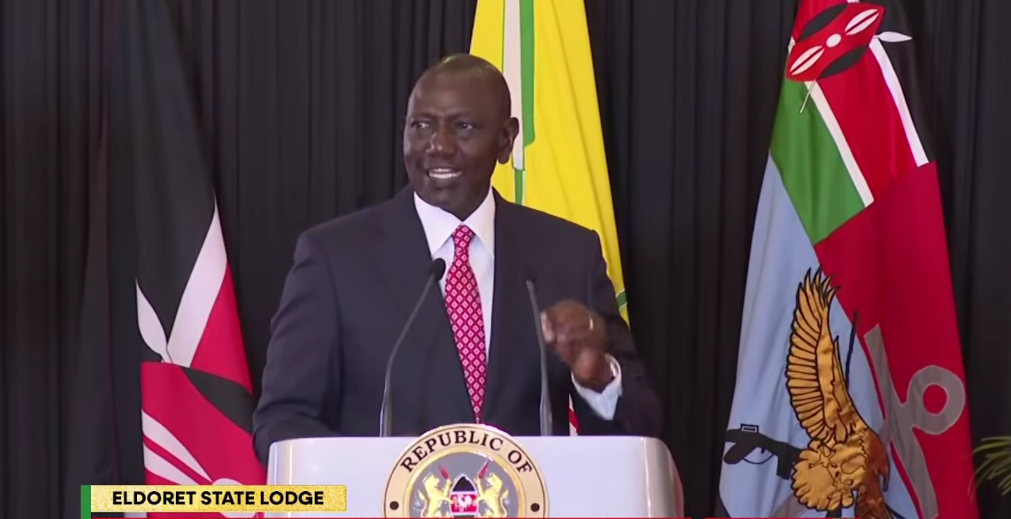
In his new year’s address to the nation, the President
warned that substance abuse had reached emergency levels, affecting millions of
Kenyans and disproportionately harming young people and men, the country’s most
productive population.
“Alcohol and drug abuse have become a clear and present
danger to Kenya’s health, security, and economic future,” Ruto said, adding
that the problem could no longer be treated as a marginal social issue.
Citing official data, the President said one in every six
Kenyans aged between 15 and 65—more than 4.7 million people—currently uses at
least one drug or substance of abuse.
He noted that the burden was particularly heavy among men
and young adults.
“One in every three Kenyan men in this age group uses drugs
or alcohol. Among young adults aged 25 to 35, our most productive population,
one in five is affected,” he said.
Ruto said alcohol remained the most widely used substance,
with more than 3.2 million current users nationwide.
He expressed concern that initiation often occurs during
adolescence, and in some cases in early childhood, exposing young people to
long-term harm.
“Initiation often occurs between 16 and 20 years, and in
some cases as early as seven, exposing children to lifelong harm before
adulthood begins,” he said.
To address the crisis, the President said the government
would treat alcohol and drug abuse as a national development and security
emergency.
Central to the strategy is the establishment of a
strengthened Anti-Narcotics Unit within the Directorate of Criminal
Investigations, with expanded operational capacity.
“We will establish a strengthened Anti-Narcotics Unit within
the Directorate of Criminal Investigations, with operational capacity
comparable to the Anti-Terrorism Police Unit,” Ruto said.
The unit’s personnel will be increased from 200 to 700
officers through recruitment and redeployment, and it will be equipped with
modern surveillance, intelligence, forensic, and financial investigation tools.
The unit will work closely with NACADA, the National
Intelligence Service, border agencies, county governments, and international
partners.
Ruto also said asset tracing, seizure, and forfeiture would
become central to narcotics and illicit alcohol investigations, with proceeds
of crime redirected to rehabilitation, prevention, and treatment programmes.
“All assets used in or acquired through these activities…
will be treated as proceeds of crime, promptly frozen, prosecuted, forfeited to
the State, and redirected to rehabilitation, prevention, and treatment
programmes,” he said.
The President said he would consult the Chief Justice on the
possible establishment of specialised courts to fast-track drug-related cases,
while respecting judicial independence.
He also announced plans to strengthen border security and
warned that any public official found colluding with traffickers would be
prosecuted and dismissed.
“This struggle is deeply personal to me, as your President,
and as a parent,” Ruto said, urging families and communities to play an active
role in prevention.
“If we fail to act, we fail our children; if we rise to this
duty, we secure not only their future, but the moral strength and destiny of
our nation.”

![[PHOTOS] Elderly brave cold to vote in Ol Kalou](https://cdn.radioafrica.digital/image/2026/07/d2345b9e-578f-45ff-9bb0-d7819671c165.webp)
![[PHOTOS] Ol Kalou residents turn out in large numbers to vote](https://cdn.radioafrica.digital/image/2026/07/fe42d51c-7f79-466e-94e8-59561f77bbe7.webp)