Gavi has said it will be sending
most of its funding to the government and expect Kenya to buy its vaccines.
Previously,
the organisation would approve vaccines for Unicef to buy in bulk on Kenya’s
behalf, which kept prices low and supply stable.
Now
Gavi will give the money directly to recipient governments like Kenya, which
will gradually take over buying the vaccines.
The
new model follows last week’s move by the US, which will see money for HIV
products sent directly to Kenya. The funding will stop in 2031.
Gavi’s
board approved the changes at its final meeting before the start of the
Alliance’s next five-year strategy, known as Gavi 6.0, which will run from 2026
to 2030.
Under
the new approach, nearly 90 per cent of Gavi’s vaccine procurement budget will
go directly to countries through what it calls “country vaccine budgets.”
For
Kenya, this means the Kenya Medical Supplies Authority (Kemsa) will have far
more control over vaccine planning, procurement and prioritisation.
Gavi
board said the shift is meant to strengthen national ownership, reduce
paperwork and give countries a clearer view of the resources they can expect
over the next five years.
“[The]
decision will further place country ownership at the heart of the Gavi model,
increase focus on protecting the most vulnerable despite financial constraints,
and support expanding equitable access to key vaccines,” the Geneva-based
alliance said in a statement.
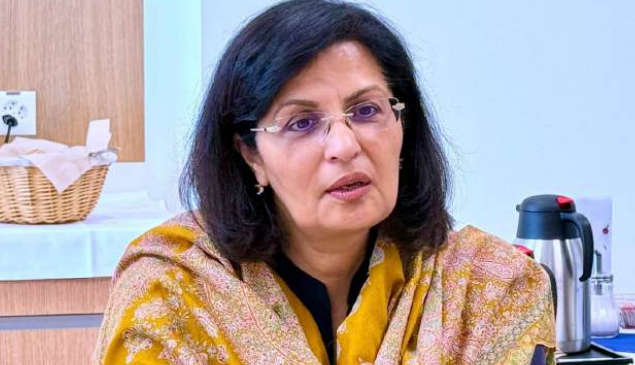
CEO
Sania Nishtar said the organisation is transforming the way it works with
countries and the reforms will enable countries have increased agency and
ownership over use of resources and lead to decreased administrative burden for
Gavi.
“These
changes are well on their way to implementation, with grant management reform –
a key pillar of the Gavi Leap – already in place and a year-long secretariat
review that will see our headcount reduce by 33 per cent now complete,” she
said.
Kenya
has been one of Gavi’s biggest success stories. Since 2001, the Alliance has
helped the country introduce vaccines such as pneumococcal, rotavirus, HPV,
yellow fever and malaria, significantly reducing child deaths.
But
as Kenya’s economy grows, it is expected to gradually take over full financing.
Gavi has already extended Kenya’s transition timeline once and under current
plans, donor financing is scheduled to end in 2029 unless a further extension
is agreed.
The
new country-budget model will give Kenya more control, but it also carries new
responsibility.
Instead
of applying for support vaccine by vaccine, Kenya will receive a five-year
allocation upfront and must plan how to use it efficiently.
Gavi
said this system ensures “countries that apply more quickly do not have an
advantage in terms of access to Gavi financing” and that all countries have an
advance view of resources available.
The
board also approved measures to direct more funding towards fragile and
humanitarian settings.
Despite
financial pressure, Gavi said it would increase its investments in such
settings by 15 per cent. It said this shift means more than a third of Gavi’s
overall funding for countries will be focused on the 25 per cent most
vulnerable children.
A
new emergency funding window, known as the Gavi Resilience Mechanism, will give
countries flexible support when conflict or crises disrupt immunisation.
Gavi
will also expand its vaccine portfolio. The board provisionally approved the
addition of nine-valent human papillomavirus (HPV) vaccines to Gavi’s portfolio
of offerings to countries, reinforcing its commitment to fighting cervical
cancer.
It
also agreed to add vaccines against tuberculosis, Mpox and respiratory
syncytial virus (RSV) to the list of priority antigens supported by the African
Vaccine Manufacturing Accelerator, which backs regional vaccine production.
To
fit these ambitions within its expected US$10 billion budget for the next five
years, Gavi approved cost-saving measures.
The
board agreed to reduce Gavi’s financial forecast for global stockpiles by US$
200 million (Sh25.7 billion) and halve the US$ 200 million (Sh25.7 billion) budget
set aside for vaccine procurement contingencies.
It
also confirmed that co-financing waivers for the poorest countries would be
covered through a separate pool of funds.
The
December 4 meeting, which made the announcement, meeting was also the last chaired
by Professor José Barroso, who has led Gavi since 2021.
“As
Gavi nears the end of its fifth strategy period, it is possible to look back at
the last five years with a historic sense of accomplishment in a period marked
by redefined multilateralism in a multipolar world,” he said.
“More than ever the Gavi model of
public private partnership is fit for purpose and can serve as a blueprint for
future initiatives. As we look ahead to the next period starting in January,
Gavi is in a strong position: not just to protect more children than ever
before but to help shape a new model where countries themselves drive their own
vaccination agenda – and achieve the Alliance overall goal of protecting our
future and strengthening country self-reliance.”