


Climate activist and endurance enthusiast Truphena Muthoni has expressed confidence that her message will resonate globally when she sets a new tree-hugging world record.
Muthoni, who previously set a 48-hour record, is hoping to extended her milestone to an unprecedented 72 hours.
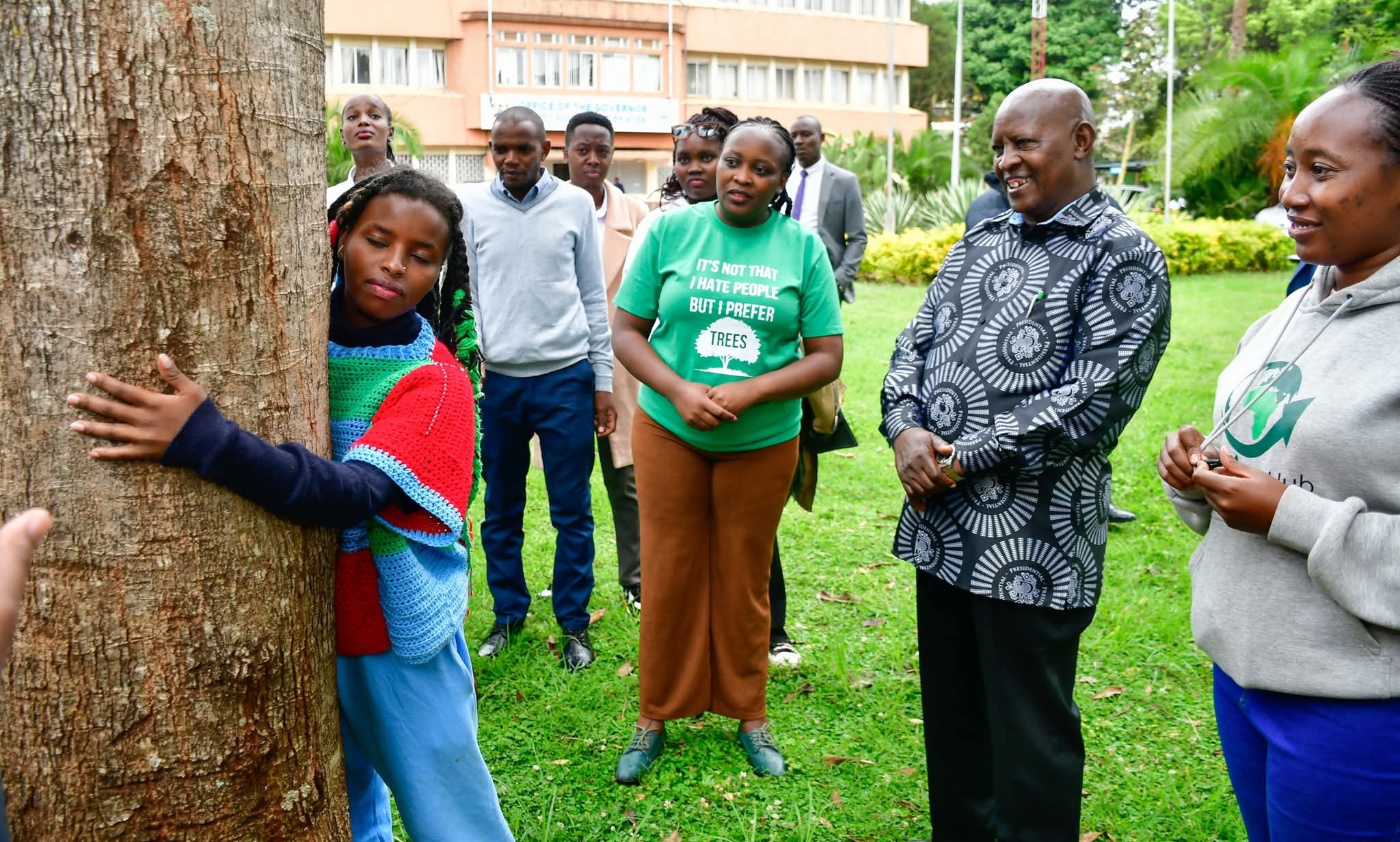
Although initial plans to perform the feat in Brazil fell through due to a lack of support from the Ministry of Environment, she remained undeterred and successfully completed her record attempt in Nyeri County.
“I was to do it in Brazil, but it did not work out at the Ministry of Environment, so I returned home and Nyeri County offered to help me and facilitate my attempt,” Muthoni said. “Even if we did not make it to Brazil, our message will go out there.”
Describing herself as an advocate for indigenous people and a guardian of the forest, Muthoni stressed that her tree-hugging efforts go beyond breaking records.
She highlighted the therapeutic and environmental significance of the practice, noting its direct link to mental health and societal well-being.
“The reason for hugging the tree is because it is therapeutic. We have a lot of mental health crises across the world directly linked to environmental degradation. When we have calamities like floods and droughts causing traumatic stress disorders, we need to help people fall in love with nature,” she explained.
“Before we plant a million trees, we must nurture hearts that care.”
Muthoni has braved heavy rains while hugging a tree outside the governor’s office in Nyeri County, demonstrating her resilience and commitment to both environmental conservation and mental health advocacy.
Tree hugging, often associated with the Japanese practice of “forest bathing” or shinrin-yoku, has been studied since the 1980s for its therapeutic effects.
Research suggests that spending prolonged time in forests, including physical contact with trees, may reduce stress, lower blood pressure, elevate mood, and strengthen immune function.
These benefits are partly linked to exposure to natural compounds released by trees, such as phytoncides, which have been shown to lower cortisol levels and improve overall well-being.
Muthoni’s journey has quietly inspired many, driven by a personal desire to challenge her limits and put Kenya on the global map in a unique way.
Support from friends, fitness enthusiasts, and curious Kenyans grew as news of her attempt spread, with many witnessing what is being hailed as a historic moment.
She emphasises that her record attempt is not about fame, but about demonstrating that ordinary individuals can achieve extraordinary feats through discipline, consistency, and a love for nature.
Through this record-breaking effort, Muthoni is amplifying a powerful message: caring for the environment and nurturing mental health are deeply interconnected, and both require dedication, awareness, and a willingness to lead by example