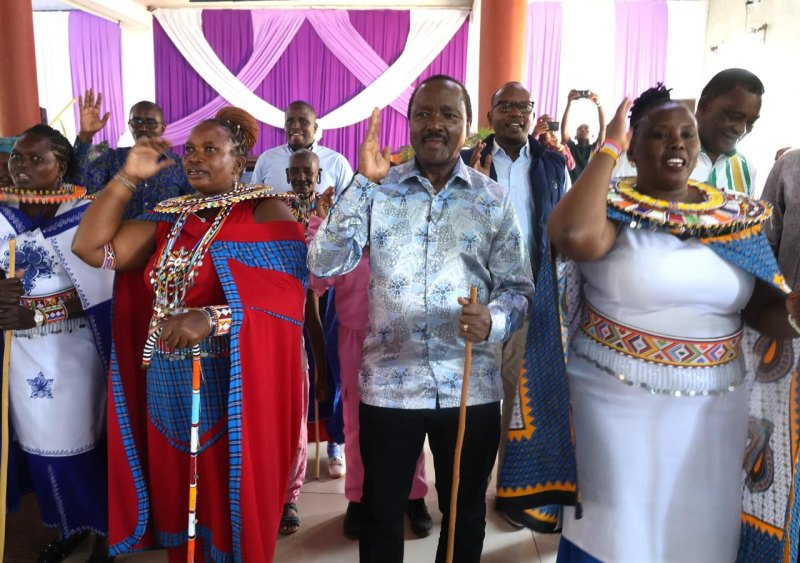
For years, it was a given that once Raila Odinga endorsed a
candidate by holding their hand, especially in Nyanza, that person’s victory
was virtually assured.
A nod, an endorsement, a whispered blessing from ‘Jakom’ (the chairman)
was often enough to anoint a candidate and seal an election.
On the flipside, Raila’s withdrawal of favour was a political
death sentence. Those who didn’t toe the line were doomed to political oblivion
in their pursuit of MP, governor, or Senate seats.
At the centre of the machinations was the ODM party, and those who
didn’t belong usually faced a herculean task of persuading the electorate.
Any form of defiance was viewed as an automatic signal of a fall,
a judgment that was passed on Orange party MPs who warmed up to William Ruto’s
presidency in its nascent stages.
That group was severely admonished. It included MPs Tom Ojienda
(Kisumu senator), Elisha Odhiambo (Gem), Mark Nyamitta (Uriri), Caroli Omondi
(Suba South), Gideon Ochanda (Bondo) and Felix Odiwuor, aka Jalang’o (Lang'ata).
They faced rebellion, especially after Raila joined hands with
Ruto under the broad-based government arrangement and were, to an extent,
condemned as having written their political obituaries.
Voting patterns started changing gradually in a wave, including
ethe lection of notable figures such as Ugenya MP David Ochieng, outside the ODM
machinery.
He was elected in 2019 on the Movement for Democracy and Growth
ticket.
Raila’s shadow, however, still loomed large.
Kisumu East MP Shakeel Shabbir also won the 2022 election as an
independent. Former Nairobi Governor Evans Kidero, who was also deemed a
rebel, failed in his independent bid for Homa Bay governor.
Even so, they had to play their politics carefully, so as not to
antagonise the former Prime Minister, lest they fell out with the very
constituency they depended on to win an election battle.
Given the ODM leader’s death on October 15, political pundits are
gripped by a single, unresolved question: Will Raila control 2027 politics from
his grave?
Some observers say the former PM would still have influence, while
others, especially those not blessed by Raila, say elections will never be the
same.
Going by the many delegations that have trooped to Raila’s
graveside, some pundits posit that he and his ideas would still be influential
nationally.
The story is different for his Nyanza compatriots.
Whereas Raila’s legacy will be the frame through which the
election will be contested, it is also debated how much his overwhelming
absence will affect a number of political figures.
Anderson Ojwang’, who unsuccessfully ran for Karachuonyo MP, told
the Star that in Nyanza those who depended on the ODM leader may have as well
written their political obituaries.
“We are likely to witness many MPs not vying in the 2027 election,”
the veteran journalist said.
“For them, Raila was their IEBC (Independent and Electoral
Boundaries Commission) and without him, it is game over. It is the end of a
political era of error, and now it's the moment of burial.”
In Nyanza, the upcoming by-election on November 27 ¾ one of 24
countrywide ¾ is viewed as a referendum on Raila’s successors and a test
of whether ODM can outlast the former premier’s influence.
Nationally, the by-election is seen as being shaped by the
opposition’s failure to find a unifying figure to replace him.
Inasmuch as Raila had given signs he would back Ruto, members of
the United Opposition publicly expressed hopes of Raila’s return to their fold.
For individual candidates, the question will be how effectively
they can leverage Raila's memory or how successfully they can run on their own
merits.
Pundits say that much as the former ODM leader’s influence would
affect elections, politicians who built their careers on his endorsement are in
a precarious position.
Prof Charles Nyambuga, a political commentator from Maseno
University, said he foresees a more savvy electorate
who will rate candidates based on their ideology and actions, more than their
party.
“To an extent, yes, 'Raila will speak,’ but largely I see a
situation where the electorate will hold candidates more accountable,” the don
said. “The period for hanging onto Baba's coattails could be long gone.”
In Raila’s Nyanza heartland, a group of leaders were often
mockingly referred to as 'osiem gi luth' (handpicked) for their reliance on ODM
direct tickets.
Governors such as James Orengo (Siaya), Anyang' Nyong'o (Kisumu),
Ochilo Ayacko (Migori), and Gladys Wanga (Homa Bay) were spared competitive
primaries due to Raila’s intervention.
Without Raila’s commanding presence to dissuade challengers, these
leaders are expected to face their most serious electoral tests yet, as
competitors’ previously shelved ambitions resurface.
Oscar Omondi, who unsuccessfully ran for the Siaya Senate seat in
2022, said the Raila bases and those who rode his wave of popularity are back
to ground zero.
“For people like me who lost nominations unfairly, we are now
equal,” Omondi said.
“Things are not going to be easy for those who depended on and
looked up to Jakom to make a stride in politics. Without him, they are already
in panic mode.”
He said the direct ticket holders must devise a way of surviving
the changing tide or else they would be swept away.
“Death is a bad reaper. The direct ticket holders will have to
learn how to survive the dependency. They are [political] orphans and have to
fight just like everyone else,” Omondi added.
Perhaps the most vocal political orphan is Suna East MP Junet Mohamed,
who is also National Assembly Minority leader, and has openly adopted the
‘orphan’ label.
"I have seen on social media, people ridiculing me, saying my
career is finished and that I am a political orphan," Junet said in Bondo
during Raila’s burial ceremony.
For Nyakach politician Erick Okeyo, Raila cannot control politics
from his grave.
“Luo land was the only place where passing Raila’s greetings to a
crowd made one win elections,” he said. “There are careers that will collapse
for good in his absence.”
He argued that leaders, especially those seeking reelection, would
now have to campaign on their track record.
“The best place to watch is Luo land. The by-elections will tell
it all. If ODM works hard, it may clinch Ugunja but Kasipul remains dicey,”
Okeyo said.
Governance analyst Daniel Orogo agrees. He said, "MPs and
governors must now begin to align to the constituency demands and ensure they
have succeeded in their development record."
Widespread anxiety now permeates Raila’s inner circle, including
figures such as Babu Owino (Embakasi East MP) and Edwin Sifuna (Nairobi senator),
who enjoyed the former PM’s protection and now face an uncertain status within
the party.
Several of the former ODM leader’s allies were also placed in
Cabinet positions under Raila’s broad-based government pact with Ruto.
They find themselves in an ambiguous position, as there has been a
major backlash within the Orange party against Raila’s partnership with Ruto.
They are Cabinet Secretaries Opiyo Wandayi (Energy), John Mbadi (National
Treasury), Hassan Joho (Mining) and
Wycliffe Oparanya (Cooperatives).
Their future depends heavily on President Ruto's patronage,
forcing them to navigate between honouring Raila’s legacy and securing their
own political survival and advancement.
Ruto had strategically pegged his 2027 reelection bid on the
political pact between UDA and ODM.
With the ODM leader gone, Ruto’s paths to secure the former
opposition leader's strongholds seem littered with uncertainty, in the face of
ODM’s existential crisis.
The President must perform a delicate balancing act to secure
Raila's former bases while managing expectations from his own traditional
strongholds.
Instant
analysis:
The 2027 election will be the ultimate test of Kenya's political
evolution, a contest revealing whether institutions and ideologies can triumph
over personality and whether new leaders can emerge from the shadow of a giant.
One truth remains self-evident: Raila’s ghost will loom large over the
campaigns as the silent architect of the new political reality he has left
behind.

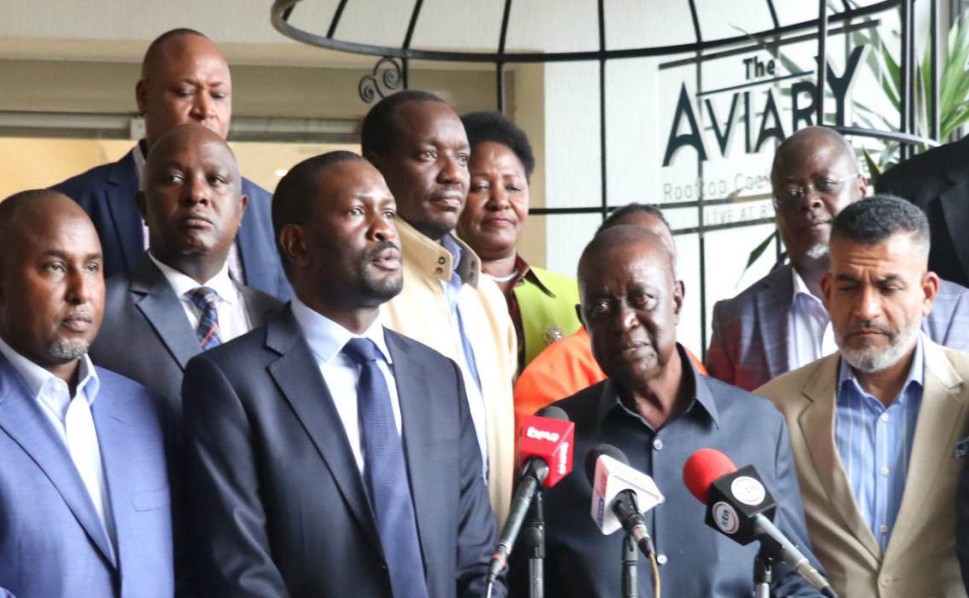
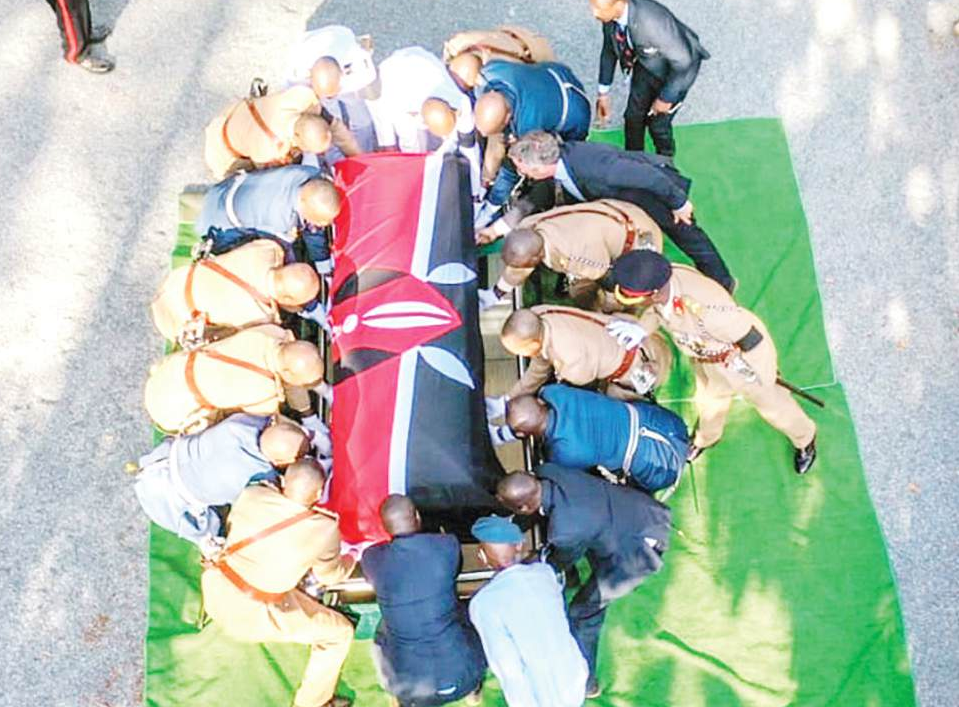 Pallbearers
lower the
casket of
former PM and
ODM leader
Raila Odinga
into the grave
at his home in
Bondo /PCS
Pallbearers
lower the
casket of
former PM and
ODM leader
Raila Odinga
into the grave
at his home in
Bondo /PCS