The death of ODM leader Raila
Odinga could breathe new life into the opposition as it prepares to challenge
President William Ruto in 2027.
Political analysts say Raila’s
demise dealt a major blow to Ruto, who had counted on the veteran opposition
chief to get re-elected.
Raila, who died in India on October
15, was buried in Bondo, Siaya county, on October 19.
His exit, some argue, has injected
fresh energy into the opposition and altered the political equation in 2027.
The emerging Rigathi
Gachagua–Kalonzo Musyoka alliance is now eyeing regions where Raila had
maintained a tight political grip for decades.
Raila, a towering figure in Kenyan
politics, wielded immense influence across Nyanza, Western, Coast, parts of
Rift Valley, Northeastern and Nairobi — making him a central pillar of the
country’s political landscape.
His dominance was evident in ODM’s
overwhelming control of his strongholds.
For instance, all sitting governors
and senators in the four Luo Nyanza counties — Siaya, Kisumu, Homa Bay and Migori
— were elected on the ODM ticket.
Out of the 28 MPs from the region,
23 also rode on the Orange party’s wave.
Beyond Nyanza, ODM maintained
strong support in Busia, where five of seven MPs were elected on its ticket and
in Mombasa, where nearly all leaders won on the party’s platform.
Without Raila’s unifying presence, these regions could become political swing zones.
Analysts warn that Ruto may not
automatically inherit Raila’s vast voter base, as loyalty to Raila was deeply
personal.
“It was Raila who could have
transferred that support. That loyalty cannot exist organically without him,”
governance analyst Martin Andati said.
Some observers also fear that
Raila’s absence could trigger voter apathy in his traditional bastions — a
factor that may benefit the opposition.
“Is the new ODM leadership going to
gather all and scatter none the way Raila did? Will the party still attract
supporters without him?” Gem MP Elisha Odhiambo asked.
“Will voters turn out? These are
tough questions, and we must handle the post-Raila era carefully.”
The opposition also hopes to
benefit from potential disagreements within Raila’s ODM over the party’s
future.
Factions have emerged, with some
leaders led by Secretary General Edwin Sifuna strongly opposing Ruto’s
re-election.
“Some politicians, especially
younger ones like Babu Owino, will feel they don’t need to cling on to Raila to
pursue their ambitions,” university don Machaira Munene said.
However, during last week’s central
management committee meeting, party leaders appeared to set aside their
differences and agreed to stay in the coalition government until 2027.
But many may see the move as a
temporary measure that may explode as the 2027 general election approaches.
“Raila’s death will dramatically change the
country’s politics. He’s been a constant figure in every election since
1997," Andati said.
“Ruto is the biggest loser. He was banking on
Raila to win. He hoped to inherit Raila’s voter bases. It was Raila who would
have transferred support to him. That loyalty can’t exist without Raila.”
During the burial, the President
said Raila’s death devastated him.
“Many commentators in the
newspapers and in the media say this is a big blow for me. Yes, it is. It is a
very big blow,” Ruto said.
For the opposition, Raila’s exit
presents a rare opportunity to capture a share of his vast support base.
“Nyanza will likely split. Kisii
might no longer be a sure thing. The Coast might also divide because loyalty
was mainly to Raila. Ruto might not automatically gain that loyalty," he
said.
Munene said Raila’s death could
weaken ODM by encouraging party members and officials to become more
independent.
“We already saw Babu pushing towards
that direction. But with Raila around, open rebellion was difficult."
In Nyanza, Raila deeply influenced
Kisumu, Migori, Siaya and Homa Bay, with 2.16 million voters across these
areas.
According to the 2022 voter
register, Siaya has 533,595 registered voters, Kisumu has 606,754, Homa Bay has
551,071, and Migori has 469,019.
The region could be reduced to a
battleground if Ruto does not position himself to secure the place.
The six coastal counties—Mombasa,
Kilifi, Kwale, Taita Taveta, Lamu, and Tana River – have 2.01 million votes:
Mombasa (641,913), Kwale (328,253),
Kilifi (588,602), Tana River (191,096), Lamu (81,453), and Taita Taveta
(181,827).
Some regional leaders have shifted
allegiance to Ruto, including flamboyant Mombasa CS Hassan Joho, the former ODM
deputy leader and immediate former governor.
Joho, a popular figure, solidified
ODM’s dominance in Mombasa before switching to Ruto’s government with Raila’s
support.
“We are staying in government and
we won’t leave. In 2027, we support our President, but by 2032, we aim for the
presidency," Joho stated.
Ruto could leverage on Raila’s
historical popularity – even in death, while expanding his own political base.
Raila’s departure has left Western
voters’ support open. He used to lead politics in Busia, Kakamega, Vihiga and
parts of Bungoma and Trans Nzoia counties.
Without Raila, rising leaders like
Trans Nzoia Governor George Natembeya, DAP-K leader Eugene Wamalwa and DCP’s
Cleophas Malala could influence the region’s political leanings.
Andati suggests the opposition
could capitalise on Natembeya’s rising profile to challenge Ruto in the region.
In Western, there are 2.21 million
votes: Kakamega (844,55), Vihiga (310,043), Bungoma (646,598) and Busia
(416,756).
Nairobi, Kenya’s most diverse and
vote-rich county, remains a key battleground, along with Maa counties like
Narok, Kajiado, and Samburu.
There are 2.42 million registered
voters in Nairobi, the country’s capital.
However, Raila had a slight edge
over his competitors in these areas. It is unclear whether the support will now
shift to Ruto.
As the 2027 elections approach,
political lines are shifting—not only along traditional ethnic and regional
lines but also through new alliances, government appointments, and the ongoing
battle for swing votes that could decide Kenya’s next leader.
INSTANT ANALYSIS
Raila Odinga’s death has dealt a
heavy blow to the President, who has been banking on him for his re-election.
Ruto has apparently lost ground in key voting blocs. They include the Mt Kenya
region, which has expressed its displeasure at ‘engineering’ the impeachment of
his former deputy, Rigathi Gachagua. Ruto has also reportedly fallen out with
the youthful Kenyans, alias Gen Z. In recent days, ‘Ruto Must Go’ chants have
dominated social gatherings, including football matches.

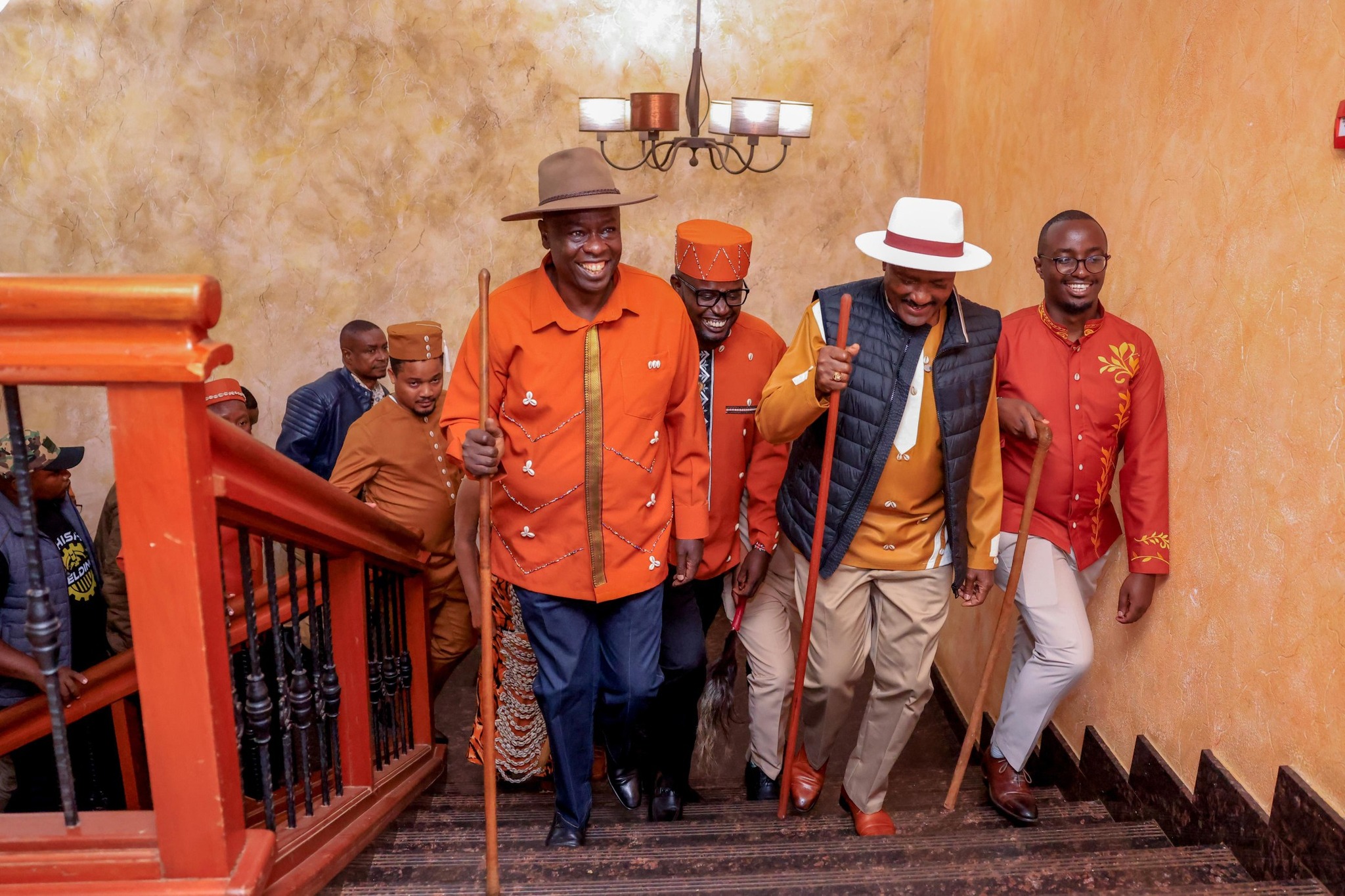
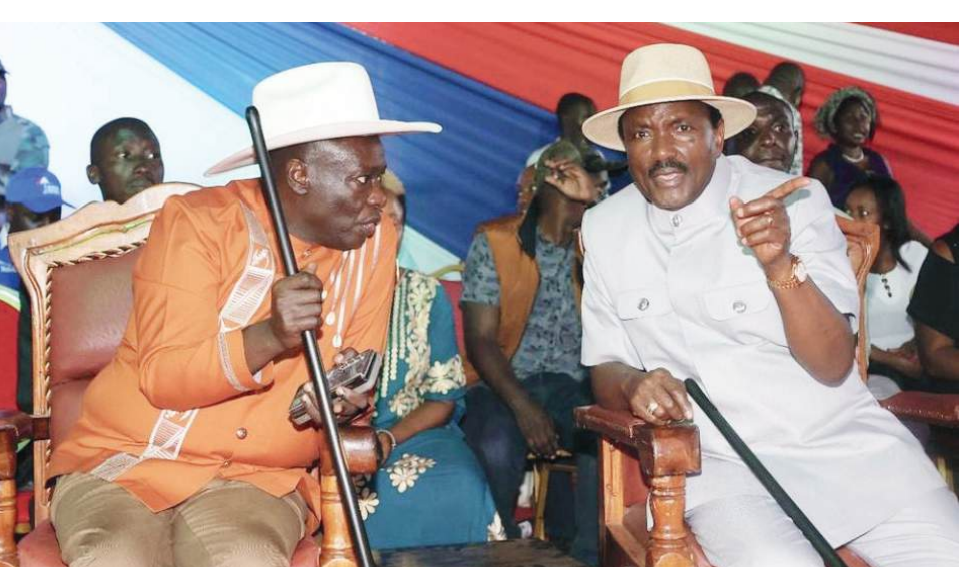 Former Deputy
President
Rigathi
Gachagua
and Wiper
boss Kalonzo
Musyoka in
Tseikuru,
Machakos
county, on May
29 /FILE
Former Deputy
President
Rigathi
Gachagua
and Wiper
boss Kalonzo
Musyoka in
Tseikuru,
Machakos
county, on May
29 /FILE


![[PHOTOS] The new Ngong –Naivasha Road viaduct](https://cdn.radioafrica.digital/image/2026/06/64d4f771-4432-4aee-ba3c-2f304c4436ec.jpg)