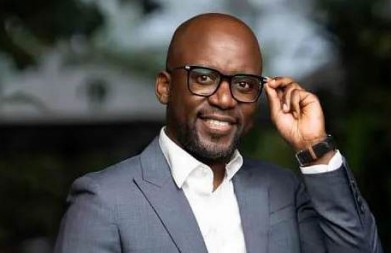
Moses Sitati
was recently appointed Eastrise Group Country Director for Kenya. Eastrise is a strategy and insights firm dedicated to bridging Africa and Europe by
shaping business models, driving
capital flows and building transformative partnerships.
The Star spoke to Sitati who has two decades of
experience spanning giants like USAID, Microsoft, Noki, the United Nations and Kenya’s Ministry
of Planning and National Development, on the investment climate and his plans for the country and region.
Who is Moses Sitati? Where was he born, where did he go
to school?
I am, as they say, “Nairobi-born” born
at Nairobi Hospital as a middle child from a middle-class Kenyan family and very much a child of the ’80s and
’90s. I have watched our city evolve from adjusting the TV
aerial for a single channel to endless streaming options, from buying mint sweets with a 10-cent coin to asking a
cashier for an Mpesa STK push, and
from punching keys on my mom’s typewriter—where I first learned to type—to swiping letters on my
smartphone.
I grew up in South B, then at the city’s edge, walking daily to Our Lady of Mercy Primary and later
attending St. Mary’s School Nairobi.
Holidays were often spent working on our family farm in Kitale. For university,
I studied abroad in Canada and the
US, then returned home immediately after. Looking back, I see my life shaped by this “middle vantage
point”—between analogue and digital,
urban and rural, rich and poor, old and young, Africa and the wider world.
How has your career journey been?
Twenty years have flown by and the “middle” theme continues
to define my path. I have worked across the government (Ministry
of Planning and National Development), the
United Nations (UNDP, UNOCHA), international development (USAID) and the corporate sector (Microsoft, Nokia,
Eastrise). In every role, I
have been drawn to the opportunities
that lie across the fence—asking what more is possible if sectors worked together. Today, I see myself as a
partnerships specialist, focused on fostering collaboration that bridges these worlds.
What shaped the leader you are today?
Several experiences have shaped the leader I am today. My
parents’ influence, especially the
years working on our family farm taught me the fulfilment of a hard day’s work and the value of working together.
Later, my first boss at Nokia Research Centre left a lasting mark on how I view leadership. The openness and
flat structures I observed in
Finnish society where participation and recognition are equal stood in stark contrast to the hierarchical systems we have inherited through
colonial legacies and education.
That contrast continues to inform how I lead and what I expect from leadership.
What would you say are some of your biggest achievements?
I am
proud of the impact I have contributed
to across different stages of my career. At
Nokia, I helped negotiate and establish several innovation labs—m:lab
Nairobi, C4D Lab at the University
of Nairobi, and the ICT4D Lab at the University of Cape Town—that laid important foundations for the tech-startup boom
we see in Africa today. At the UN,
I supported the creation of communities that used technology to scale impact at the Humanitarian Open Data Lab at
UNOCHA. Later, at USAID, I helped design and manage the Kenya Investment Mechanism, which mobilised over $650 million (Sh 83 billion) in private capital for SMEs across East Africa.
Which is that one challenge you faced that tested your
leadership style and how
did you solve it?
Collaboration by nature requires patience and time, a
resource that is increasingly scarce
today. At Nokia Research Centre, while we once worked with research horizons of up to seven years, we suddenly had
to compress development windows down to six
months when the company faced economic headwinds. At USAID, we often
spoke of “working ourselves out of
a job,” especially when debates about reducing foreign assistance intensified nearly a decade ago. The challenge of
doing more with less has become a
constant in today’s workplace.
It is not a problem that is ever fully solved, but it has pushed me to stretch my
leadership through different partnership models co- creating solutions, pooling resources and leveraging technology
to accelerate delivery without
compromising quality. It taught me that effective leadership in times of
constraint means being adaptable,
transparent with teams and partners, and focused on building trust so that everyone is willing to
carry the load together.
You were recently appointed Eastrise Group Country
Director for Kenya. What does
this mean and what does the organisation do?
I am leading
our operations, strategy and
partnerships in the region. Eastrise is a strategy and insights firm dedicated to bridging Africa and Europe by
shaping business models, driving
capital flows and building transformative partnerships. From investment readiness and market intelligence to
ecosystem design and communications strategy, we help businesses and investors unlock opportunities across
emerging markets. We leverage our
offices in Nairobi, London and
Warsaw in different ways: Nairobi to engage
with African innovation ecosystens, London to connect with global investment and philanthropic capital and Warsaw to
tap into the insights of Central and Eastern Europe’s
model of economic transformation and resilience.
What is your plan for Kenya and the region?
My plan for Kenya and the region is twofold. On one level, I want to
strengthen business-to-business partnerships by creating an “innovation bridge”
that channels ideas, capital and
opportunities between our two regions. On a deeper level, I believe lasting
impact comes from cultural
understanding. That means expanding conversations through creative and digital media, the arts,
exchange programmes and platforms that showcase the richness each side has to offer.
What is the biggest challenge African countries, including Kenya,
face in unlocking project
funding?
One of the biggest challenges is the unfair risk premium
that Africa faces compared to other
regions. I particularly like how Hanan Morsy, Deputy Chief Economist at the UN Economic Commission for Africa,
recently framed it, that Africa holds the world’s greatest potential for renewable energy yet attracts only about two per cent of global clean energy investment. This gap exists
because the continent is still viewed through a lens of both real and perceived risks. The result is that capital is
deterred, growth is slowed and
poverty cycles remain entrenched, despite Africa’s vast opportunities.
How can this be addressed?
Addressing this challenge begins with reframing the African
opportunity, because perception
directly influences where capital flows. We must move beyond outdated narratives of risk and dependency to
one of competitiveness and innovation. At
Eastrise, we are
helping to shift that narrative by helping organisations and businesses create new solutions and build new
partnerships. We must also generate actionable investment data across high-growth sectors giving investors a
clearer view of Africa not as a
cause, but as a fair, competitive and
investable market.
What trends are you currently most excited about in
capital funding or venture investing?
One of the most exciting trends is the rise of local capital
and blended finance models that
combine commercial and development objectives. As traditional aid flows evolve, we are seeing new partnerships between private investors, DFIs, and
regional institutions that share
both risk and reward. This shift toward locally anchored, partnership-based investment is creating a new playbook
for Africa’s growth, one that values sustainability, innovation and local ownership. At Eastrise, that is exactly where we focus:
designing models that make impact
commercially viable.
How do you see the capital funding landscape evolving in
the next five
years?
Across Kenya and the wider East African region, we are seeing a quiet
transformation in investment
culture. While real estate has long dominated, investors are now recognising the potential of SMEs and tech-driven ventures as engines of
long-term growth. Entrepreneur
support organisations
are helping micro ventures formalise, scale and access
structured capital. At the same time, a new generation, many with startup or diaspora experience, is diversifying
beyond land and government bonds.
What’s
particularly exciting is how Central and Eastern Europe (CEE) can act as a transition partner in this process. CEE
markets have undergone their own rapid transformation
from development dependence to private investment-led growth, and the lessons from that journey - around
institutional development, SME financing and regional integration-are directly
relevant to Africa today. Over the next five years, we expect stronger cross-learning and collaboration between these
two regions, building a more
resilient, self-sustaining investment ecosystem.
How do you weigh traction vs. potential when evaluating
early-stage projects?
Different actors play different roles along the growth cycle
of a project. From my time at USAID,
I saw how concessional or grant capital can de-risk opportunities and incentivize entry into underserved
sectors. That said, while everything can look impressive on paper or in a polished pitch deck, what truly
matters is evidence of value creation,
that is whether a
company is solving a real problem that customers are willing to pay for, ideally at a margin. Equally
important is ensuring alignment of values and interests between project promoters and investors, so
expectations are realistic and well-served
at every stage.
What are your key criteria for making an investment
decision?
Beyond the basics—strong
teams, market validation and value creation—I look for linkages that connect East Africa and CEE. This could
be through the source of capital or technology, joint ventures, supply chain integration, or access to new markets.
Projects that are embedded in this
corridor tend to be more resilient and offer stronger long-term growth.
How do you decide how much capital to allocate to each
investment?
While Eastrise Investments is not yet a fund manager, our
value lies in enabling smarter allocation
decisions. We provide market intelligence, due diligence and sector insights that
help fund managers deploy capital effectively. Our approach is data-driven and context-aware, helping investors
understand not only what and where to invest, but also why now. In that sense, we serve as bridge-builders between
global capital and local opportunity.
How do you manage risk across your portfolio?
As we build toward establishing a portfolio under Eastrise
Investments, our current focus in
risk management is on partnership development. The wrong partner or one not serious about investment can be
costly in both time and resources. That is why we emphasise deeper due diligence when
sourcing and onboarding partners, ensuring
alignment from the outset to reduce risk and create stronger, more
reliable collaborations.
How has your approach to capital deployment changed
during volatile markets?
Volatile markets tend to amplify both risk and opportunity.
At Eastrise, our role is to help businesses,
investors and development
organisations make sense of that uncertainty, not by predicting volatility, but by preparing for it. We
support our clients in stress-testing their
investment strategies, identifying resilient sectors and designing partnership models that spread risk without
diluting impact.
Increasingly, this means helping them diversify across regions, for example, linking European capital
with African growth opportunities
or vice versa, to balance exposure and unlock new markets. Our focus is on long-term resilience: helping our
partners deploy capital in ways that remain steady even when the world isn’t.
What red flags make you walk away from a potential
investment? Even if the metrics
look great?
Even when the challenge is interesting and the numbers look
strong, misalignment on values or
long-term sustainability is always a red flag. At Eastrise, we are building our investment philosophy around B Corp principles and the UN
Sustainable Development Goals,
meaning we look for integrity, transparency and models that create lasting value.
Across Africa, we see many businesses driven by purpose,
tackling social or environmental
challenges through innovative products and services. But often, these enterprises operate within ecosystems
that don’t yet provide the patient capital,
infrastructure or policy support needed to make their impact
commercially sustainable. Our role
is to help bridge that gap. We work with founders and investors to strengthen the underlying business model so that
good ideas can attract long-term funding and scale responsibly.
What do you do to unwind?
Having grown up working on a farm, I believe the bond with
nature never really leaves you. I
often unwind through outdoor activities such as self-driven game drives, gardening (there is always room for one more plant!),
long hikes or nature photography. And
as a lover of manual cars, few things are as rewarding as a long drive or a
good road trip with scenic views.
Best advice you ever received?
Success is never final
and failure is never fatal.
What advice would you give to someone looking to enter
your field?
It is a challenging time to enter the field of international
cooperation, given the global decline
of trust across people and groups. Yet it is also a profoundly important moment to pursue the noble goal of building
bridges between people, place and
organisations. The world needs more connectors
listeners. My advice? Get out there, meet people, ask why and stay curious about how the world really works. The
best partnerships are
often in unexpected places.